

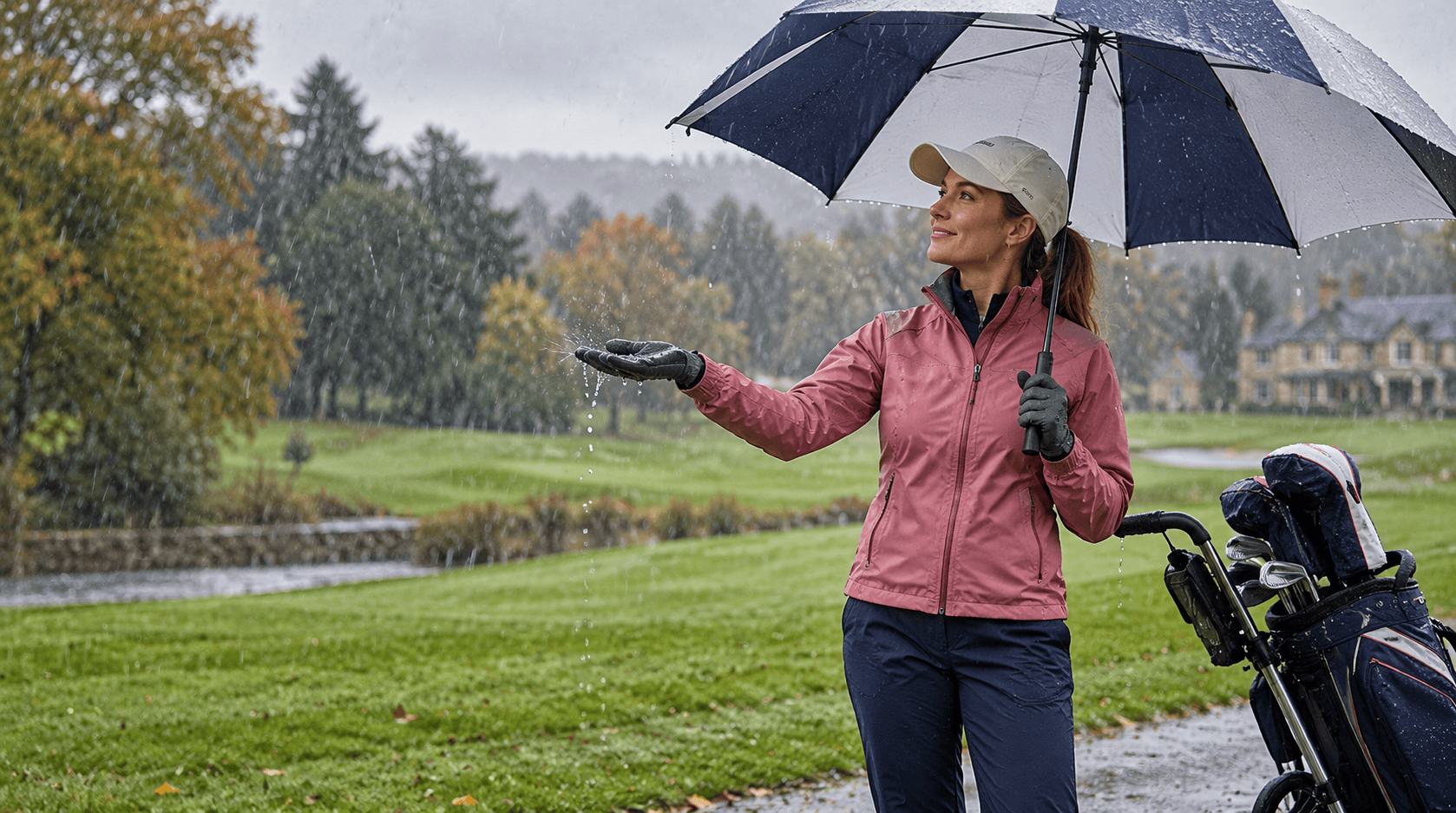
When the temperature drops and the rain arrives, your usual golf glove might not be enough. Here’s how to choose the right gloves for the conditions without filling your bag with unnecessary kit.
Your golf glove is one of the smallest pieces of equipment in your bag, but when the weather turns, it can make an enormous difference to how comfortably you play.
A cold November morning, a damp grip and an ordinary leather glove are not always a happy combination. Yet rain gloves, winter gloves and everyday golf gloves do different jobs. The trick is knowing when you need each one.
Everyday gloves: good for feel, less good in the rain
Most golfers are familiar with a conventional leather or synthetic golf glove. Its purpose is to help you maintain a secure, comfortable connection with the club.
Leather gloves are popular for their soft feel, particularly in dry conditions. But once saturated, leather can lose its grip and become uncomfortable. Repeated soaking and poor drying can also shorten its useful life.
A synthetic or mixed-material glove may be more forgiving in changeable weather, although performance varies between models.
For autumn golf, carrying a spare everyday glove in a waterproof bag is a sensible starting point.
Rain gloves: designed for wet-weather grip
Rain gloves are different because their materials are selected to maintain traction in damp conditions. Some specialist fabrics perform particularly well when wet.
Unlike a conventional golf glove, rain gloves are commonly sold as a pair, allowing both hands to maintain contact with the grip.
They can feel unfamiliar initially, particularly if you normally play with one glove, but they are worth considering if you regularly play through rain.
The important distinction is that rain gloves are primarily about grip, not insulation.
Winter gloves: keeping your hands warm

Winter golf gloves are designed with warmth and protection from the cold in mind.
They may include thermal linings, wind-resistant panels or extended cuffs. Some also offer wet-weather grip, but not every winter glove is designed to perform like a specialist rain glove.
There is a trade-off. A thicker glove can feel less connected to the club than a thin everyday model.
For some golfers, the answer is a winter glove suitable for swinging. Others prefer to wear insulated mittens between shots and retain their normal glove for playing.
If your hands become particularly cold, comfort may be more important than preserving the thinnest possible glove feel.
What should you actually carry?
For a typical British winter, you do not necessarily need three expensive sets of gloves.
A practical combination might be:
- An everyday golf glove for dry conditions.
- A spare dry glove, protected from moisture.
- A pair of rain gloves for persistent wet weather.
- Winter mittens or insulated gloves when temperatures drop.
If you play mostly in mild conditions and avoid heavy rain, you may need considerably less.

Don’t forget fit and care
Whatever glove you choose, fit matters. A glove should feel secure without restricting finger movement or bunching excessively across the palm.
Try gripping a club while wearing it rather than judging the fit with your hand held flat.
After a wet round, follow the manufacturer’s drying instructions. Avoid leaving damp gloves crumpled in your golf bag, and keep clean, dry spares protected from the elements.
The verdict
If rain is your main problem, prioritise wet-weather grip. If cold hands are making golf uncomfortable, look at insulation or mittens. And if the forecast is dry, your familiar everyday glove may still be the best option.
The right winter glove is not necessarily the warmest or the most expensive. It’s the one that helps you hold the club comfortably in the conditions you actually play.


