

The most useful detail on a quilted golf vest may be the neckline. PING and Malbon take different approaches to the layers you wear underneath.
Lay out the top you most often wear for a winter round. If it has a short collar, you might welcome a vest that zips up over it. If it has a substantial roll neck, you may prefer to leave that neckline free. Two blue quilted vests illustrate the difference particularly well. One closes high under the chin, while the other leaves the top beneath it in view.

A stand collar over a thinner top
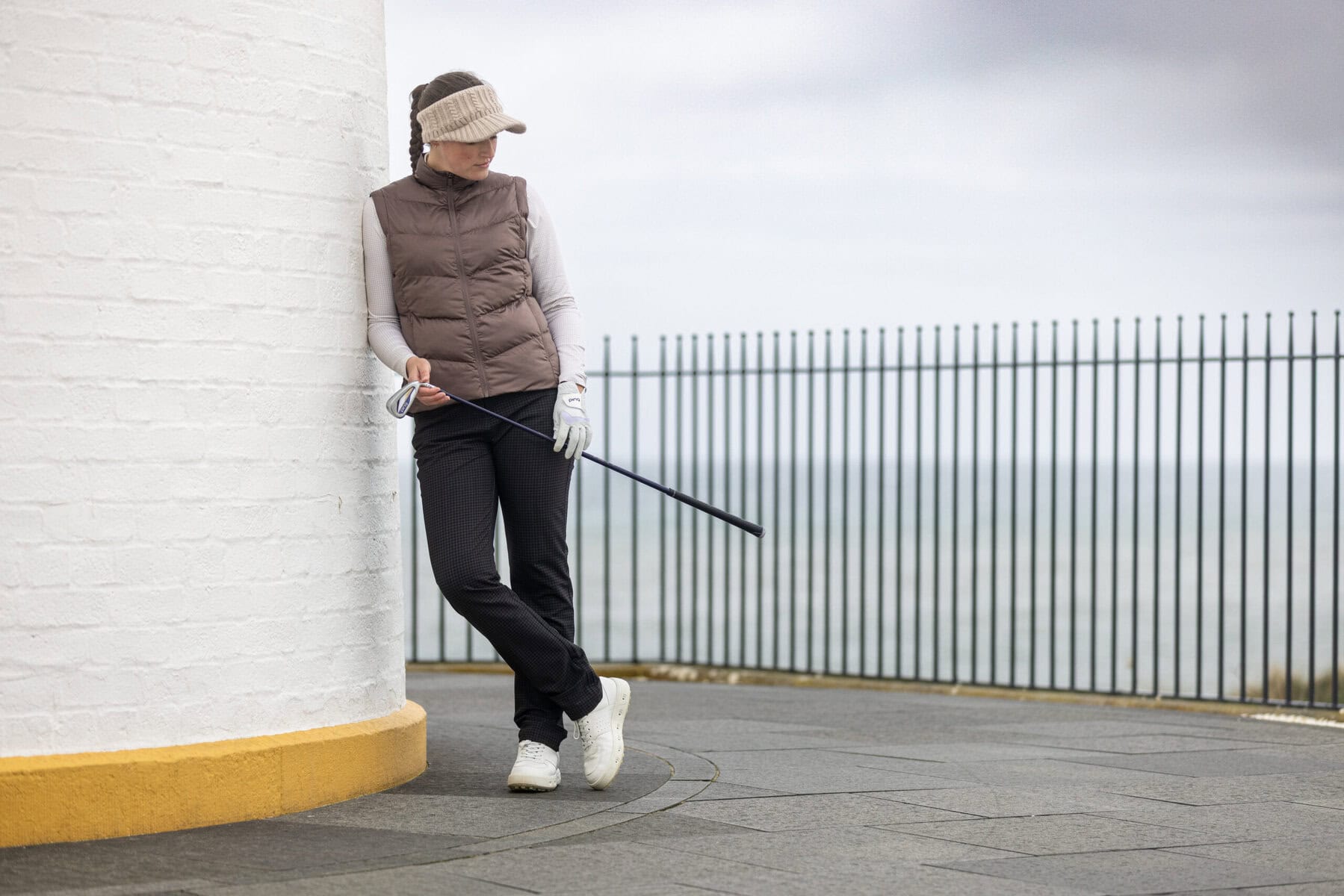
In the W&G catalogue photograph of the PING Annalise, the pale blue sleeves of the base layer are visible but the vest supplies the collar. That is a useful arrangement if your favourite top has little coverage at the neck. Try the zip both fully closed and slightly open. Turn your head as you would to follow a shot and see where the top of the zip sits.
The PING Annalise Insulated Vest in Blue Indigo was £110 on PING’s UK site on 6 November. PING specifies Clo Pluma synthetic insulation, a water-resistant outer, two zipped pockets and studs at the side seams. The pockets make sense for small things you want to keep separate from your golf bag. The side studs are worth trying over your usual layers, especially if a straight hem tends to catch at the hip.
A round neckline over a roll neck
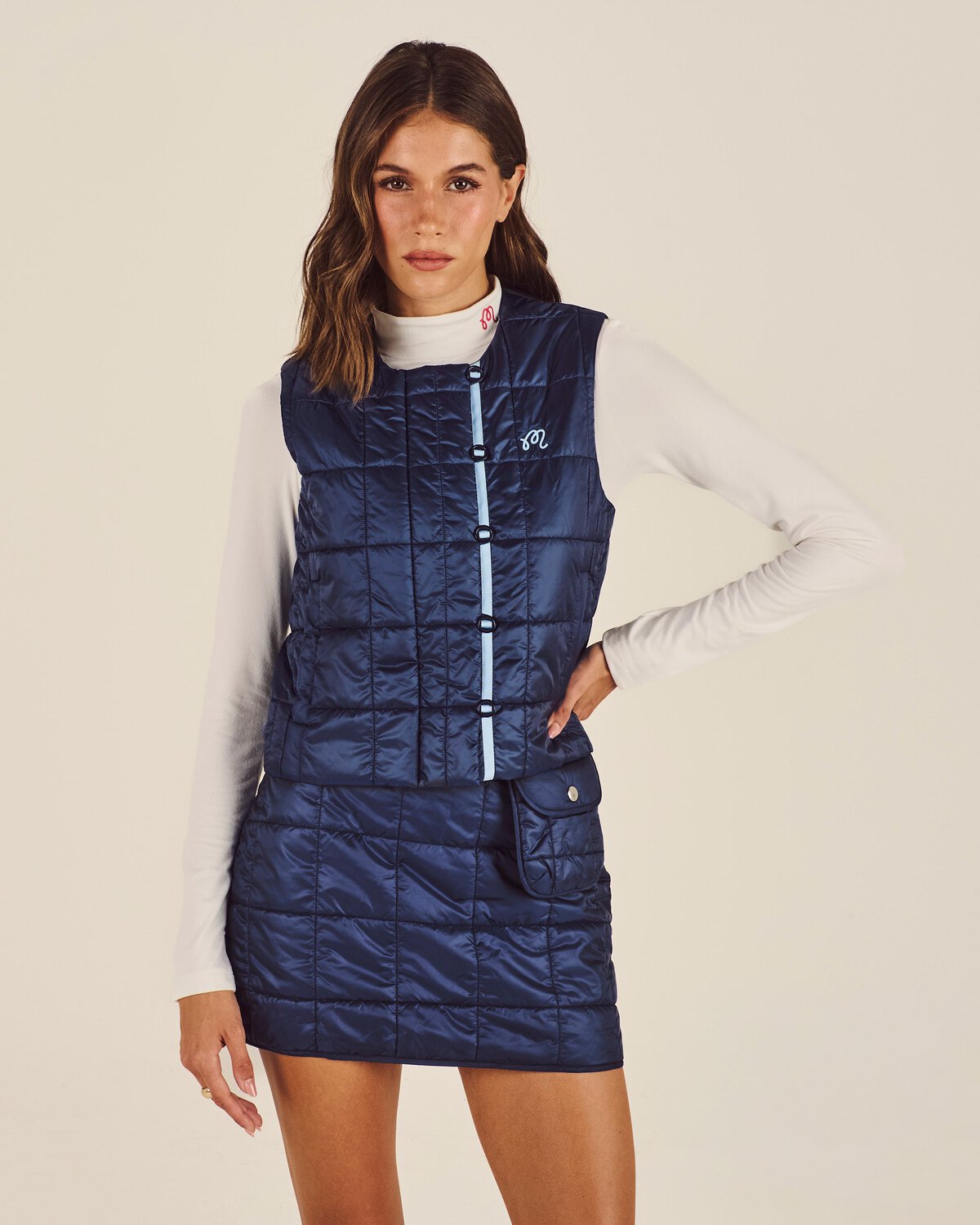
Malbon takes a different route with the Maya Quilted Vest in Blueberry, £270 on the UK-facing listing on 6 November. Pale trim traces the round neckline, leaving room for the white roll neck shown in the W&G image of the Maya. If you prefer colour or pattern close to your face, the neckline of your own top will still be visible when the vest is fastened.
Malbon describes a relaxed cut in recycled ripstop with quilted filling. Five corozo buttons cover a concealed front zip. The welt pockets have hidden snap closures, a small but practical distinction from the zipped pockets on the PING vest. Decide which fastening you would rather use with cold fingers and where your hands naturally fall when the vest is closed.
For either style, try the armholes over the sleeve you plan to wear. Take your address position and turn your shoulders, then check whether the lower edge rides up. A photograph can show how the necklines differ, but it cannot establish which vest will feel warmer on your course. Choose the collar, pocket closure and fit that suit the clothes you already own.


