

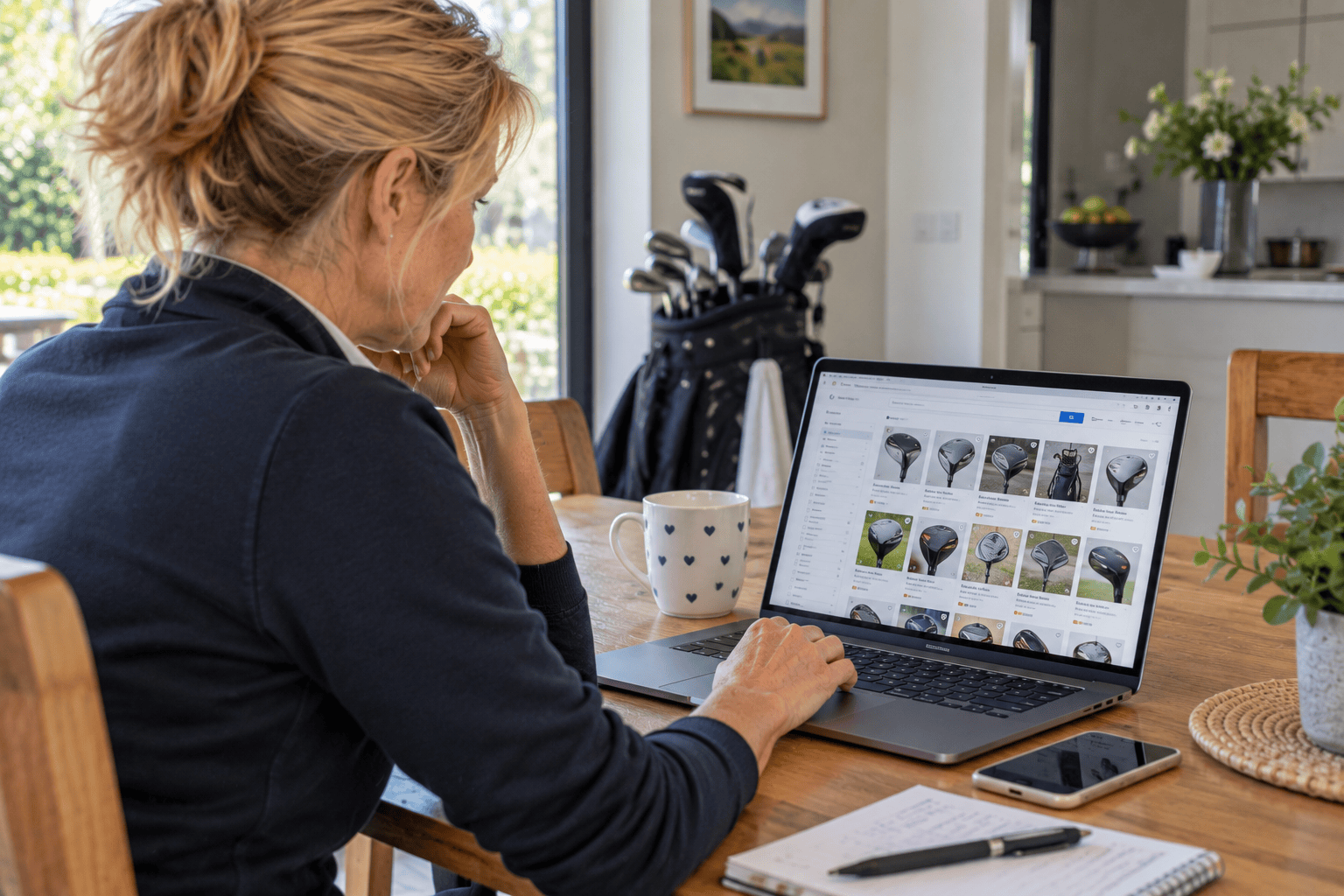
Last year’s driver, a set of irons someone else has traded in or the putter you’ve always wanted can cost considerably less second-hand. The trick is knowing what matters before the price persuades you
Golf equipment doesn’t suddenly stop working when a new model arrives. A driver that cost several hundred pounds a few seasons ago may now be available for a fraction of that, while a good set of irons can have years of golf left in it.
That makes the second-hand market particularly useful if you’re starting out, changing part of your set or simply don’t want to pay new-club prices.
But the bargain isn’t the club with the biggest discount. It’s the club that suits you, is in good condition and costs enough less than the new alternative to make buying used worthwhile.
Know what you’re looking for before you start
It’s much easier to buy well if you know your basic specification before you begin browsing.
Shaft flex and weight matter, as do the length of the club and, particularly with irons, whether anything has previously been altered. A set that looks perfect and costs £200 less isn’t much of a bargain if the shafts don’t suit you.
Women shouldn’t feel restricted to the second-hand racks marked Ladies, either. As we’ve explained in our guide to shaft flex, the letter on the shaft is only part of the story. What matters is whether the specification works with your swing.
If you already have clubs that suit you, use those specifications as a starting point. If you don’t know what you need, a little time establishing that before you shop can prevent an expensive mistake.
This matters particularly when buying online, where a tempting price can make it very easy to buy first and work out whether the club suits you afterwards.

Some clubs are easier to judge than others
Drivers, fairway woods and hybrids can offer excellent second-hand value because golfers frequently trade them in when newer models appear. Cosmetic marks on the sole aren’t necessarily important, but inspect the crown and face carefully for cracks, dents or other damage and check the shaft and hosel.
With an adjustable club, make sure you know exactly which model and loft you’re buying. A missing headcover won’t affect performance; missing or damaged components are another matter.
Irons can also make very good used purchases. Look at the faces and grooves, particularly on the shorter irons that have probably seen the most use, and check that the set is consistent. Ask whether the clubs have been lengthened, shortened or had their lie angles altered.
Grips are another easy thing to overlook. Worn grips aren’t a reason to reject an otherwise good set, but replacing eight of them changes the real cost of your bargain.
Putters can remain perfectly usable for years, but don’t buy one simply because there is little obvious wear. Length, head shape, alignment and feel all matter. If possible, try it before buying or make sure you can return it.
I’d be more cautious with heavily used wedges. They take a lot of punishment from sand, turf and practice, and the condition of the face and grooves matters more than it does on many other clubs. A lightly used wedge at the right price may make sense; a well-worn one with only a small saving over new probably doesn’t.
Compare the used price with new
Second-hand prices don’t exist in isolation.
Golf equipment is regularly discounted when a replacement model arrives, so before buying a used club, check what the same model — or a similar new one — currently costs.
A two-year-old driver at £199 may look attractive because it originally sold for £450. If a retailer is clearing the same club new for £229, the saving suddenly looks much less compelling.
The same applies to complete sets. A good used set can be an excellent starting point for a newer golfer, but compare it with current package sets and previous-season equipment before assuming second-hand is automatically cheaper.
Condition, specification and price have to make sense together.
Decide how much protection you want
Buying from an established second-hand retailer usually costs more than buying privately, but you’re paying for some reassurance alongside the club.
The club should have been inspected and described, and there will normally be some form of returns process if it isn’t as expected. Check the individual retailer’s terms before buying rather than assuming they’re all the same.
Buying privately can produce better bargains, but it puts more of the checking onto you. Ask for clear photographs of the actual club, including the face, sole, shaft and grip, and ask about any alterations or damage.
If the price for a supposedly recent premium club looks implausibly low, be cautious. Counterfeit golf equipment exists, particularly online, and buying from a seller you can identify and return the club to reduces that risk considerably.
The best bargain is the one you keep
The attraction of second-hand equipment is that somebody else has absorbed the biggest part of the original price.
That can put a better-quality driver, set of irons or putter within reach, and there is no reason a club needs to be the latest model to play good golf with it.
Just start with the club rather than the discount. Check that the specification suits you, understand its condition, compare the price with what else is available and know what happens if it arrives and isn’t right.
If all four stack up, buying second-hand can be one of the easiest ways to get more golf club for your money.
Links to affiliate Partners: – Callaway Pre-Owned US – Callaway Pre-Owned UK/EU – Global Golf US


