

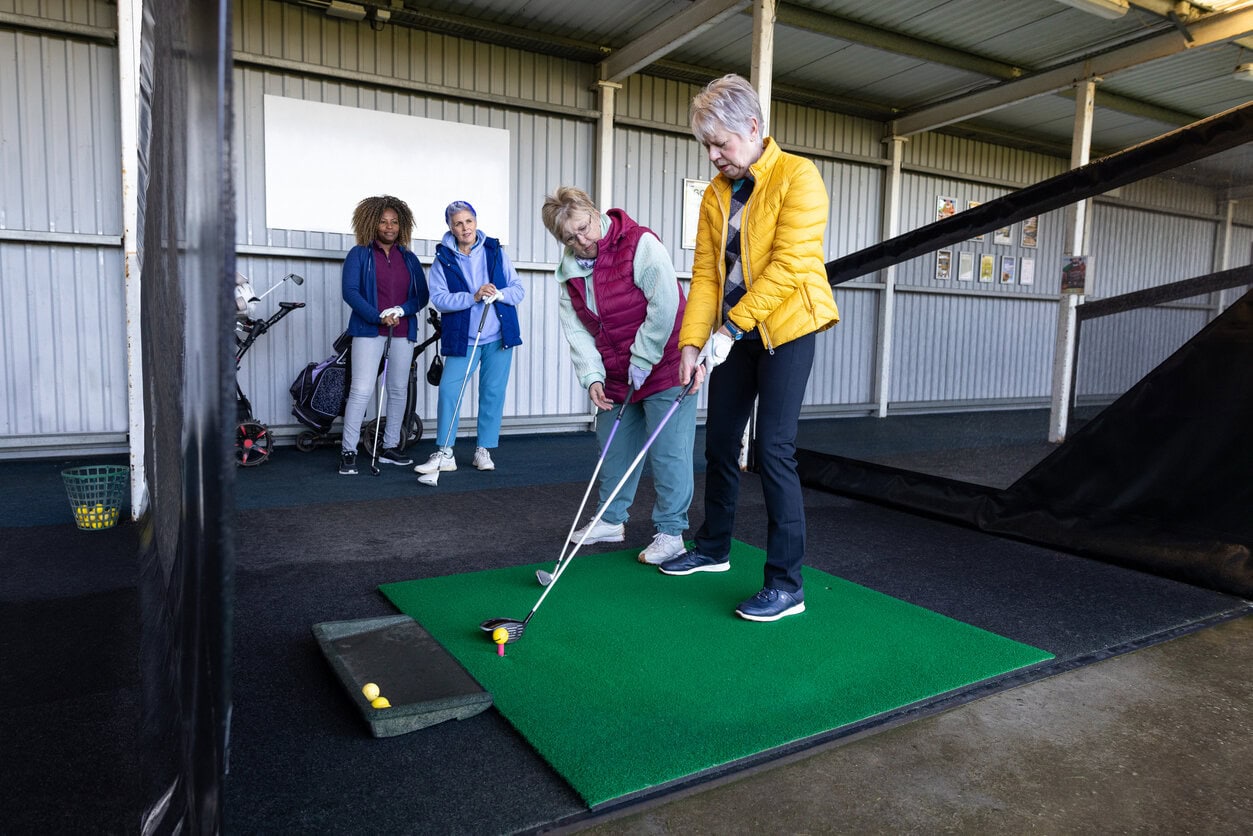
We know golf gets us outdoors, keeps us moving and gives us friendships that often last a lifetime. But could the game we love actually be prescribed to improve health and wellbeing? Research in Scotland suggests that golf could have a valuable role to play.
Ask a group of women golfers what they love about the game and you’ll probably hear plenty about the fresh air, friendships and laughter, alongside the occasional great shot that keeps us coming back.
For many of us, golf is about much more than improving our handicap. It’s an opportunity to escape everyday pressures, spend time outdoors and enjoy the company of people we might otherwise never have met.
But what if those benefits could make golf more than just an enjoyable pastime? What if it could become part of the way we help people improve their health and wellbeing?
That’s the thinking behind an interesting area of research exploring golf and social prescribing.
And it turns out that golf is already being put to the test.

What exactly is social prescribing?
You may have heard the term, particularly in connection with activities such as walking groups, gardening or community arts projects.
Social prescribing is an approach used within the NHS and other health and community services to connect people with activities that may help improve their physical, mental and social wellbeing.
Rather than focusing solely on medical treatment, it recognises that our health can also be affected by loneliness, inactivity, confidence and opportunities to connect with others.
A social prescribing link worker might help someone find a local walking group, a community activity or another opportunity that suits their circumstances.
And increasingly, researchers are asking whether golf could be one of those activities.
It’s not quite a doctor handing you a prescription for nine holes and a coffee afterwards. But the principle is rather appealing.
Golf on prescription?
A research project in Fife, Scotland, has already been investigating how golf might be introduced through social prescribing.
The Golf for Health programme offered free golf sessions through five local clubs, with healthcare practices and other professionals invited to connect physically inactive people with the opportunity to take part.
The programme formed part of wider research involving the University of St Andrews and other partners, examining how people could be connected to golf through primary care and community services.
A study published in January 2026 explored the experiences of participants who completed the programme.
The findings were encouraging.
Participants spoke positively about learning golf, meeting new people and enjoying a welcoming environment. The researchers identified the social experience as an important part of what made the programme appealing.
There were challenges, too, particularly around how people were introduced to the scheme and supported through the sign-up process.
The study involved just nine people in post-programme focus groups, so it cannot establish that golf improves health outcomes or that the programme would work equally well everywhere.
Nevertheless, it provides a fascinating real-world example of golf being explored as a community health activity.
And for those of us who already play, perhaps the appeal isn’t difficult to understand.
Why golf has something special to offer
Golf combines several things that are individually associated with better health and wellbeing.
There’s the physical activity, of course. Walking the course, carrying or pulling clubs and making repeated swings all involve movement.
But golf also encourages us to spend time outdoors, often in attractive green spaces, and gives us opportunities to connect with other people.
A systematic review published in Sports Medicine in 2022 examined research into golf and physical health, identifying evidence of potential benefits while also highlighting limitations in the available studies.
The R&A has also brought together research examining golf’s physical, mental and social benefits in its Golf and Health work.
However, we should be careful not to confuse the established benefits of physical activity with proof that golf itself can treat particular health conditions.
What makes golf interesting is the combination of activity, social interaction and enjoyment.
Unlike exercise that can sometimes feel like another obligation, golf gives us a reason to keep coming back.
There’s always another round to arrange, another shot to attempt or another course to discover.
And having something enjoyable in the diary can be valuable in itself.
The friendships might matter just as much as the fairways- HEADING
For many women, the social side of golf is every bit as important as the game itself.
A regular group provides companionship, routine and a sense of belonging. You might begin by sharing a lesson or joining a roll-up and gradually find yourself with an entirely new circle of friends.
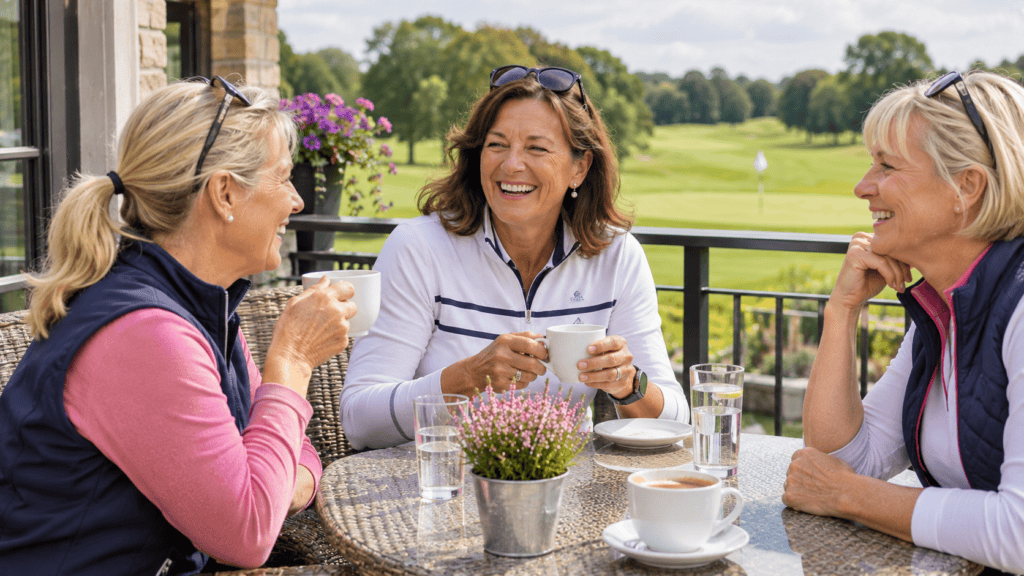
Those connections can become particularly meaningful during periods of change — retirement, moving to a new area, children leaving home or simply finding more time for yourself.
The Scottish Golf for Health research is interesting partly because participants valued the chance to learn alongside others and make friends.
Of course, golf doesn’t automatically create friendships. Anyone who has felt uncomfortable joining an unfamiliar group will know that the environment matters.
A welcoming introduction, opportunities to play with people of similar experience and the absence of pressure can make a considerable difference.
And that brings us back to something we’ve been exploring in our Building Her Game series: getting women interested in golf is only the beginning. Helping them feel that they belong is equally important.
Could golf help more women discover those benefits?
Most of us probably know someone who might enjoy golf but has never seriously considered giving it a try.
Perhaps she thinks it’s too expensive, too difficult or simply not for her.
Yet the social prescribing approach offers an interesting way of looking at the game.
Instead of presenting golf as a sport that requires lessons, equipment, membership and eventually a handicap, it can be introduced as an enjoyable activity involving fresh air, movement and meeting people.
A few beginner sessions, a short course or some relaxed practice with others could provide an accessible starting point.
The Scottish research also reminds us that the invitation itself matters. People need to know what to expect, feel comfortable attending and have opportunities to continue if they enjoy the experience.
Golf clubs, coaches and community organisations all have a potential role in making that possible.
And existing women golfers can help too.
Sometimes a friendly invitation to accompany someone to the driving range or join a beginner session is all it takes to make the game feel less intimidating.

More than a game
Social prescribing is still developing, and the evidence for its effectiveness varies between different programmes. Research into golf-specific schemes is at an early stage.
Golf is not a substitute for medical care, nor is it necessarily suitable for everyone.
But the idea that the game could contribute to wider health and wellbeing is certainly worth exploring.
Those of us who already play may recognise some of its benefits without ever having thought of them in medical terms.
The friendships, the fresh air, the exercise, the sense of achievement — and perhaps most importantly, having something enjoyable to look forward to.
So the next time you head out for nine holes with friends, remember that the value of your round may extend well beyond the scorecard.
And if there’s someone in your life who could benefit from a little more fresh air, company and activity, perhaps it’s worth inviting her along.
After all, golf has given many of us far more than a handicap.
It might just have something to offer her, too.
READ MORE: Walking 18 Holes: What Does It Really Do for Your Body?


