

A round of golf can deliver a surprisingly substantial amount of physical activity. But how far do you actually walk, what are the benefits, and is completing all 18 holes always the best choice?
If you’ve ever finished a round of golf feeling pleasantly tired, you might have wondered just how much exercise you’ve actually done. After all, golf involves plenty of standing around, chatting between shots and occasionally spending rather longer than intended looking for a ball.
Yet beneath its leisurely reputation, golf can be a remarkably effective way to keep moving. An 18-hole round combines several hours outdoors with sustained walking, changes in terrain and the physical demands of playing the game. The exercise may not feel like a conventional workout, but that doesn’t mean it isn’t worthwhile.
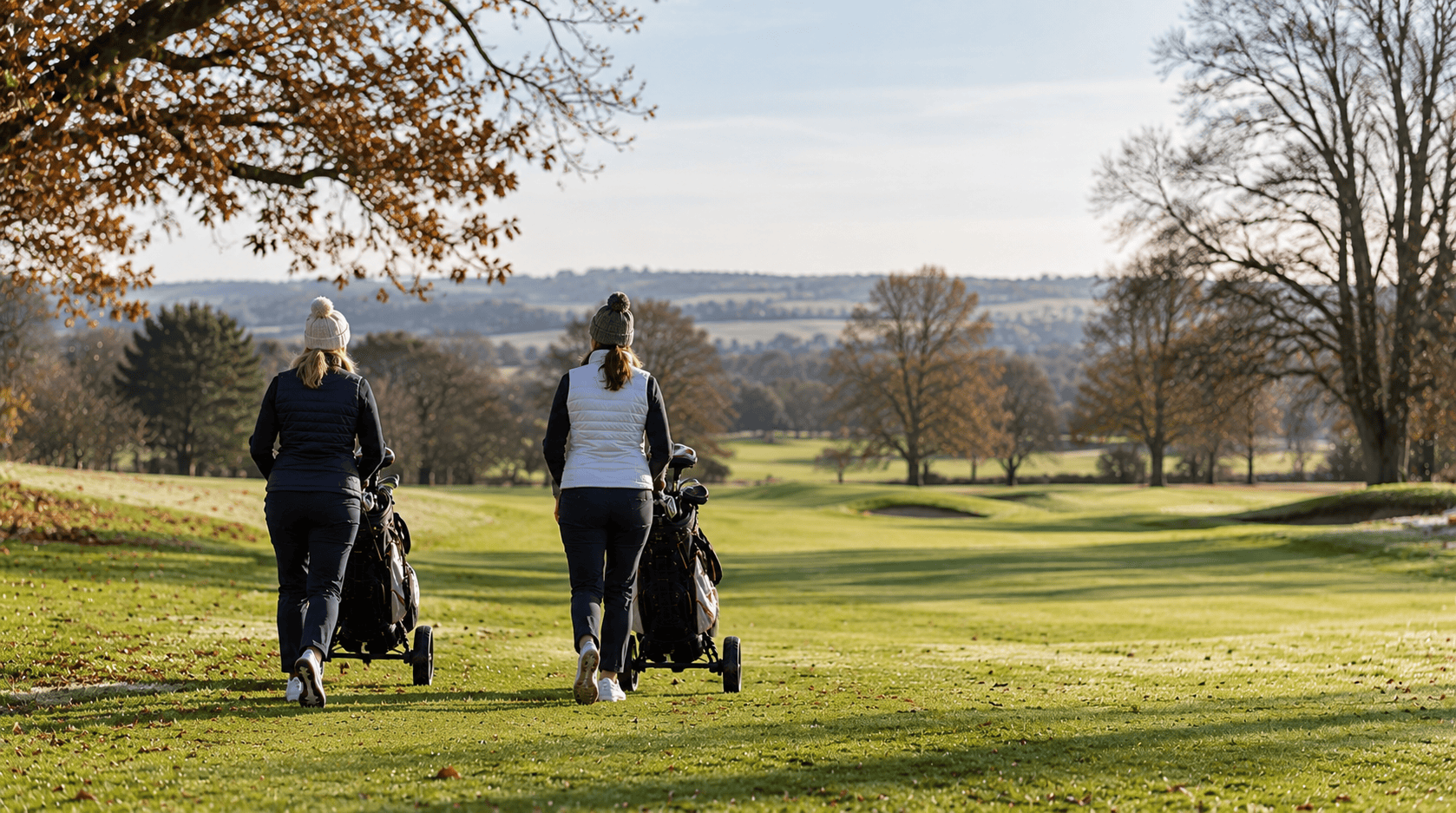
You’re probably walking further than you think
Research suggests that golfers walking 18 holes typically cover around 6–11 kilometres, depending on the course. A study published in Mayo Clinic Proceedings, involving 42 golfers including 30 women, recorded an average of 11,948 steps per round.
That’s a considerable amount of movement, particularly when you remember that the distance printed on a scorecard isn’t the distance you actually walk. There are journeys between greens and tees, detours to find balls and all those extra steps around bunkers and putting greens.
The terrain makes a difference too. Walking a relatively flat parkland course is a different physical proposition from tackling an undulating hillside layout. Slopes increase the effort required, while uneven ground challenges your balance and coordination. However, although golf research suggests possible associations with better balance, it doesn’t establish that playing golf itself produces those improvements.
Perhaps the most interesting point is that the exercise is spread across several hours. Rather than setting out to complete a workout, you’re accumulating activity while concentrating on something you enjoy.
Does golf count towards your weekly exercise?
The NHS recommends that adults aim for at least 150 minutes of moderate-intensity physical activity each week, alongside muscle-strengthening activities on at least two days.
Walking golf can contribute towards that target, although the amount depends on how quickly you walk, the terrain and your individual fitness. Moderate intensity generally means your breathing and heart rate increase while you’re still able to hold a conversation.
That distinction matters. A four-hour round doesn’t automatically equal four hours of moderate-intensity exercise. Some of the time will be spent standing, waiting or walking slowly, and the physical demands vary considerably between golfers.
Even so, golf has an important advantage over exercise that feels like a chore: it gives you a reason to keep coming back. A regular round, perhaps supplemented by shorter walks during the week, can help make physical activity part of your routine rather than something you have to persuade yourself to do.
There is one limitation worth remembering. Golf isn’t a complete fitness programme. Walking provides valuable aerobic activity, but it doesn’t replace dedicated strength training, particularly as we get older and maintaining muscle strength becomes increasingly important.
Carrying, pushing or using a trolley?
Does carrying your clubs turn a round into a better workout? Not necessarily.
Carrying a bag adds weight, but that additional load may also place greater demands on your shoulders, back and legs. Research comparing different ways of transporting clubs suggests that golfers can accumulate substantial walking activity whether they carry their clubs or use a trolley.
If an electric trolley allows you to walk comfortably for the whole round, that may be a more sensible choice than carrying a heavy bag and becoming exhausted after twelve holes.
The same principle applies to the number of holes you play. Walking nine holes regularly may be more beneficial for your overall activity habits than occasionally forcing yourself through 18 when you’re already struggling.
The objective should be to make walking golf sustainable and enjoyable, rather than treating the heaviest bag or longest round as an achievement in itself.

Five things worth considering before your next round
- Notice how you feel afterwards. Pleasant tiredness is one thing; persistent pain or excessive exhaustion suggests you may need to adjust your approach.
- Think about the terrain. A hilly course may require more effort than a flat one, even if the distances are similar.
- Choose your equipment sensibly. Comfortable shoes, suitable clothing and a manageable golf bag can make a long round more enjoyable.
- Don’t neglect food and fluids. Several hours outdoors can leave you tired and dehydrated, even when the weather is cool.
- Build up gradually. If you haven’t been walking regularly, start with shorter rounds or easier courses rather than immediately tackling a demanding 18 holes.
The benefit isn’t just physical
There is also something valuable about spending several hours away from a desk, a screen or the demands of everyday life. Golf offers time outdoors, social interaction and the satisfaction of learning and improving, all of which may contribute to wellbeing.
Research into golf and health has identified potential mental and social benefits, although the evidence is less conclusive than it is for physical activity. It would be an exaggeration to suggest that a round of golf is a guaranteed solution to stress or poor mental health.
What golf can offer is an enjoyable opportunity to be active, spend time with other people and focus on something different for a few hours.
And perhaps that’s its greatest strength. You don’t have to count every step, carry the heaviest bag or complete every hole to benefit. If walking golf helps you move more regularly, feel better and look forward to your next round, it’s already doing something worthwhile for your health.
READ MORE: How the Pros Cope With 36 Holes a Day – And What Weekend Golfers Can Learn


