

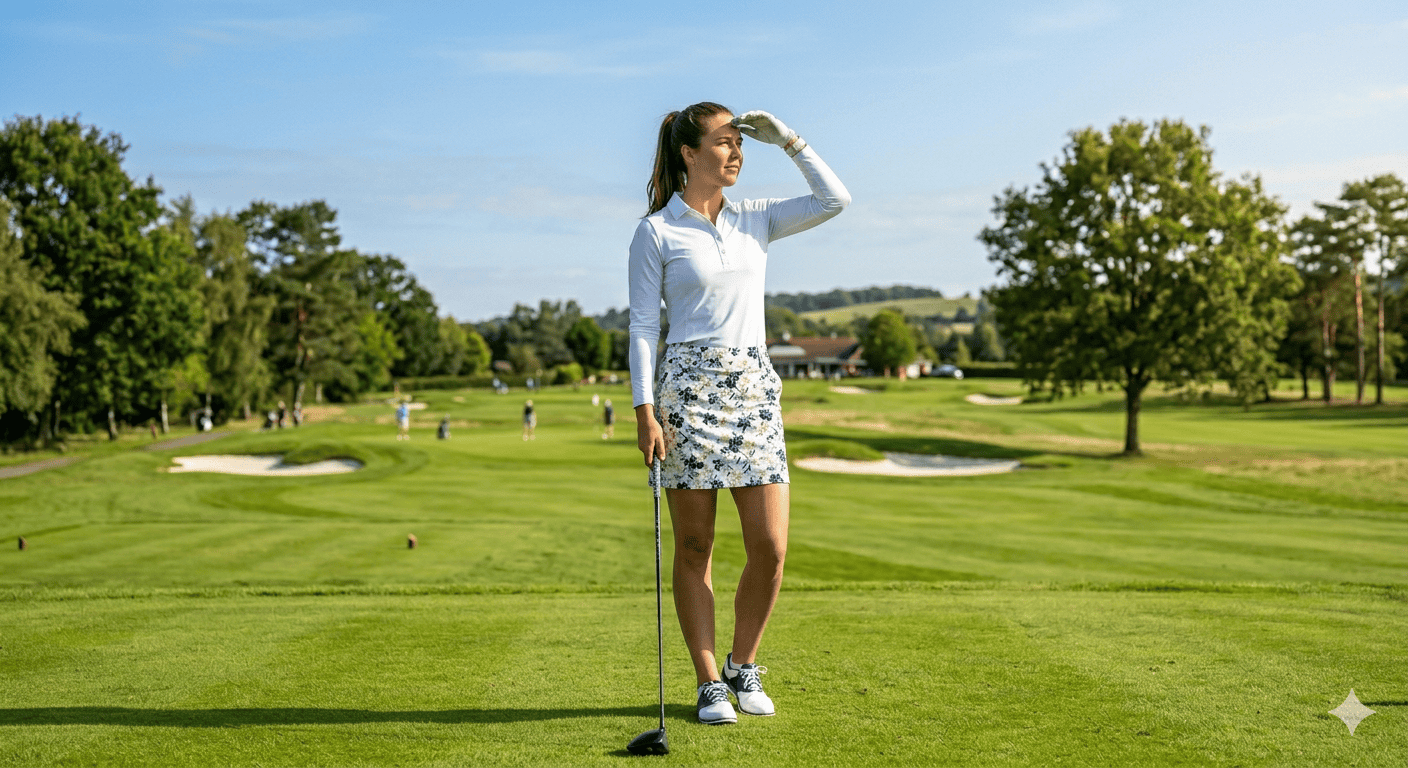
Sun-protective clothing is one of the fastest-growing categories in women’s golf fashion. The labels can be confusing and the claims vary widely between brands. Here’s a straightforward guide to what actually matters.
A round of golf takes between three and a half and five hours. In that time, depending on the season and the conditions, you are exposed to UV radiation for longer than most outdoor leisure activities. Unlike running or cycling, golf involves a lot of standing still — waiting on the tee, walking the fairway, standing over putts — with no shade and no opportunity to step inside.
Skin cancer is the most common cancer in the UK. Golf is one of the sports most associated with high cumulative UV exposure, particularly for people who play regularly over many years. Sun-protective clothing is a practical response to that, not a trend.
The good news is that the golf clothing industry has responded with a range of genuinely useful products. The less good news is that the labelling is not always consistent, and some claims are easier to verify than others.
UPF and SPF: What’s the Difference
- SPF — Sun Protection Factor — is a measure used for sunscreen. It refers specifically to protection against UVB rays, which cause sunburn. You will sometimes see it applied to clothing, but it is not the correct standard for fabric sun protection.
- UPF — Ultraviolet Protection Factor — is the correct measure for clothing and fabric. It accounts for both UVB and UVA rays, which makes it a more complete measure of sun protection. A UPF rating tells you what fraction of UV radiation passes through the fabric to your skin.
UPF 15–24 is considered good protection. UPF 25–39 is very good. UPF 40–50+ is excellent and blocks more than 97.5% of UV radiation. Most sun-protective golf clothing on the market that carries a specific rating will be rated at UPF 50, which is the standard used by brands including Abacus (in their Aloha UV range) and Ace Golfs (across their SPF collection).
A standard white cotton polo shirt has a UPF of around 5 to 7. That means roughly one fifth of UV radiation passes straight through. A lightweight technical golf polo made from performance polyester or nylon will typically offer better protection than cotton even without a specific UPF rating, but the rating tells you it has been tested.
What Affects a Fabric’s UV Protection
The UPF rating of a garment is not fixed. Several factors affect how much protection you actually get in practice, and it is worth understanding them.
Colour makes a difference. Darker and more saturated colours generally absorb more UV radiation than pale or white fabrics. A white polo may look like a sensible choice on a hot day, but a navy or deep pink fabric in the same weave will offer more protection. This is why many sun-protective golf garments come in richer colours.

Weave and fabric density matters more than colour. A tightly woven or knitted fabric leaves fewer gaps for UV to pass through. Technical golf fabrics — performance polyester, nylon blends — tend to have a tighter structure than cotton, which is one reason they test better even before any UV treatment is added.
Stretch reduces protection. When a fabric is stretched — as it is during a golf swing — the weave opens slightly and the UPF rating drops. This is relevant because golf clothing is specifically designed to stretch. A garment rated UPF 50 at rest may offer somewhat less protection during an actual swing. It is not a reason to avoid sun-protective clothing, but it is worth knowing.
Wet fabric also reduces protection. A polo that has been soaked through by sweat or rain will offer less UV protection than the dry rating suggests. Again, this does not invalidate the rating, but it is part of the picture.
Clothing and Sunscreen: Not Either/Or
Sun-protective clothing does not replace sunscreen. Your face, neck, hands and any exposed skin still need protection. What sun-protective clothing does is reduce the surface area you need to cover with sunscreen and provide consistent protection across the areas it covers, without the need to reapply.
IMAGE: Supporting image: woman golfer applying sunscreen to arms or face

For a typical four-hour summer round, the practical approach is UPF 50 clothing on your arms and body, a visor or cap for your face and scalp, and sunscreen applied to your face, neck and the backs of your hands. Gloves cover one hand already, which helps.
What to Look for When Buying
Look for a specific UPF rating on the product label or in the product description rather than vague language like ‘sun-smart’ or ‘UV-aware’. A tested and rated UPF 50 garment is a different product from one that is simply described as offering sun protection without a number attached.
Long sleeves provide more coverage than short sleeves, which provide more than sleeveless. For high-UV conditions — a summer round, a golf holiday in southern Europe or further afield — a lightweight long-sleeve UPF 50 top is the most practical option. Modern technical fabrics make these genuinely comfortable to wear in warm conditions; the weight and breathability of a UPF performance polo is nothing like a heavy long-sleeve shirt.
Fit matters for coverage. A top that pulls and gaps when you swing is exposing skin. Check that the garment stays close to the body through the full range of a swing, particularly across the lower back where tops can ride up.
Sun-protective golf clothing has improved significantly in recent years. The fabrics are lighter, the cuts are better and the ratings are more consistently tested and labelled. If you play regularly through the British summer — and especially if you travel for golf — it is worth making UPF protection part of your buying criteria alongside fit and style. The two are not in conflict. Browse sun-protective options across the brands in the Women & Golf Fashion Directory.
Browse sun-protective golf clothing in the Women & Golf Fashion Directory. (Tip: use the site search tool)


