

A spring morning in the UK can start at eight degrees and be twenty by the time you reach the back nine. Getting dressed for a round is less about choosing an outfit and more about building a system. Here’s how to do it.
There is no such thing as dressing for a British golf round in one garment. Even in summer, a 7am tee time will feel nothing like the same course at midday. Add wind, a sea-facing links or an elevated parkland course and the temperature range across eighteen holes can be significant.
The answer is not to wear more clothing. It is to wear the right clothing in the right order — pieces that work individually and together, that you can remove and stow without bulk, and that do not leave you overheating on the back nine because you over-dressed on the first tee.
The Three-Layer Principle
Layering for the golf course works on the same principle as layering for any outdoor activity, adapted for the specific demands of a golf swing. You need freedom of movement at every layer, which rules out anything stiff, heavy or restrictive across the shoulders and arms.
The three layers are:
Layer one is your base — the polo or top you are wearing closest to the skin. This should be lightweight, moisture-wicking and comfortable enough to play in on its own on a warm day. It is doing the work of keeping you dry and regulating temperature from the inside. A technical polo in a DRYcool or similar moisture-management fabric is the right choice here, not a cotton shirt.
Layer two is your mid-layer — a cardigan, quarter-zip, fleece or lightweight knit that adds warmth without adding bulk. This is the layer you will put on at the car park and take off by the fifth hole. It needs to be easy to remove one-handed, easy to tie around your waist or stuff into a bag pocket, and light enough that carrying it is not a nuisance. A knit cardigan or a soft fleece with a full zip both work well. Avoid anything with a hood that catches in your swing.
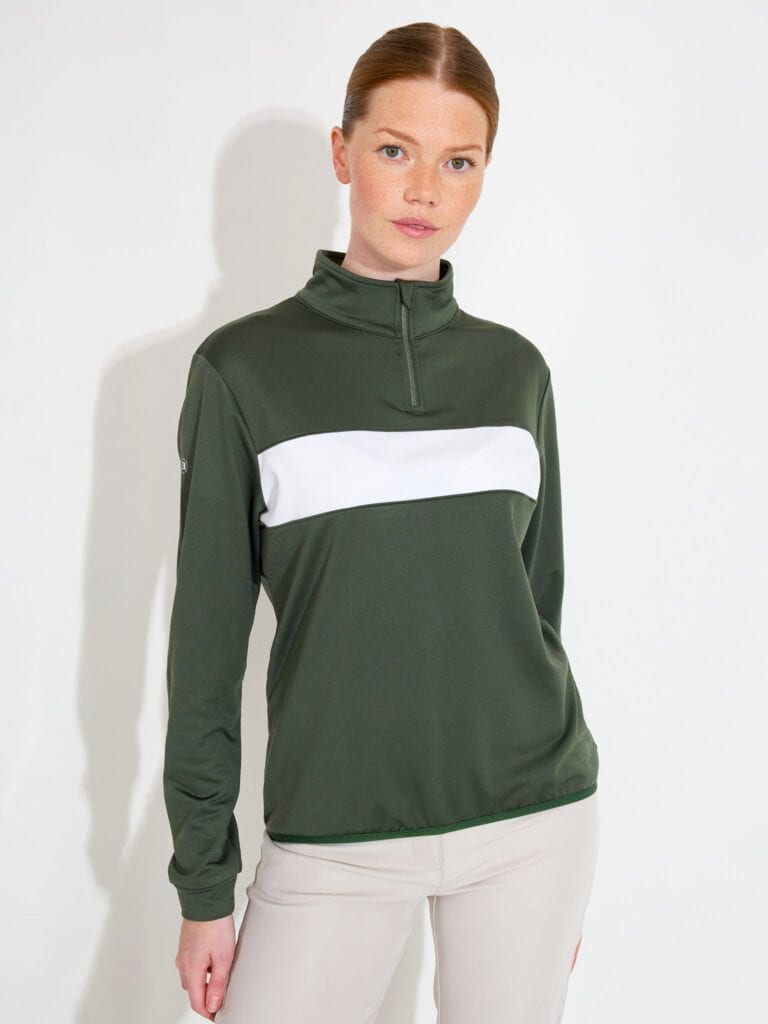
(Abacus Midlayer Forest)
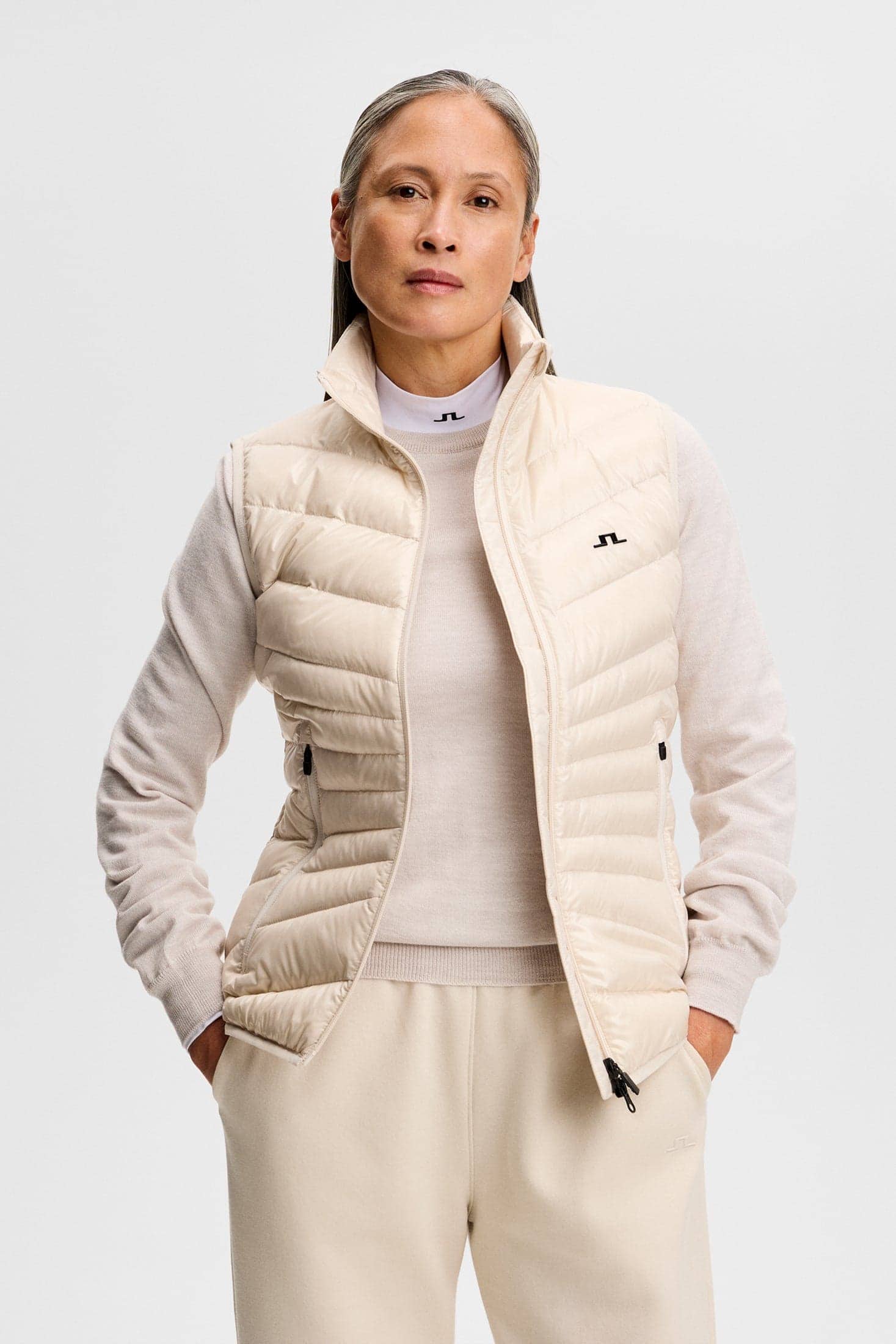
Layer three is your outer — a gilet, hybrid jacket or waterproof, depending on the forecast. The gilet is the most versatile outer layer for spring and autumn golf because it keeps your core warm while leaving your arms completely free. A hybrid jacket — insulated body, stretch arms — is the next step up when you need more coverage. Save the full waterproof for when it is actually raining.
What to Look for in Each Layer
The base layer should be four-way stretch as a minimum. You need it to move with your swing rather than pulling across your back at the top of the backswing. Fabric weight matters — lightweight polyester or nylon blends perform better than heavier fabrics for temperature regulation. UPF sun protection in the base layer is increasingly standard and worth having even in the UK.
The mid-layer needs to pack small and move freely. A structured knit or textured fleece works better than a heavy sweatshirt. Look for stretch fabric rather than a rigid knit, and check that the sleeve length does not bunch under an outer layer. The zip is important — a full zip gives you more temperature control than a half-zip.
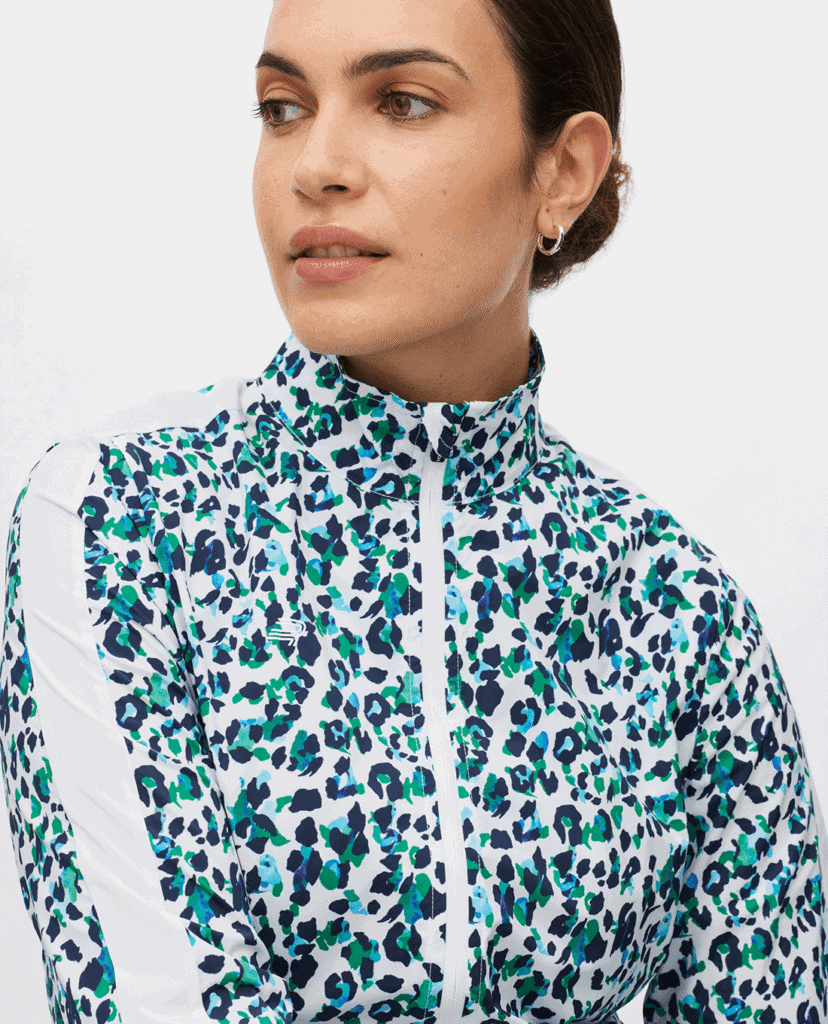
The outer layer is where fit is most critical for golf. A gilet should sit close to the body but not restrict the torso turn. A hybrid jacket needs stretch fabric across the arms and shoulders specifically — this is where cheaper outerwear fails. If you cannot comfortably cross your arms across your chest while wearing it, it will affect your swing.
The Gilet Question
The gilet divides opinion. Some women find them impractical — cold arms, no weather protection. Others consider them the most useful garment in their golf wardrobe. The answer depends on where and when you play.
For parkland courses in spring and autumn, a gilet over a long-sleeve base layer is a very effective combination. It keeps your core and chest warm, which is where cold affects you most when standing still between shots, while leaving your arms free for the swing. It is also the easiest layer to remove and carry.
For links courses or exposed moorland in any season, a gilet alone is rarely enough. The wind is the issue, not just the temperature. A hybrid jacket or softshell with some wind resistance is the more practical choice.
Building a Layering Wardrobe
You do not need a different outfit for every temperature combination. Three or four well-chosen pieces cover most scenarios across the British golf season.
A lightweight long-sleeve polo and a short-sleeve polo give you the base layer covered for most temperatures. One good mid-layer — a full-zip fleece or knit cardigan — handles the in-between mornings. A gilet for spring and autumn, a hybrid jacket for colder days and a waterproof for rain covers the outer layer for the full season. That is six garments that work in multiple combinations.
The practical tip is to keep the mid-layer and outer layer in your bag at all times from March through to October. The number of rounds where you will not need them is smaller than you think.
Layering well is less about buying more and more about buying right. The right base layer, one versatile mid-layer and a gilet or hybrid jacket will see you through most of what British golf weather throws at you. The brands in the Women & Golf Fashion Directory cover all three layers — browse by category to find pieces that work together.
Browse layering options in the Women & Golf Fashion Directory. Fashion


