
England Golf’s Women’s Club Growth Workshops are putting hard numbers on a problem the industry has talked around for years — and the data makes uncomfortable reading.
I recently attended one of England Golf’s Women’s Club Growth Workshops, part of a national programme running through 2026 and into their wider strategy to 2030.
The session brought together club representatives to look honestly at why women under 50 are the most underrepresented group in club golf — and what clubs need to do differently to change that.
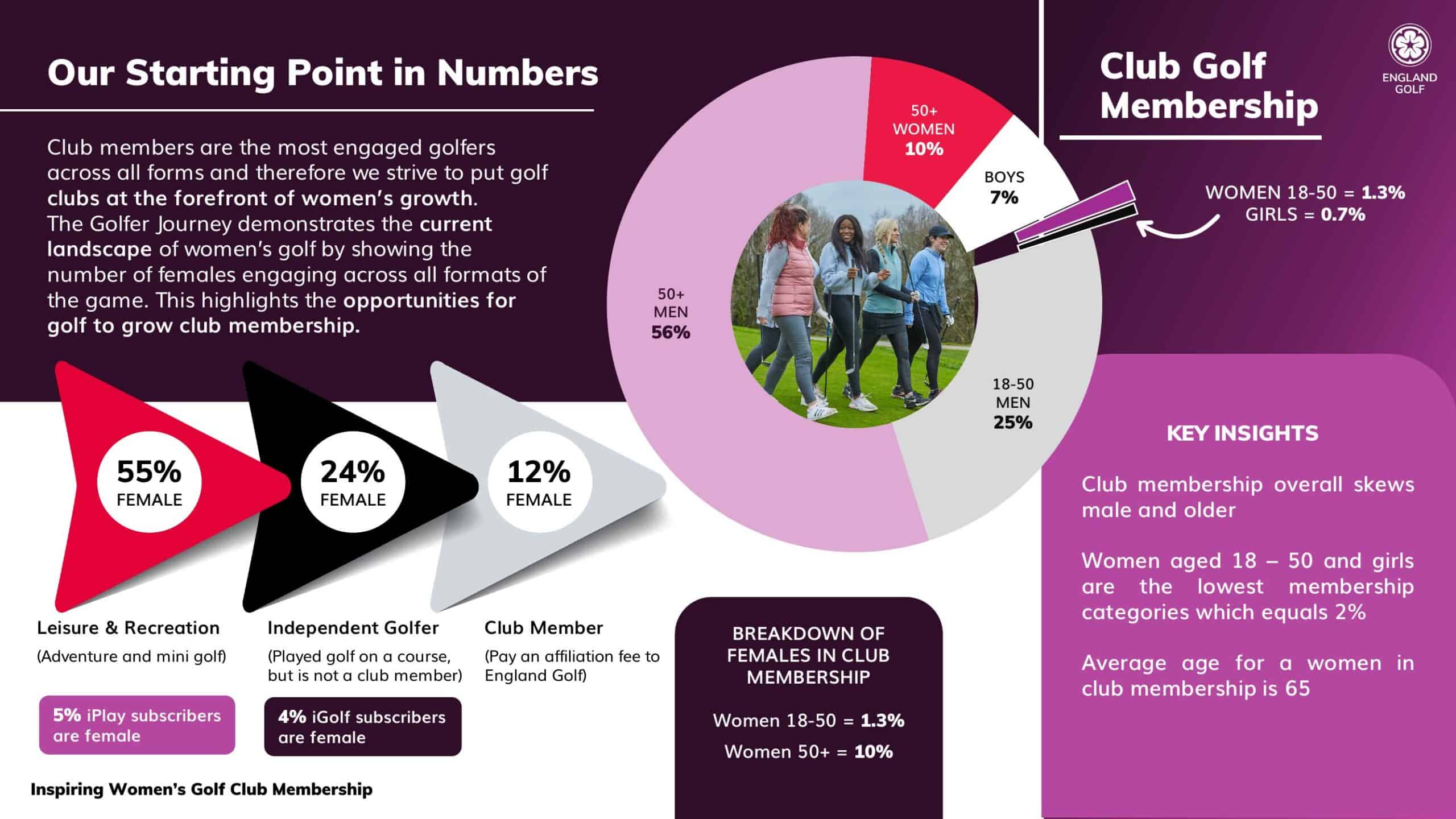
The numbers set the scene quickly. Women aged 18 to 50 make up just 1.3% of England Golf club membership. Girls are 0.7%. The average age of a female club member is 65. Meanwhile, 55% of leisure and recreational golfers — the people playing adventure golf, footgolf and driving ranges — are women. The pipeline is there. Clubs just aren’t converting it.
The Gap Between What Women Want and What Clubs Offer
The workshop presented a clear mismatch. Women — particularly those under 50 — are saying they want flexibility, value for money, a welcoming environment and something that doesn’t demand 18 holes and a handicap card every time they turn up. Clubs, by and large, are still offering exactly that.
The pull towards competition and formal formats works for the members clubs already have. It doesn’t work for the women they’re trying to attract.
What the Research Shows Works
England Golf pointed to Denmark and Norway as useful benchmarks. Denmark has 36% female golfers and brings new members in at an average age of 43. Norway’s new members average 32. Both countries have a strong culture of nine-hole golf at club and competition level — a format that fits around work, family and the reality of modern life in a way that an 18-hole medal simply doesn’t.
The workshop was clear that shorter formats, flexible membership, coaching groups and a social entry point are the practical tools that actually move the dial. Not as a replacement for traditional club golf, but alongside it.
The Culture Question
Getting the product right is only half the picture. Clubs need whole-club support for any women’s growth strategy to stick — board and management buy-in, the plan written into club strategy, and enough people behind it that it doesn’t collapse when one enthusiastic captain moves on.
England Golf also flagged the importance of the Women in Golf Charter and the EDI framework as foundations clubs should already have in place — not as box-ticking, but as genuine evidence that the environment is ready before any marketing begins.
The Bigger Picture
The workshop’s ambition is to see more women under 50 in club membership by 2030, with a phased approach from building buy-in, through challenging traditional models, to embedding sustainable growth. It’s a five-phase plan that asks clubs to be honest about who they are, who they’re trying to reach, and whether those two things are currently aligned.
As a women golfer, and someone who has spent thirty years writing about this sport, the workshop felt like a genuine shift in how England Golf is approaching the problem — less policy, more practicality. The question now is whether clubs are ready to act on it.