

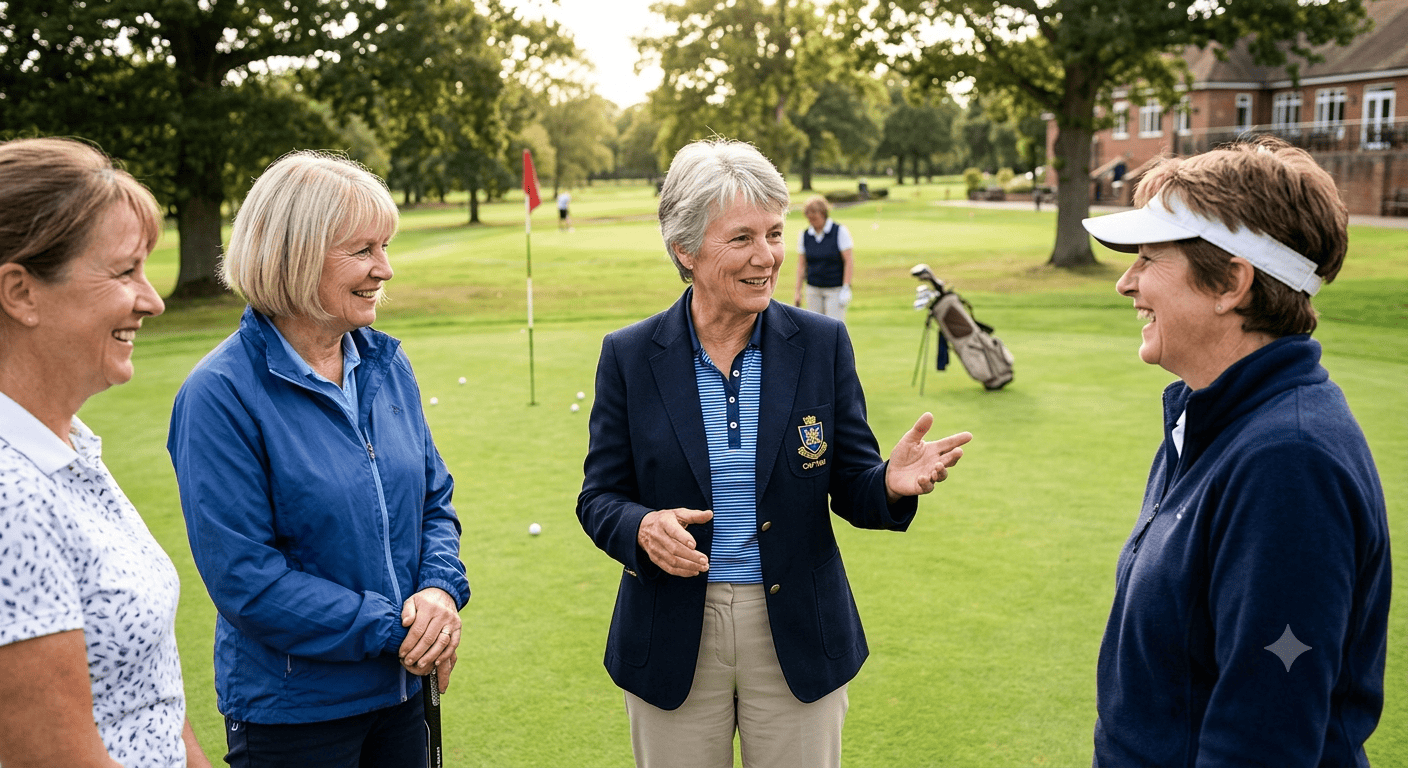
The role is evolving, the membership is changing, and yes, some clubs have already dropped the L-word. So what are we holding onto, and why does it still matter?
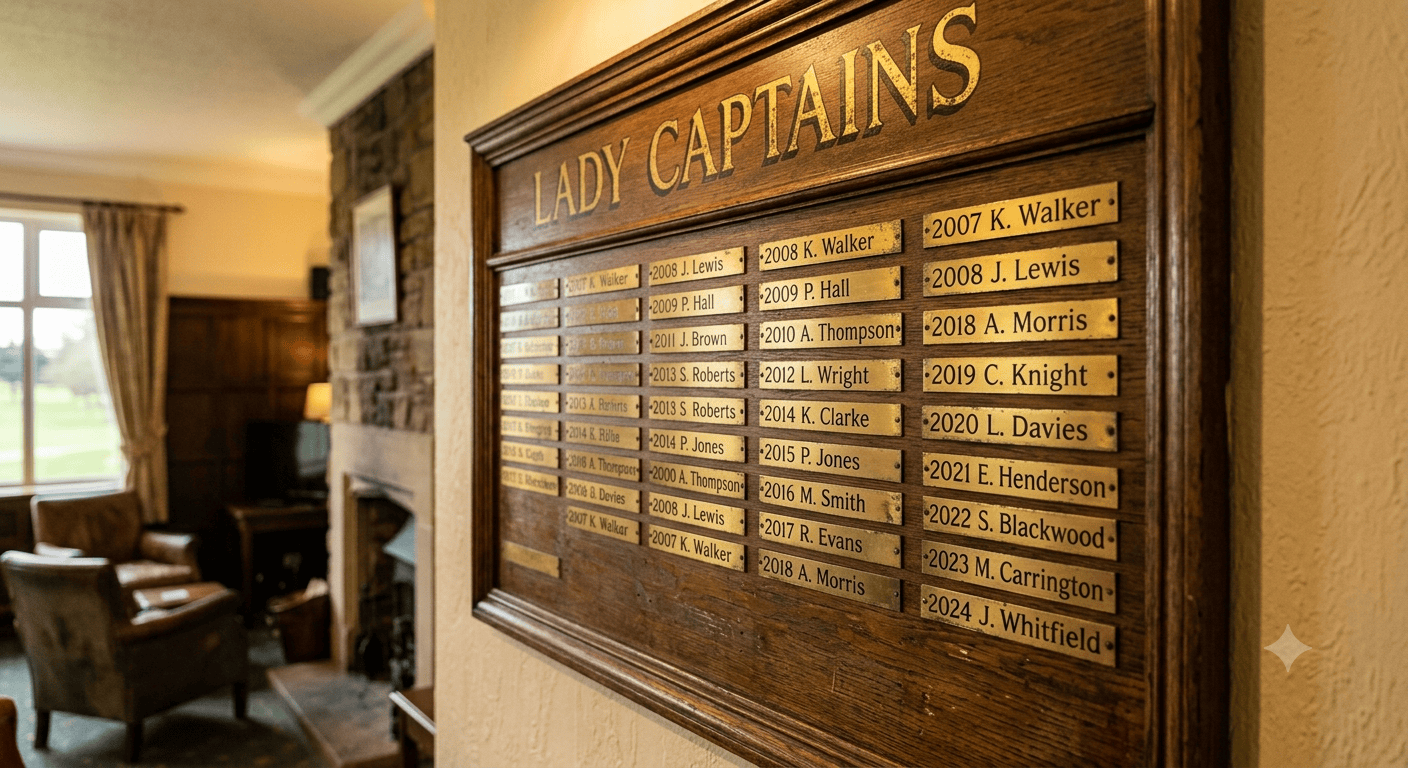
Walk into most traditional golf clubs and you’ll find a board of honour somewhere near the entrance. Photographs going back decades. Names in gold lettering. Lady Captains, year after year, marking out the history of women’s golf at that club in a way nothing else quite does.
It’s a role with real weight. At its best, the Lady Captain holds a women’s section together: recruiting new members, running competitions, organising matches, building the social calendar, welcoming newcomers and keeping experienced golfers engaged. She is, in many clubs, the visible face of women’s golf. The person everything runs through.
Which raises an obvious question. Is that actually one job? And if it is, what kind of person does it take to do it well?

The Gulf Nobody Talks About
The women walking through the doors of golf clubs today are not a single group with shared expectations. On one side, there is the golfer who wants everything the traditional game offers: a handicap, competitions, club matches, rules quizzes, the full structure of the sport as it has always been played.
On the other, there are women who have come to golf for something else entirely. Fresh air, exercise, company, a reason to get out on a Tuesday morning. They may have a 54 handicap and no particular desire to reduce it. Competitions don’t interest them. Matches feel like pressure. They just want to enjoy their golf, on their own terms, at their own pace.
Both groups are valid. Both belong. But bridging that gulf is a significant ask, and in most clubs, that ask lands squarely on one person.
How does a Lady Captain serve both? Does she try to? Or does the role, by its nature and its history, sit more naturally on one side of that divide than the other? And what does it actually take to hold those two very different groups together: patience, diplomacy, creativity, sheer force of personality? All of the above, probably. But is any of that being talked about when a club is looking for its next captain?
Honour or Chore?
Recruiting members. Running the section. Managing the fixture card. Building community across a membership that may not want the same things from the game. Navigating club politics. Acting as a bridge between golfers with completely different relationships to the sport.
It is a great deal to carry. And there is a reasonable question about whether what was once considered a significant honour has now become something closer to a chore.
The evidence is hard to ignore. Clubs going back to the same women a second time, a third time, because nobody else has put their hand up. Sections restructuring around committees because the pool of willing candidates has dried up. In some clubs, the role is being filled by women just a year or two into the game, enthusiastic and willing, but still finding their feet in a role that carries considerable expectation. Is that sustainable? And what does it say about how the role is being perceived by the next generation of club golfers?
None of this is a criticism of the women stepping up. Quite the opposite. But it does suggest that the role, as currently framed, may be carrying more than one person can reasonably hold, and that clubs may need to think harder about what they are actually asking for, and what they are offering in return.
And Then There’s the Name
Before we even get to the structure, there is the title itself. Lady Captain. For some clubs it remains exactly right: part of the tradition, part of the identity, not up for debate. For others the word Lady has started to feel like a conversation of its own. Some clubs have already moved to Women’s Captain. Others are somewhere in the middle, uncertain which way to go and wary of the reaction either way.
Whatever your view on the language, the fact that the title alone can generate debate tells you something about where the role sits right now. It carries history, identity and, for some, a fair amount of baggage. Is it worth having that conversation at your club, or does opening it create more problems than it solves?
What Makes a Good One?
Here is something that rarely gets discussed openly. The Lady Captain can be transformative. She can change the culture of a women’s section, bring people together who might otherwise drift apart, and leave the club in genuinely better shape than she found it. But the reverse is also true. A captain who, for whatever reason, isn’t the right fit can entrench divisions, make certain members feel invisible, and cast a shadow that takes years to shift.
So what actually makes a good Lady Captain? Is it golf knowledge, organisational ability, people skills, political instincts? Is it the capacity to make a nervous newcomer feel as welcome as a scratch golfer who has been a member for twenty years? Is diplomacy a skill that can be learned, or do you either have it or you don’t? And are clubs doing anything at all to prepare the women they ask to take on the role, or is it still largely a case of here’s the badge, good luck?
These are not comfortable questions. But they are worth asking.
So Where Does This Go?
There are no easy answers here, and that is rather the point. The right model for one club will not work for another. What matters is whether clubs are genuinely asking the questions about what the role is for, who it serves, what it demands of the person holding it, and whether the way it has always been done is still the way it needs to be.
The best people to work any of this out are not governing bodies or consultants. They are Lady Captains themselves: the women living the role, navigating the gulf, carrying the weight, and working it out largely on their own.
We think that needs to change. Not with a manual or a masterclass, but with a conversation. It’s a conversation we will be having on our website and across our app. What’s working at your club. What isn’t. How others are handling the new versus traditional divide. Whether the title even matters. What good captaincy actually looks like in 2026, and whether anyone is thinking seriously about 2030.
This piece is just the start. The conversation, we think, will be much longer.
Read More: Golf runs on goodwill. What happens when it runs out?


