

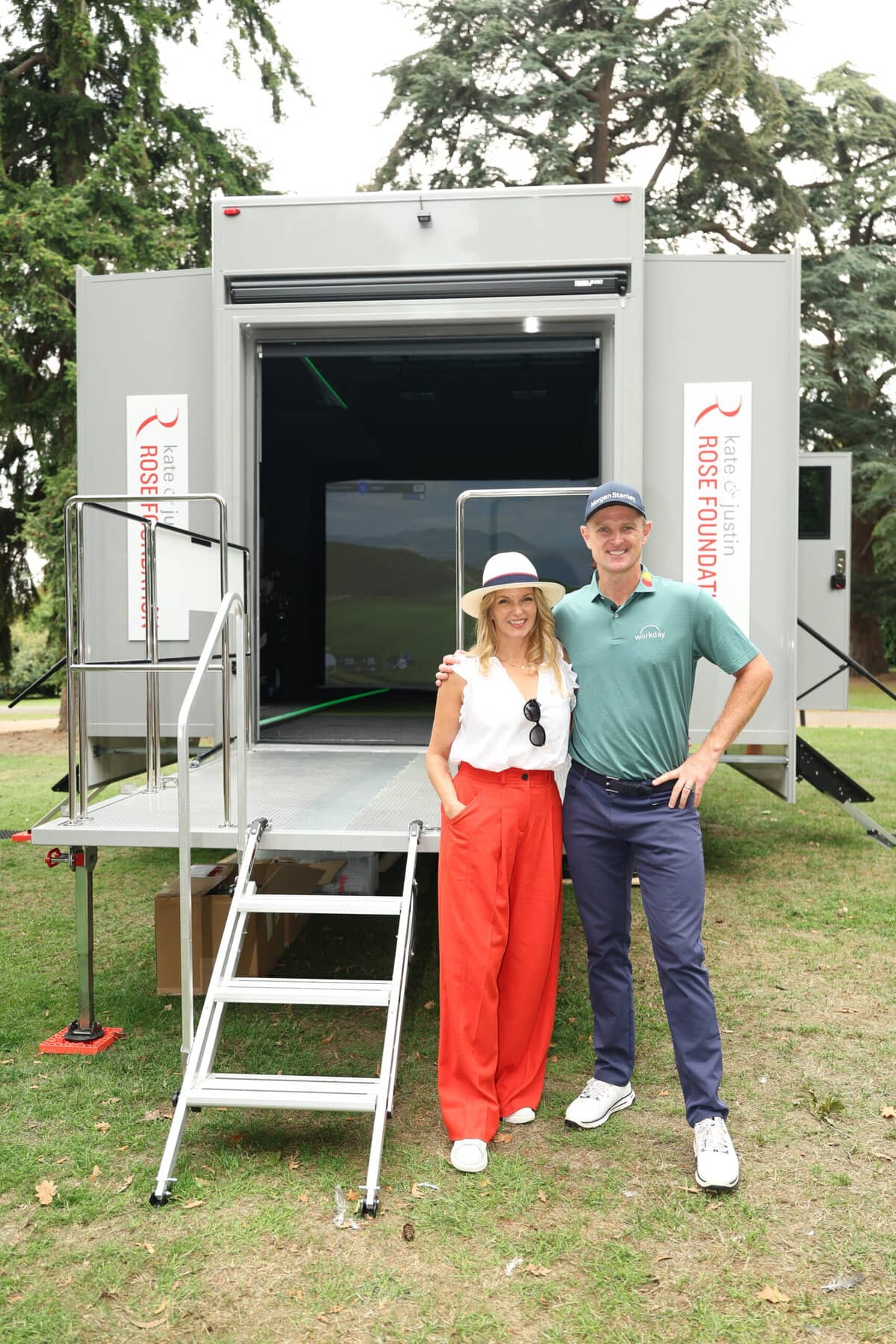
As the Kate and Justin Rose Foundation marks a strong start to 2026, Chair of Trustees Kate Rose talks to Women & Golf about Dryvebox, EDGA’s Project 250, adaptive golf with Sport for All UK and Koalaa, and why removing barriers to the game matters most for the girls who might otherwise never pick up a club.
The Kate and Justin Rose Foundation has made a strong start to 2026, backing a run of initiatives designed to bring golf to young people- particularly girls -who might never otherwise get the chance to try it.
Through Dryvebox, the Foundation delivers golf directly into schools: PGA professionals, equipment and coaching on-site, no club membership or green fees required. Alongside that, EDGA’s Project 250 is building structured pathways into the game for young people with disabilities and additional needs.
One of the most striking examples sits within the Foundation’s partnership with Sport for All UK and Koalaa, where children with limb difference are introduced to golf using adaptive prosthetic technology. Among the stories to emerge is one of a young girl whose confidence grew so visibly through golf that she inspired her own mother to take up the game alongside her – the kind of result Kate Rose sees as proof a programme is working.
These projects sit within a wider mission: making golf more inclusive, accessible and relevant to the next generation of girls and women. Since 2020, Kate and Justin have also backed the Rose Ladies Series, and the Foundation now runs a bursary supporting young women building careers in the industry.
Women & Golf sat down with Kate to talk about what’s working, what isn’t quite yet, and what an inclusive golf landscape should look like a decade from now.
Using golf as a vehicle for opportunity
Women & Golf: The Foundation is supporting some quite different initiatives — Dryvebox, EDGA, Sport for All UK and Koalaa. What connects them, and how did you and Justin come to focus on this corner of the game?
Kate Rose: For us, it all comes back to a very simple belief: using golf as a vehicle to drive opportunity.
Golf has given us so much over the years, both on and off the course, and we feel an acute responsibility to provide those opportunities to children here in the UK- particularly those who might never otherwise get the chance. What connects Dryvebox in schools, EDGA’s work with disabled young people, and the Koalaa prosthetics is that shared goal: using golf to engage children who might otherwise be left out or without a sense of purpose, particularly disabled young people, children facing disadvantage, or behavioural challenges.

We want every child, no matter their background or ability, to know what it feels like to pick up a club for the first time and to experience the wider benefits: confidence, connection, enjoyment, a sense of belonging. It’s not about one single programme or pathway, it’s about breaking down barriers in lots of different ways.
Has golf turned a corner for girls?
Women & Golf: Golf has a well-documented problem attracting girls and keeping them in the sport. Has the game genuinely turned a corner or is there still some way to go?
Kate Rose: I think we’re seeing real progress, but it’s too early to say the job is done.
There’s been a positive shift in recent years, with much more focus on creating welcoming opportunities for girls, alongside greater visibility of female role models-and that’s starting to make a real difference in how girls are first introduced to the game. We’ve seen this first-hand through players like Lottie Woad and Mimi Rhodes, who we met as finalists in the Justin Rose Telegraph Junior Golf Championship and have since supported through the Rose Ladies Series. Watching their journeys develop has been incredibly fulfilling.
Role models matter enormously. Someone like Charlie Hull brings an honest, relatable presence on social media, showing both the highs and challenges of professional golf. And Liz Young-a big inspiration behind the Rose Ladies Series- shows how the game is evolving, returning to professional golf after having children and proving women don’t have to choose between a sporting career and motherhood.
That said, key challenges remain around access, perception and, crucially, retention. Getting girls to try golf is one thing, keeping them involved as they grow older is another. So yes, the direction is positive, but there’s still work to do to turn that momentum into lasting change.
The ripple effect
Women & Golf: We’ve heard about a young girl with limb difference who came into golf through Koalaa and ended up inspiring her mum to start playing too. What does that ripple effect mean to you?
Kate Rose: It means everything, because that’s when you know the impact goes far beyond the individual.
Through our partnership with Sport For All UK -providing Koalaa prosthetics and golf tools- the goal is simply to remove a real barrier and give children with limb difference the chance to experience golf. Seeing a young girl take up the game and then inspire her mum to start playing too shows how meaningful that first introduction can be. Golf becomes something shared; social, inclusive, part of family life.

It’s almost a butterfly effect. Those unexpected, positive moments you couldn’t have fully anticipated at the outset. Ultimately, it’s not just about participation numbers. It’s about changing perceptions, building confidence, and creating genuine connections and when that happens naturally, you know a programme is creating something sustainable for the future.
From school hall to golf club
Women & Golf: Dryvebox removes so many traditional barriers in one go. No membership, no green fees, a PGA professional straight to the school. Is that the way forward, or do young people eventually need a proper club environment to progress?
Kate Rose: Having golf made easy and delivered to children at school tackles so many traditional barriers in one go. For many, that first positive introduction simply wouldn’t happen otherwise.
That said, I don’t see it as replacing the club environment. It’s more about creating an initial bridge into it. We don’t want our projects to introduce children to the sport only to leave them unable to access it long-term, so together with each project we build pathways for young people to continue their journey. The real success comes when that initial spark translates into longer-term participation.
Two ends of the same pipeline
Women & Golf: Women & Golf has followed the Rose Series closely since the early days. How does that connect to the Foundation’s grassroots work?
Kate Rose: I do see them as two ends of the same pipeline, rooted in very similar principles.
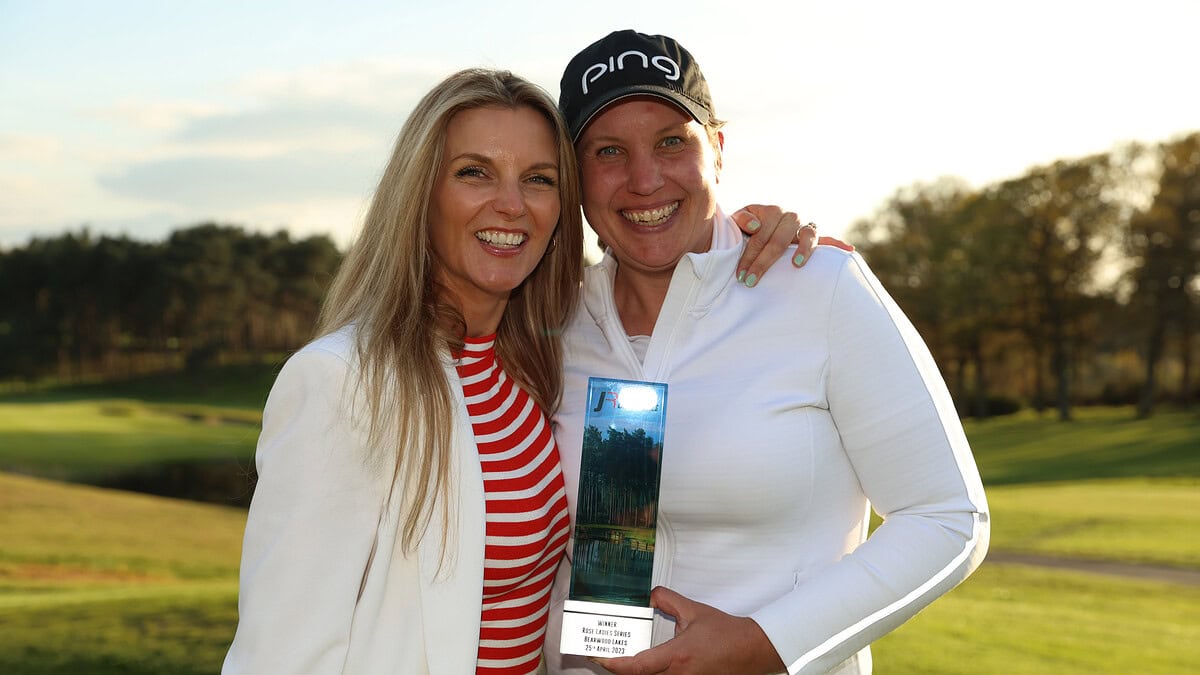
The Rose Ladies Series gives professionals and top amateurs more opportunities to compete, earn and be seen, at a time when those opportunities were limited. The Foundation’s work sits at the other end of that journey: grassroots, introducing children to golf, breaking down the barriers that might stop them picking up a club in the first place. What connects the two is creating opportunity at every stage. A positive first experience, and a visible, aspirational pathway at the top.
Justin, family, and what really drives her
Women & Golf: Justin’s profile clearly opens doors most foundations couldn’t. How involved is he day-to-day -and has having a family shaped what the Foundation is trying to achieve?
Kate Rose: Justin’s profile undoubtedly opens doors for us, and we’re incredibly fortunate in that respect. Beyond that, he’s genuinely invested. Hands-on in the decision-making, always asking the right questions, hugely supportive of the direction we’re taking.
That said, in my role I shape strategy, working with the Trustees and wider team to structure and deliver our projects. It’s a shared vision, with clear roles that let us move things forward consistently.
Having a family has sharpened our focus to providing access, opportunity, confidence, positive first experiences. But honestly, what really drives me is my own experience. Even after 30 years in golf, I can still find certain environments intimidating. A sport with a lot of rules and unspoken expectations can feel daunting if you don’t know how it all works. Golf hasn’t always been as accessible for women or juniors as it is today, and that’s where our focus lies.
A ten-year vision
Women & Golf: Looking ten years ahead, what would a genuinely inclusive golf landscape look like and how would you measure the Foundation’s part in getting there?
Kate Rose: A genuinely inclusive golf landscape would feel open and accessible at every level. Far more diversity in who’s playing, across gender, background and ability, and with those players feeling a real sense of belonging.
Entry points would be flexible and visible, through schools, community programmes or clubs, with clear pathways for anyone who wants to progress. It would be about more than playing the game itself. Golf builds confidence, social skills and wellbeing, all the more valuable when screen time dominates so much of children’s lives, and it naturally teaches consideration for others, respect for rules and emotional control.
So for me, success isn’t just about participation numbers. It’s about retention, confidence and representation. For the Foundation, that means knowing we’ve removed early barriers and made that first experience of golf a positive one for thousands of children. If more young people are starting with confidence and benefitting from everything the game offers, we know we’ve played a meaningful part in shaping a more inclusive future.
Read more about the Kate & Justin Rose Foundation Golf Bursary


