


Standing on a tight, tree-lined tee and wondering if there’s a better option than your driver? There might be. This guide explains what a mini driver actually is, when it earns its place in the bag, and what to look for whether you’re an Established Golfer, an Improver, or play off a single-figure handicap.
If you’ve been hearing a lot about mini drivers lately and wondered whether they’re a genuine option or just the latest thing the equipment industry is excited about, you’re not alone. The category has grown quickly, the marketing claims are bold, and it can be hard to work out whether this is a club that could genuinely help your game — or one that sounds more useful than it is.
This guide will tell you what a mini driver does, how it sits alongside your driver and your fairway wood, and whether it deserves a place in your bag. We won’t tell you which one to buy — that’s what our product reviews are for. What we will do is give you the knowledge to go into a fitting and ask the right questions.
The Decisions That Matter
What Is a Mini Driver?
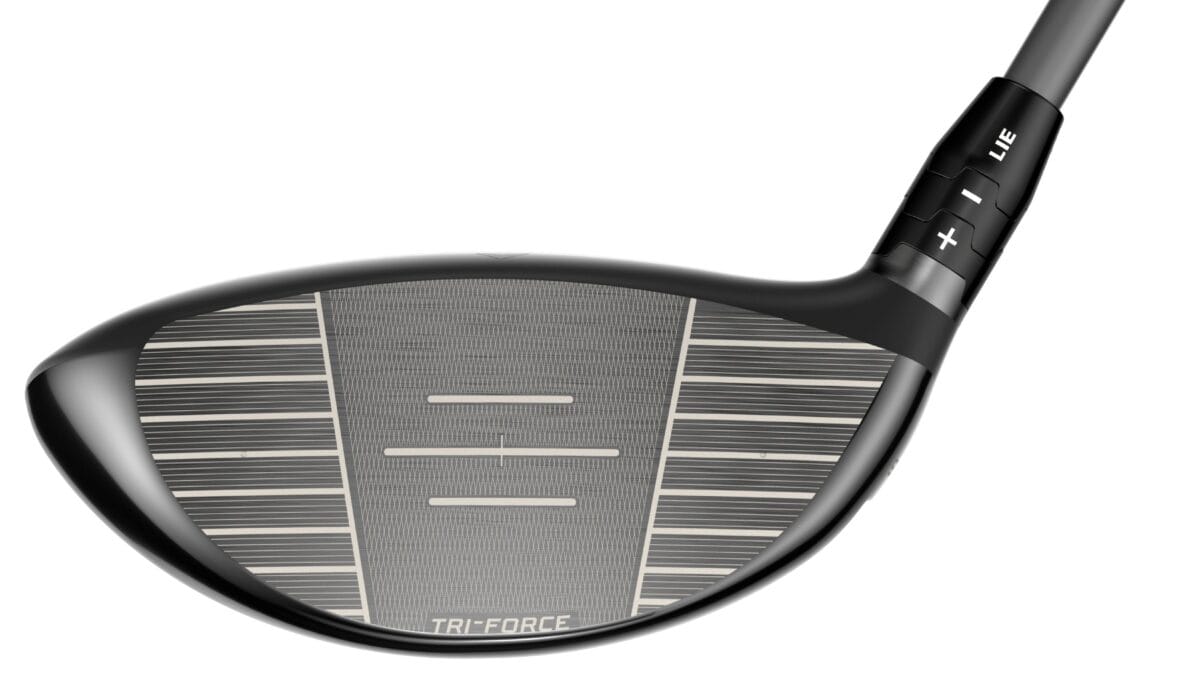
A mini driver sits in the gap between a standard driver and a fairway wood. The head is smaller than a conventional driver — usually between 200cc and 300cc, compared to the 460cc maximum you’ll find on most drivers — but larger and deeper than a fairway wood. It’s typically lofted between 11 and 14 degrees, and while it’s primarily designed to be hit off the tee, many models can also be played off the fairway or from a light rough lie.
The compact head changes how the club behaves. Because the centre of gravity — the point inside the clubhead that influences how the ball launches and how much it spins — can be positioned differently to a large driver head, mini drivers tend to produce a lower, more penetrating ball flight. They’re also often built on a shorter shaft than a standard driver, which is one reason many women find them easier to control.

The Fairway-Finder Concept: What It Means in Practice
You’ll hear mini drivers described as fairway-finders, and it’s a useful way of thinking about them. The idea is straightforward: on tight or technical driving holes, a mini driver gives you something more controllable than a full driver without the distance sacrifice of dropping down to a fairway wood off the tee.
For women golfers specifically, this framing is worth taking seriously. Many women already use a fairway wood or hybrid off the tee on certain holes because their driver feels hard to keep in play — and a fairway wood, while accurate, doesn’t always produce enough distance to be useful on longer par fours. A mini driver can sit in that gap: more control than a driver, more distance than a fairway wood off the tee, and — on the right models — versatile enough to use from the deck as well.
Mini Driver vs Fairway Wood: Is There a Real Difference?
A 3-wood and a mini driver can look similar at a glance, but they’re built for different jobs. A fairway wood has a shallow face and a sole designed to slide through the turf, making it as useful from the fairway as from the tee. A mini driver has a deeper face and a larger, more stable head — it’s built primarily for the tee, though many models handle the fairway well too.
The practical test is this: if you already love your 3-wood off the tee and it’s giving you the distance you need, a mini driver may simply duplicate what you’ve already got. Where a mini driver earns its place is when your 3-wood off the tee leaves you consistently too far from the green on longer holes — but your driver is costing you too many penalty shots.
Loft, Shaft, and Adjustability: What to Focus On
Most mini drivers come in lofts from around 11 to 14 degrees. A higher loft — 13 or 14 degrees — helps get the ball up and suits moderate swing speeds, which is relevant for many women golfers. Lower loft suits faster swing speeds, where the reduced spin of a mini driver produces a long, controlled flight rather than one that balloons and drops short.
Shaft length and weight matter more than many golfers realise. A shorter shaft — which mini drivers often feature compared to a standard driver — is one of the main reasons women find them easier to strike consistently. Shaft flex is equally important: Ladies (L) or Senior (A) flex suits lower swing speeds, while faster swingers may find a Regular (R) flex gives them better control. Don’t overlook shaft weight; lighter is not automatically better, and a fitter will guide you to the right combination.
Some mini drivers also feature adjustable hosels and moveable weights, which allow the loft, face angle, and ball flight to be tweaked. These are worth exploring at a fitting — but don’t let adjustability be the deciding factor. A well-fitted fixed setup will outperform a poorly fitted adjustable one.
What Matters at Your Level
The Established Golfer (handicap 10–24): Approach this one with an open mind but realistic expectations. Modern large-headed drivers are built to be forgiving, and if yours is doing a reasonable job, a mini driver’s smaller head won’t automatically improve things — it’s less forgiving on mishits, not more. That said, if you already reach for your 3-wood off the tee more often than your driver because you just can’t trust it, a well-fitted mini driver is absolutely worth trying. The key is to test it properly rather than assume the marketing applies to you.
The Improver (handicap 20–36): This is where a mini driver can make genuine sense. If your driver is the most inconsistent club in your bag and it’s costing you shots off the tee, a shorter, more controllable alternative can help you keep the ball in play while you work on your swing. The fairway-finder argument is most compelling here — if you’re trading a few yards of distance for significantly tighter dispersion (how widely your shots spread around the target), that’s a trade worth making while your game develops.
The Advanced Golfer (single figures and below): At this level, a mini driver is a genuine strategic option rather than a remedy for an inconsistent swing. If you have a fast, repeatable swing and good control of your driver, a mini driver gives you a precision tee-shot option on tighter holes or when conditions reward a lower, more controlled flight. Some advanced women golfers use one specifically on par fours where position matters more than distance. Equipment not marketed specifically at women — including some tour-spec models — is worth exploring at a fitting.
The Jargon Buster
- Centre of gravity (CG): The point inside the clubhead that influences how the ball launches and how much it spins. A lower, further-back CG helps get the ball up and reduces spin. Mini drivers position this differently to a full-sized driver, which changes the flight.
- MOI (moment of inertia): How resistant the clubhead is to twisting when you don’t hit the sweet spot. Higher MOI means mishits lose less distance and stay straighter. Large driver heads typically have higher MOI than a mini driver.
- Loft: The angle of the clubface, which determines how high the ball launches. Higher loft = higher ball flight and easier to get airborne. Mini drivers typically range from 11 to 14 degrees.
- Shaft flex: How much the shaft bends during the swing. Ladies (L) and Senior (A) flex are generally suited to slower swing speeds. Regular (R) and Stiff (S) suit faster swings. Getting this right is one of the most important fitting decisions.
- Dispersion: How widely your shots spread around a target. A tighter dispersion means more consistent direction. It’s one of the most useful numbers to focus on at a fitting — often more telling than distance.
- Adjustable hosel: A mechanism on the clubhead that allows the loft and sometimes the face angle to be changed. Useful for fine-tuning ball flight after a fitting.
- Step sole: A sole design feature on some mini drivers that helps the club interact cleanly with the turf, making it easier to hit from the fairway as well as off the tee.
Before You Buy

The honest truth about mini drivers is that they divide opinion. Some women golfers try one and wonder how they managed without it; others hit a few balls, compare the numbers against their 3-wood, and put it back on the rack. The only way to find out which camp you’ll fall into is to try one on a launch monitor, comparing it directly against both your current driver and your fairway wood off the tee.
When you go for a fitting, ask to see three specific numbers: ball speed, spin rate, and dispersion. These will tell you whether the mini driver is genuinely performing better for your swing — or whether it’s just a different shape producing the same result. Don’t let how the club looks at address make the decision for you; the data should lead.
One practical point: most mini drivers from major manufacturers conform to R&A and USGA rules, but if you play in competitions it’s always worth confirming the specific model is on the conforming list before you put it in the bag.
About This Guide
This is a Women & Golf Foundation Buying Guide. We don’t rank products or accept payment for editorial recommendations. We may earn commission from affiliate purchases, but this never influences our coverage. Our job is to give you the insight and context to make the right choice for your game.
View at Callaway – Link – View at Scottsdale Golf – Link – View at Affordable Golf – Link


