


Joining a golf club is one thing. Getting the most out of it is another. Here’s how to make sure your first year delivers everything you hoped for.
The first year of club membership is the most important one. The habits you form, the connections you make, and the way you engage with the club in those first twelve months will shape your experience for years to come. Get it right and membership becomes one of the best investments you make in your golf and your social life. Drift through it passively and you’ll reach the renewal date wondering whether it was worth it.It doesn’t take a lot. It takes knowing what to do and doing it early.
Get your handicap first
Before anything else, get your World Handicap System handicap registered. Without it you cannot enter club competitions, cannot track your progress in any meaningful way, and cannot fully participate in the structures that make club golf worthwhile. It is also the single most useful piece of information about your game that you can have.
Most clubs will guide new members through the handicap registration process — ask at the pro shop or contact the club secretary if it isn’t immediately clear. You’ll need to submit a number of qualifying scores, which your club will specify. The sooner you start, the sooner you have a number to work with.
If you’re new to golf entirely, your club may have a specific pathway for getting beginners onto the handicap system. Ask about it on day one.
Understand how your club works
Every golf club has its own structures, its own rhythms, and its own way of doing things — and most of it is unwritten. The sooner you understand how yours works, the more comfortable and effective you’ll be as a member.The key things to get clear on early:
The women’s section. Introduce yourself to the ladies’ captain or a committee member as soon as you can. They are the most useful people in the club for a new woman member — they know how everything works, they can point you toward the right competitions and social events, and they are almost always delighted when new members take an active interest.
The competition calendar. Get a copy and read it. Understand which competitions are open to you, how to enter them, and when the key events of the year take place. Club competition golf has its own formats — stroke play, stableford, matchplay — and understanding them takes a little time but is worth the effort.
The general rules of the club. Dress code, booking tee times, etiquette on the course, how the pro shop works. Most of this is common sense but some of it is specific to your club. Read the members’ handbook if there is one, or simply ask.
Enter something early
This is the single most important piece of advice for a new member, and the one most often ignored. Enter a competition as soon as you are eligible to do so.
It feels daunting. You don’t know the course well enough, you don’t know the other members, you’re not sure your game is good enough. None of that matters as much as you think. Club competitions are not intimidating environments — they are the mechanism by which most club golfers meet each other and embed themselves in the life of the club. The members who enter competitions early make friends faster, improve their game more quickly, and enjoy their membership more than those who wait until they feel ready.
You will not feel ready. Enter anyway.
Use the professional
Most club members never make full use of the PGA professional attached to their club, which is one of the most consistent missed opportunities in golf. The pro is not just there to sell equipment — they are a qualified coach, a source of advice on every aspect of the game, and often the person who knows the club community better than anyone.
Book a lesson in your first month, even if your game is in reasonable shape. It establishes a relationship, gives you a baseline assessment of where your game is, and opens a door you can return to whenever you need it. Ask about group coaching sessions too — many clubs offer these as part of membership or at reduced rates, and they are a good way to meet other members at a similar stage.
If you’re thinking about new equipment, talk to the pro before you buy anywhere else. A club fitting by someone who has watched you hit balls is worth considerably more than an online purchase based on reviews.
Use the practice facilities with purpose
A practice area is only useful if you use it deliberately. Hitting balls aimlessly for twenty minutes before a round is not practice — it’s warming up, and there’s nothing wrong with that, but it won’t improve your game.
Set aside occasional practice sessions that are separate from your rounds and focused on something specific — a shot you’re working on with your coach, a weakness you’ve identified, a part of your game that costs you most during a round. Even two or three focused sessions a month will produce measurable improvement over the course of a year.
The short game area, if your club has one, is the highest-return practice facility available to most club golfers. Chipping and putting practice produces results faster than almost anything else you can work on, and it requires no equipment beyond what you already carry.
Get on your course as much as possible
There is a significant advantage available to every club golfer that is almost never discussed: knowing your home course intimately. Which holes play longer than they look, where the subtle borrows are on the greens, which pin positions are genuinely dangerous and which ones are straightforward, where the safe miss is on every approach. This knowledge accumulates through repetition and it is worth real shots over the course of a season.
In your first three months, play as many rounds on your home course as you can. Vary your tee times so you play it in different conditions and light. Walk it if you can — you notice far more than you do from a buggy. By the time the first competition season is in full swing you will have an advantage over visitors and newer members that is entirely free and entirely earned
Don’t wait to be invited
Club golf has a social infrastructure — regular groups, informal pairs and fourballs, post-round gatherings — but it is largely invisible to a new member until you find your way into it. And the way into it is not to wait for an invitation that may take a long time to come.
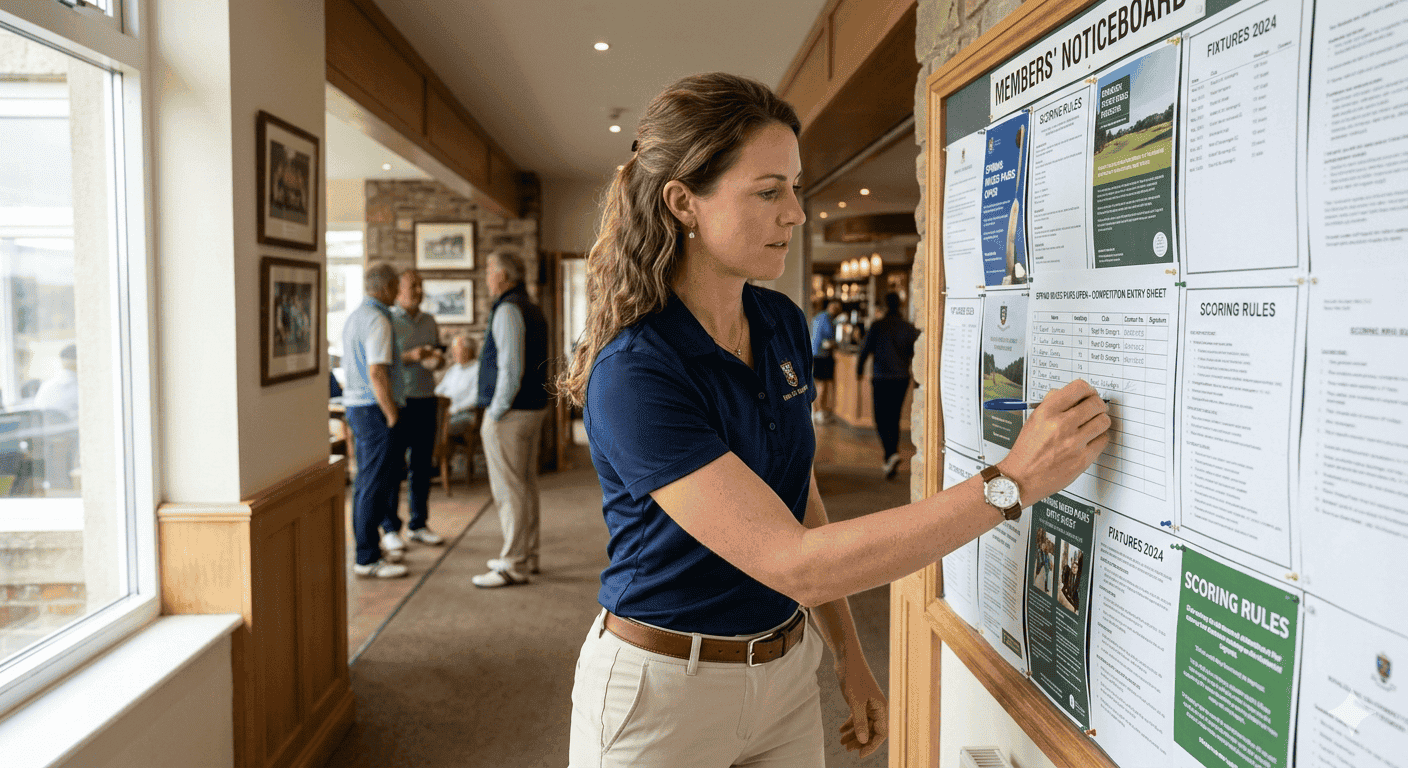
Introduce yourself to the starter. Chat to the members in the groups ahead of and behind you on the course. Stay for a drink after your round. Put your name on the noticeboard if your club has a partner-wanted system. Ask the ladies’ captain if there’s a regular women’s group you can join.
None of this requires an outgoing personality — it just requires a small amount of deliberate effort in the early weeks. The connections you make in the first three months will determine the shape of your membership for years.
What to do if it isn’t working
Sometimes, despite the best intentions on both sides, a club and a member aren’t the right fit. The course doesn’t suit your game, the culture isn’t what you hoped for, the women’s section isn’t as active as it appeared. These things happen.
If by month six you’re not enjoying it and you can’t identify a clear reason things will improve, it is worth having an honest conversation with the ladies’ captain or a committee member before you make any decisions. Problems that feel significant sometimes have straightforward solutions — a different competition format to try, a different group to play with, a misunderstanding about how something works.
But if the fit is genuinely wrong, it is better to acknowledge it and move on than to renew out of inertia and spend another year being vaguely disappointed. There are good clubs out there that will suit you well. Finding the right one is worth the effort.
Read our guide to finding the right club: How to Join a Golf Club — What to Look For and What to Avoid
Next: How to Get Into the Social Side of Golf If You Don’t Know Anyone


