

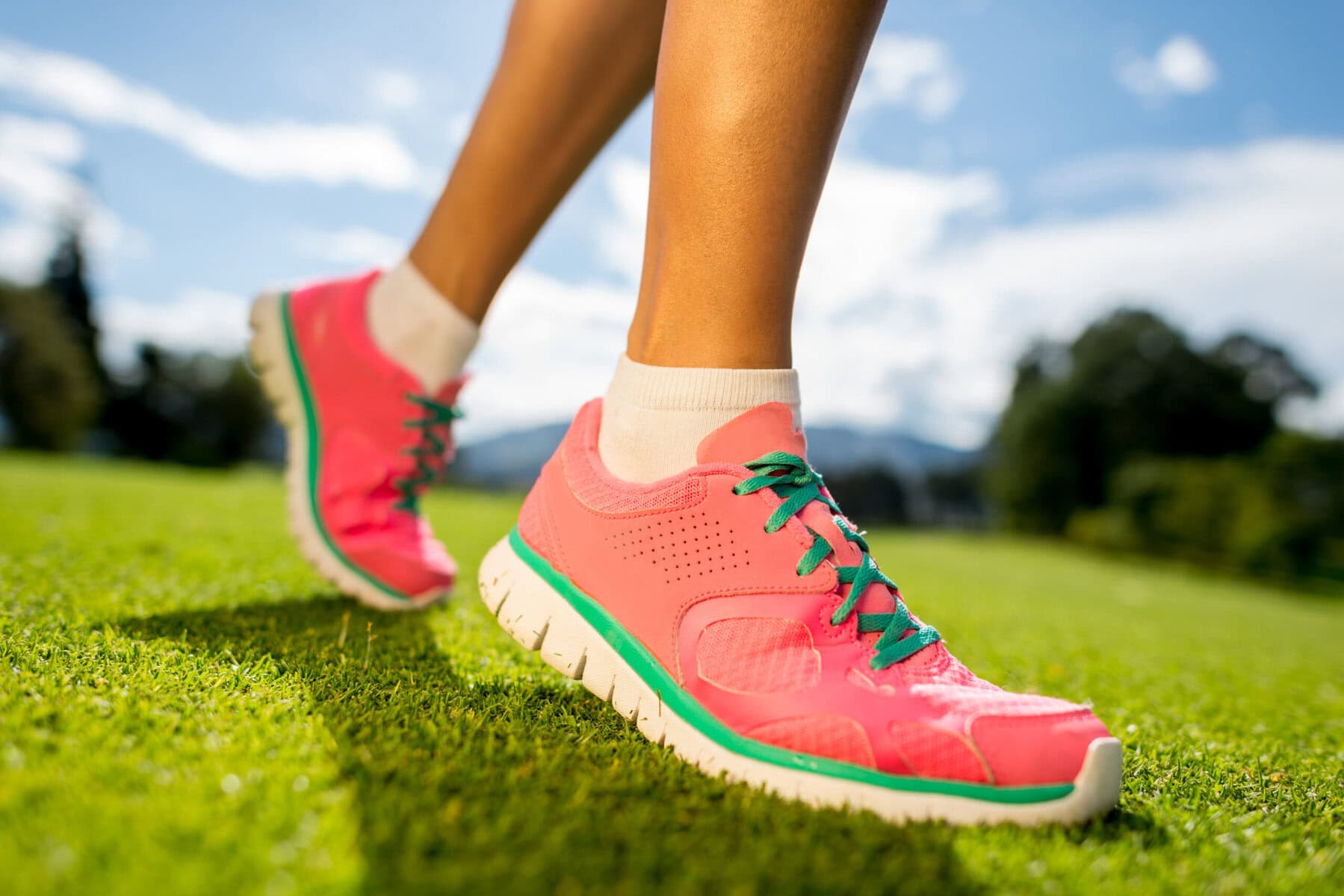
Fit, waterproofing, spiked or spikeless, cushioning that lasts a full round — golf shoes get less attention than they should and cause more problems than most. Before you spend £60 or £200, here’s what actually separates a good pair from a bad one.
Of all the equipment decisions in golf, shoes tend to get the least attention and cause the most problems. A driver that does not suit you will cost you distance. A pair of golf shoes that do not fit correctly, let water in on a wet morning or leave you with aching feet by the 15th hole will affect every single round you play in them. The right pair of shoes is worth spending time and money on.
Why Golf Shoes Matter
Golf involves walking three to five miles over varied terrain, often on wet grass, sometimes on uneven ground, for four or more hours. Your feet are the foundation of your stance and your swing. A shoe that does not support the foot correctly through the hip rotation of a golf swing, or that allows your foot to slide inside the shoe during the downswing, will affect your ball striking as well as your comfort.
Beyond performance, comfort is simply a practical issue. Feet that hurt make a round miserable, and feet that are wet and cold make it worse. In the UK, where courses are often damp underfoot for much of the year, choosing the wrong shoes is a mistake that will remind you of itself on every round from October to May.
The Waterproofing Question
For UK golfers, waterproofing is not a luxury — it is a baseline requirement for most of the year. Even on a day when it does not rain, morning dew on fairways and rough will soak through a non-waterproof shoe within the first few holes. Once your feet are wet, they stay wet for the rest of the round.
There are two main approaches to waterproofing in golf shoes. The first is a waterproof membrane built into the shoe construction — GORE-TEX is the most widely recognised, used by brands including ECCO Golf. A membrane shoe keeps water out effectively while allowing some breathability, and a good membrane shoe will carry a manufacturer’s waterproof guarantee, typically one or two years.
The second approach is a waterproof-treated upper — leather or synthetic — without a separate membrane. These can be effective but tend to become less reliable over time as the treatment wears.
If you play year-round in the UK, a shoe with a proper waterproof construction is worth the extra cost. If you play primarily in summer or abroad, a non-waterproof or water-resistant shoe may serve you well enough and will often be lighter and more breathable on warm days.
Spiked or Spikeless?
The spiked versus spikeless debate is largely a matter of where and when you play, and what you value most.
Spiked shoes — meaning soft spike, not metal; metal spikes are largely obsolete on modern courses — offer better grip in wet conditions and on steep slopes. The soft spikes bite into soft ground and hold your foot firmly through the swing, which matters particularly in the downswing where ground reaction force is significant. For links courses, wet parkland and winter golf, spiked shoes are the more secure choice.
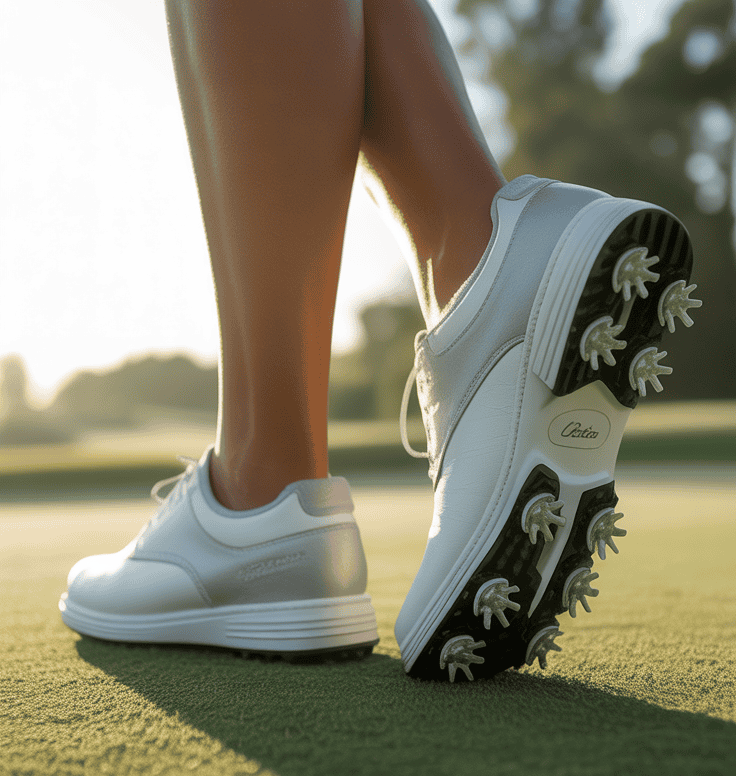
Spikeless shoes use a moulded traction pattern on the sole rather than removable spikes. They are lighter, more comfortable for walking, easier to wear on and off the course without changing, and have improved significantly in grip performance over the past decade. On firm, dry ground they perform comparably to spiked shoes. On soft, wet or slippery ground, most spikeless shoes offer less traction than a properly spiked equivalent.
For a golfer who plays on a range of courses and conditions, owning one of each is not an unreasonable position. For one pair only, the UK conditions argument tends to favour a waterproof spiked shoe as the more versatile all-season choice.
Fit: The Part Most People Get Wrong
Golf shoes are sized in standard UK or EU sizing, but the fit experience varies significantly between brands and lasts. The ‘last’ is the foot-shaped form the shoe is built around, and it determines the width, the toe box shape and the arch position. Two shoes in the same size from different brands can feel completely different on the same foot.
Width is the most common fit issue for women. Standard women’s golf shoes are built on a medium-width last, which does not accommodate wider feet, bunions or a broad forefoot. If you find that your toes feel compressed across the front of the shoe, or that the shoe pinches at the widest point of your foot, the shoe is too narrow rather than the wrong size. Some brands offer wide-fit options — check before buying, particularly online.
Toe box depth is a separate consideration from width. Women with high insteps, hammer toes or conditions such as Morton’s neuroma need a shoe with sufficient depth in the toe box to avoid pressure on the top of the foot. This is not always visible from a product image and is best assessed by trying the shoe in person where possible.
ECCO Golf is widely regarded for its anatomical fit and comfortable last — the brand brings considerable footwear expertise to golf shoe construction and is worth trying if standard golf shoe lasts have not worked for you. FootJoy, as the market-leading golf shoe brand, offers the widest range of fits and widths and is worth considering if fit has historically been a difficulty.

Comfort Over the Full Round
A golf shoe that feels comfortable for the first nine holes and increasingly painful over the back nine is the wrong shoe, regardless of how it looks or what it costs. Comfort over a full round requires adequate cushioning underfoot, a supportive midsole that does not compress flat by the 14th hole, and a fit that stays stable without your foot moving inside the shoe as you tire.
Cushioning technology has improved across all shoe categories and golf is no exception. Brands that bring dedicated footwear expertise to golf — ECCO, New Balance and FootJoy among them — tend to perform well on cushioning and support because comfort over long distances is core to their wider product development. A running or walking shoe brand’s understanding of sustained foot comfort translates well to the golf course.
If you have existing foot conditions — plantar fasciitis, flat feet, overpronation or supination — it is worth knowing whether your golf shoe accommodates or conflicts with those. Removable insoles allow you to use custom orthotics if you need them. Check before buying that the insole is removable if this applies to you.
What to Spend
Golf shoes span a wide price range. At the lower end, you can buy a functional waterproof shoe for around £60 to £80. At the premium end, technically advanced shoes from brands like ECCO Golf sit at £150 to £200 and above.
The middle of the range — £90 to £140 — covers a wide selection of well-made, properly waterproofed shoes from established brands. For most women golfers, this is where the best value sits. Spending more tends to buy better materials, improved comfort technology and greater longevity rather than fundamentally better waterproofing or grip.
One pair of good-quality golf shoes, cared for properly, will last several seasons. Remove them from your bag after a wet round, allow them to dry naturally rather than in front of a heat source, and treat leather uppers periodically with a suitable conditioner. Replacing spikes when they wear down — a simple task with a spike tool — extends the useful life of a spiked shoe considerably.
The right golf shoe is the one that fits your foot correctly, suits the conditions you play in most often and keeps you comfortable for the full round.
Browse the footwear brands in the Women & Golf Fashion Directory — we carry ECCO Golf, FootJoy, Adidas Golf, New Balance Golf and Duca Del Cosma.
Browse women’s golf footwear in the Women & Golf Fashion Directory: Fashion – Shoes


