

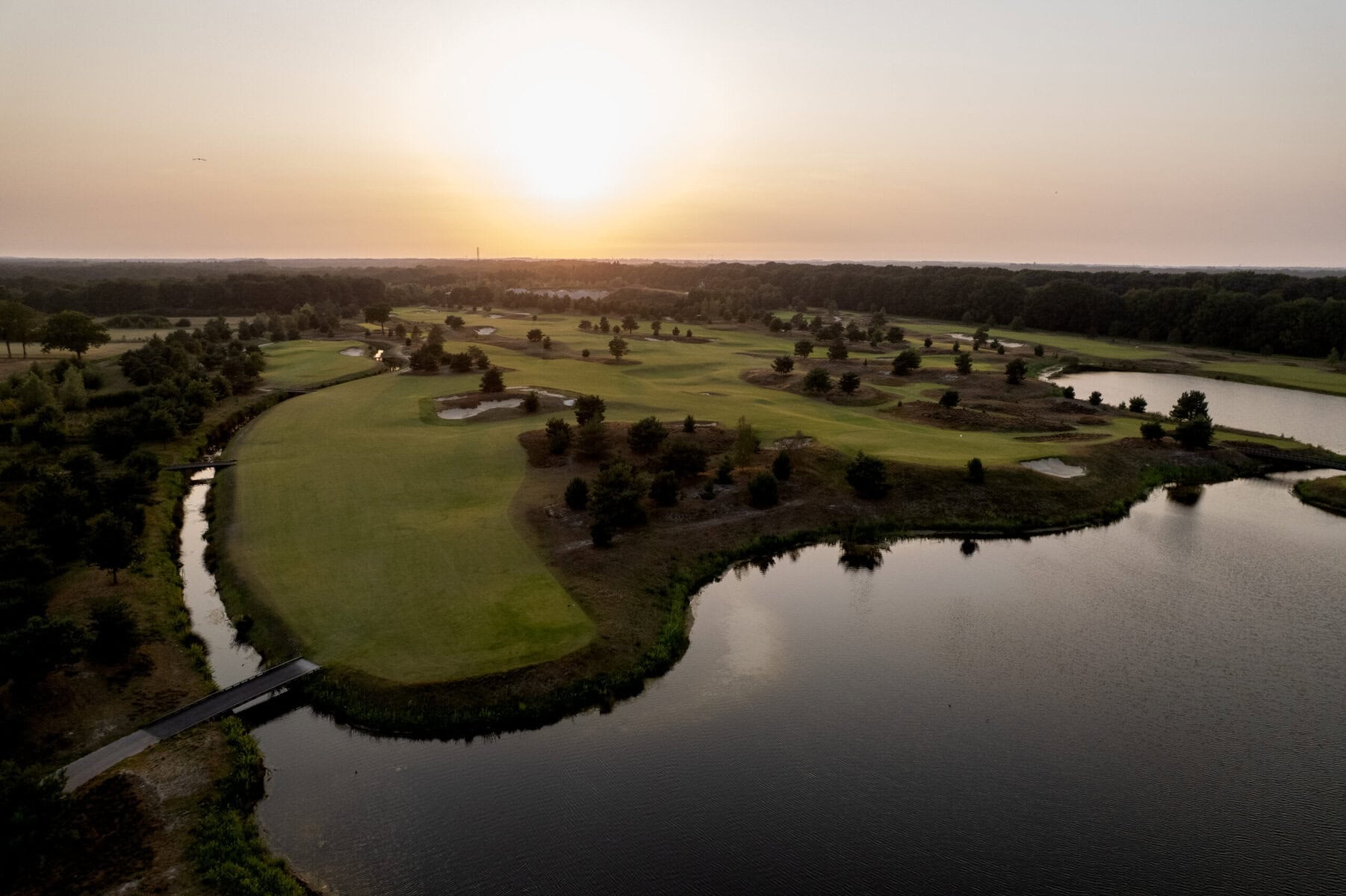
Bernardus isn’t playing the course its members know for the Solheim Cup. Head Professional Roel Verdonschot talks us through the reshuffled routing, the three holes he reckons will decide matches, and how to make the most of it whether you’re walking the fairways or watching from the sofa.
Fun Solheim Cup fact: the 1st hole at this year’s Solheim Cup isn’t Bernardus’ actual 1st hole. We got Head Professional Roel Verdonschot to talk us through what’s changed on the ground, and which three holes he thinks have the best chance of deciding a match.

Why the numbers don’t add up
If you’ve played Bernardus before, don’t expect to recognise the running order. Its been shifted two holes forward: matches start on what members know as the 3rd, play straight through, and finish on the regular 2nd, a hole that would normally show up before you’ve even settled into your round.
Quick cheat sheet:
- Solheim Cup 1 = the regular 3rd
- Solheim Cup 2 to 16 = regular 4th through 18th, in order
- Solheim Cup 17 = the regular 1st
- Solheim Cup 18 = the regular 2nd
It’s not just admin. This gets teams finishing matches on the hardest hole on the course instead of a gentle one, and starting on a hole built for a quick birdie and an early roar. Big matchplay events do this all the time, saving the best for last.
How far will they actually hit it?
Around 6,808 metres, or roughly 7,445 yards, at par 72. That’s long even by Solheim Cup standards, and it’ll show in the club selection all week, more long irons and hybrids into these greens than you’d normally see at this level. Tee positions may shift slightly closer to match week, but that’s the scale we’re working with.
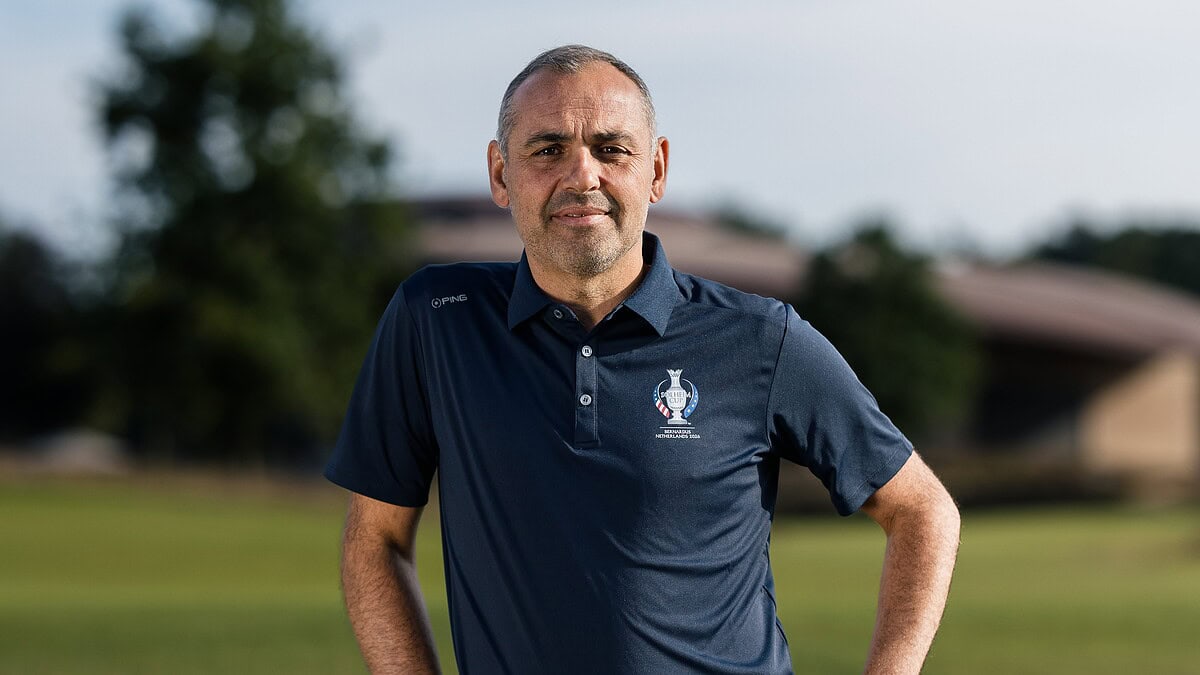
The three holes Verdonschot says to watch
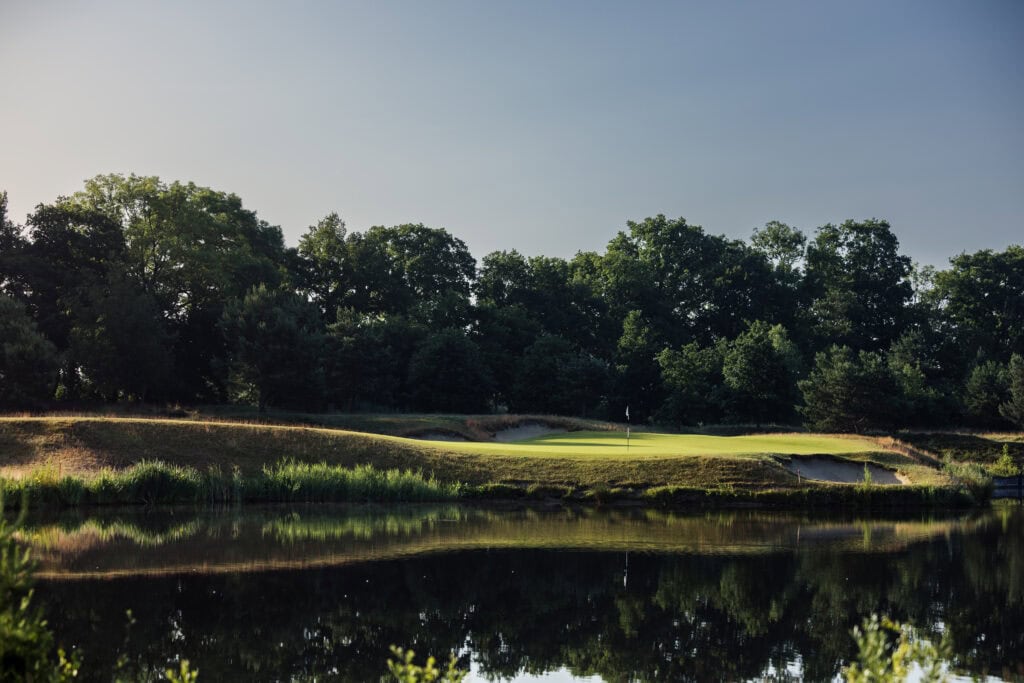
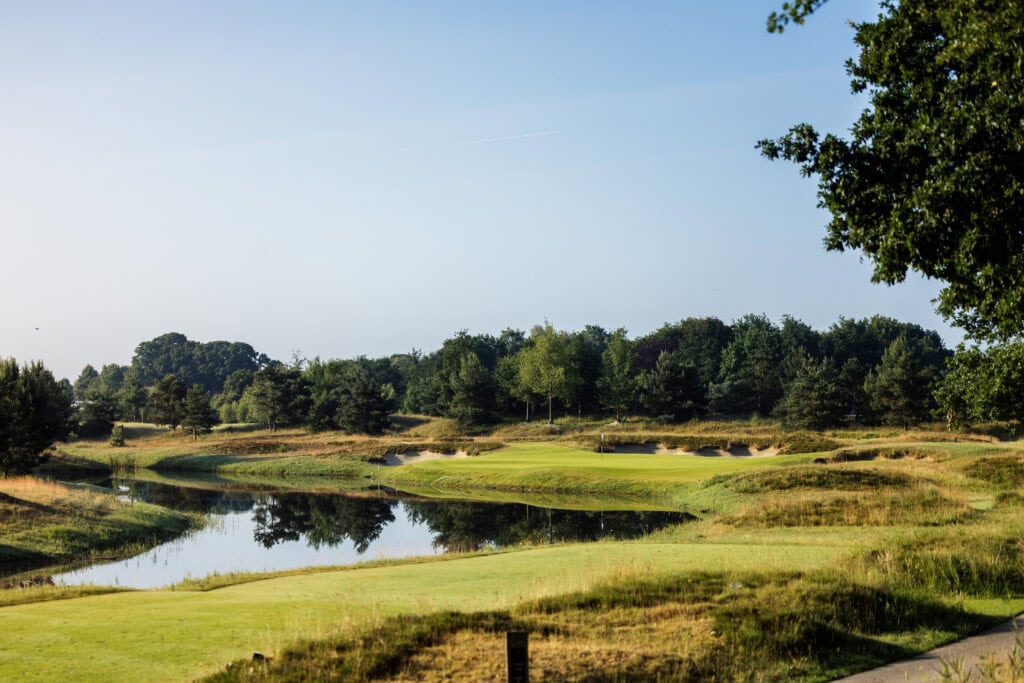
Hole 6. A par 3, played entirely over water, that looks kinder than it plays. “The 6th has a large green, but the area where the ball will actually hold is very narrow, in practice it can feel like a target of only around ten metres,” he told us. “If you are slightly off line, you can quickly find the water and be in serious trouble.”
Hole 15. Verdonschot’s favourite on the course, and he thinks it’s built for drama. “Players must decide whether to take the risk and attack the pin for a short birdie opportunity or play towards the middle of the green and accept a longer putt,” he said. “The tee is sheltered, so the wind can be difficult to feel, even though it is still influencing the shot.” It’s already delivered big moments in Dutch Open history, from a holed putt on the way to a play-off win to a bold tee shot that set up victory the following year.
Hole 18. The hardest hole at Bernardus, and for this week it’s also the last one. Water down the left, bunkers to the right, and barely any margin at the green. “You face a tee shot that you cannot afford to miss left, but you do not want to miss right either,” Verdonschot said. “If a close match reaches the 18th, there is a very good chance of drama.”
If you’re walking it
Bernardus is genuinely enjoyable on foot, and Verdonschot’s tip is to find the greenkeeper complex mid-round, where you can watch one match finish, another tee off, and a third’s approach shots land, all without moving. The opening tee will have the loudest atmosphere thanks to the grandstands.
If you’re watching on TV
Because the closing stretch (holes 16, 17 and 18 in Solheim Cup numbering) is genuinely the toughest on the course, close matches should stay tense right to the very end. Expect the TV commentary teams to be building up the tension from the off.
This is a course built for exactly this kind of golf, firm, tactical and unforgiving of anything loose, with water and bunkers doing the work as well as the length. Verdonschot’s three holes are the ones to watch, but really it’s the whole layout that has the potential to swing a session. A proper test of golf, and everything a match needs to produce real drama.
Keep up to date with all the new on the Solheim Cup