


You already know to wear sunscreen. That’s not the problem. The problem is what happens two hours into your round, when the SPF you put on in the car park has already stopped working and nobody told you.
Golf is one of the worst sports for sun exposure precisely because it doesn’t feel dangerous. There’s no burning midday sprint — just four to five hours of steady, cumulative exposure, often in short sleeves, often without shade, often without a second thought after the first application.
The British Association of Dermatologists has flagged golf specifically as a higher-risk sport for skin cancer because of that exposure pattern: long, low-intensity, repeated.
Here’s how to actually get it right.
Reapplication: the two-hour rule
Sunscreen isn’t a one-and-done. The NHS and British Association of Dermatologists both recommend reapplying at least every two hours, and immediately after sweating heavily — which, in a British summer round in a waterproof or windproof top, happens more than you’d think. For a 4-5 hour round, that means applying before you tee off and again around the turn, minimum. If you’re playing 36 holes or it’s a genuinely hot day, a third application isn’t overkill.
Sweat and friction from gripping the club, wearing a glove, and adjusting your visor all wear sunscreen down faster than normal daily wear. Factor that in rather than assuming morning application will see you through to the 18th.
UPF clothing vs. sunscreen: it’s not one or the other
UPF (Ultraviolet Protection Factor) clothing gives consistent protection that doesn’t wear off, rub off, or get missed in patches — which is its real advantage over sunscreen, not a replacement for it. A UPF 50 top blocks around 98% of UV radiation, reliably, for the whole round.
The sensible approach is layering both: UPF fabric for the areas it covers (torso, arms if long-sleeved), sunscreen for everything UPF clothing doesn’t reach — face, neck, ears, hands. Treat clothing as your base layer of protection and sunscreen as covering the gaps, not the other way round.
The bits everyone misses
Dermatologists consistently flag the same missed zones, and golfers hit all of them:
- Ears — rarely covered, rarely reapplied, and a genuinely common site for skin cancers picked up in dermatology clinics.
- Back of the neck — especially with a visor rather than a full-brim hat, which shades the face but leaves the neck exposed all round.
- Backs of hands — out in the open for every single shot, and often skipped because sunscreen there feels like it’ll compromise your grip.

A visor protects your eyes and forehead but does nothing for your neck or ears. If you’re a visor player, that’s worth a proper look at — either a wider-brim hat for high-UV days or a dedicated stick of sunscreen for ears and neck that you can reapply without breaking your grip or getting cream on your glove.
The simple version
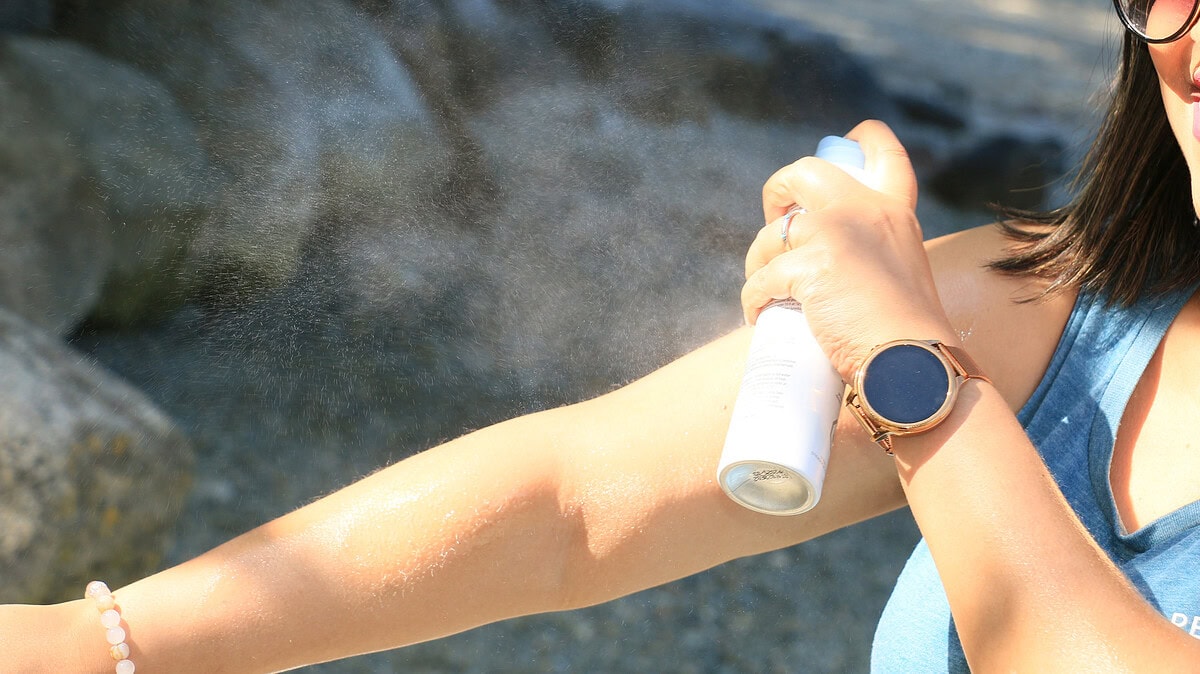
Apply 20-30 minutes before you tee off, so it’s absorbed rather than sitting on top of the skin. Reapply at the turn. Cover ears, neck, and hands specifically, not just face and arms. Layer UPF clothing under that, rather than assuming fabric alone is enough. None of this adds real time to your round — it’s a two-minute habit that changes the risk on cumulative sun exposure over a full season of golf.
Check out our article on Sun Protective Clothing


