

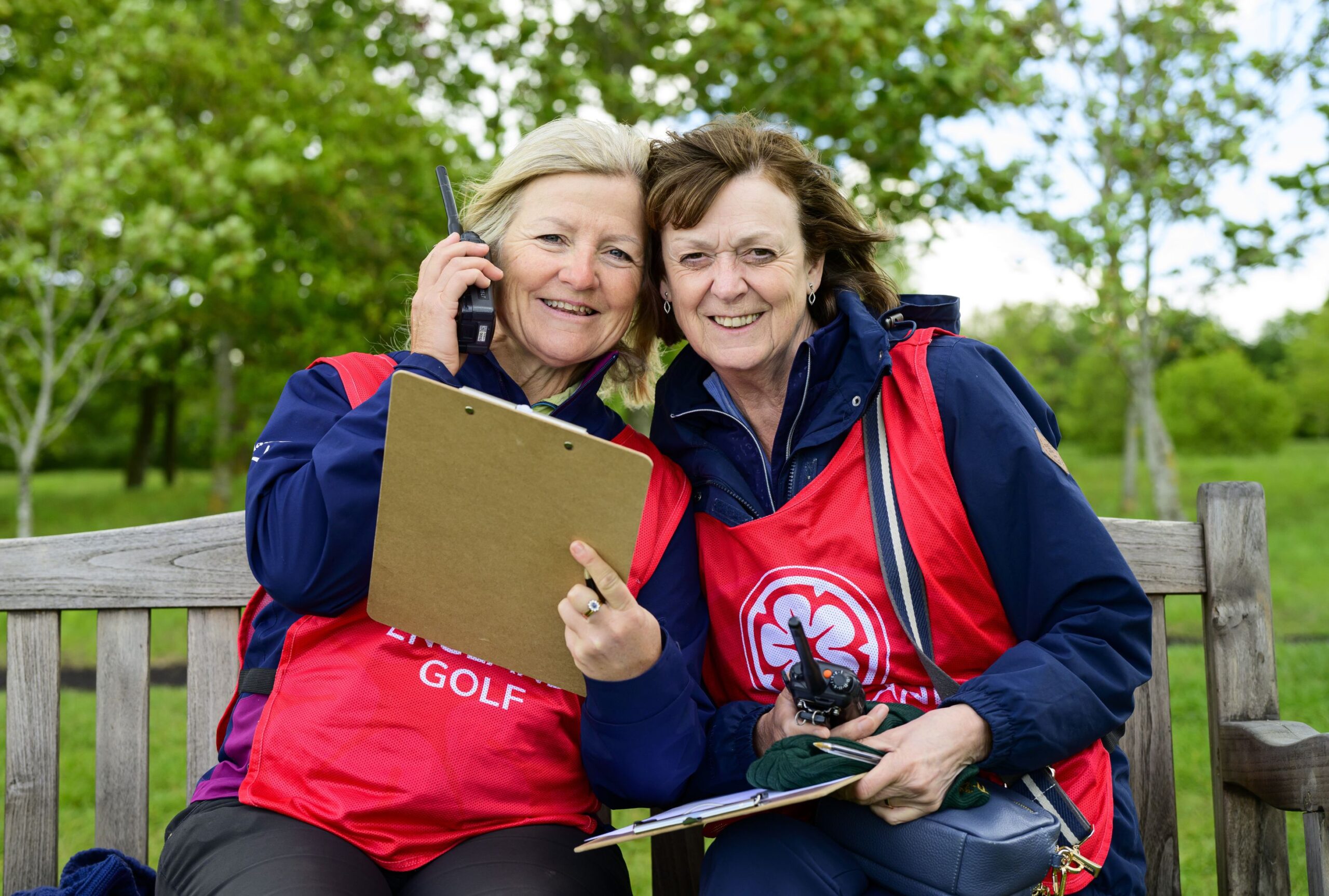
England Golf’s latest figures show 100,000 people give their time to keep golf running — but with formal volunteering in long-term national decline, clubs and counties are bracing for what comes next. Editor Jane Carter looks at the picture behind the numbers.
Walk into almost any golf club on competition day and it all looks effortless. The draw is up. The starter is on the first tee. The results are posted by teatime. What you don’t see is the web of unpaid work holding it all together — the hours of handicap administration, course setup, junior coaching, county selection and committee governance that go into making any of it possible.
England Golf marked Volunteers’ Week by publishing new figures from a survey of more than 1,000 golf volunteers. The headline number is 100,000 — the estimated total of people who give their time to the game across England. Almost one in seven members. Sixty per cent have been doing it for seven years or more. A remarkable 15 per cent have given 21 years or more. The data paints a picture of extraordinary commitment.
It also, if you read it carefully, hints at what might be coming.
A workforce weighted to one generation

The volunteer age profile is striking: 42 per cent of respondents are aged 66 to 75, with a further 32 per cent aged 56 to 65. That means three quarters of golf’s volunteer base is aged over 55. These are the people running competitions, sitting on match committees, marking courses, and keeping county unions operational.
They are also, nationally, the cohort that has seen the steepest drop in volunteering since the pandemic. Research published by the Centre for Ageing Better shows that monthly formal volunteering among people aged 50 to 64 has fallen from 23 per cent before Covid to 16 per cent — with almost no recovery since. The economic value of those lost hours across all sectors is estimated at up to £4 billion a year.
Across England as a whole, the picture is a steady downward curve. Annual formal volunteering participation has fallen from 45 per cent of the population in 2013/14 to 28 per cent in 2024/25, according to the government’s Community Life Survey. Monthly volunteering has dropped from 27 per cent to 17 per cent over the same period. Sport England’s Active Lives data puts the current adult sport volunteer workforce at 10.5 million — still 1.7 million below pre-pandemic levels.
Golf has not been immune to any of this. Clubs and counties report growing difficulty filling traditional committee roles — the Competition Secretary, the Match Manager, the Welfare Officer. Positions that once had a queue of willing members are now advertised with diminishing response.
Why it’s getting harder
The reasons are structural, not attitudinal. Cost-of-living pressures mean more people in their 50s and 60s are working longer, leaving less capacity for unpaid commitments. A Sheffield Hallam University study for Sport England found that volunteering levels in sport have been directly affected by time constraints as people take on more paid hours to cover rising bills. In the most deprived areas of England, 17 per cent of non-volunteers cite the financial cost of volunteering itself as a barrier.

There is also a bureaucracy problem. Research by the NCVO found that 35 per cent of current volunteers feel there is too much red tape attached to their roles, and 26 per cent said their volunteering feels too much like paid work — up from 19 per cent in 2018. Golf clubs are not immune to this: safeguarding requirements, data protection obligations and governance standards have all added administrative weight to roles that used to be relatively straightforward.
Then there is the pipeline. Junior club membership in England has declined over the past 15 years, with under-18s now making up less than 10 per cent of club members. Today’s junior golfer is tomorrow’s volunteer. If clubs are not building that base, they are not building their future workforce either.
Women are already stepping up
One figure in the England Golf data deserves particular attention. Women make up approximately 11 per cent of golf club membership but represent 30 per cent of the volunteer workforce. That is a significant overrepresentation — and evidence that women in golf are not only playing more, but contributing more, than their membership numbers suggest.
It is also a signal that women’s engagement with their clubs runs deeper than green fees. For those who have long argued that golf needs to do more to embed women into club life, these numbers are both encouraging and instructive: where women feel genuinely welcome and valued, they give back.
What clubs can do now
The answer is not simply to ask more loudly. Organisations struggling to recruit are often doing so because they are offering roles designed for a different era — open-ended, poorly defined, and heavy on meetings. Research consistently shows that episodic, flexible volunteering is growing, while long-term formal commitment is declining. Clubs that unbundle the big committee roles into smaller, time-limited tasks tend to have better luck.
Recognising volunteers properly matters too. England Golf’s own data shows 85 per cent of its survey respondents are satisfied in their roles — which suggests the experience of volunteering in golf is largely positive. The risk is not that volunteers are unhappy; it’s that clubs are not asking the right people, or offering roles that fit modern lives.

Minchinhampton Golf Club is cited by England Golf as one of the game’s standout examples, with more than 200 active volunteers across a wide range of roles. It is not a coincidence that clubs with strong volunteer cultures tend to have strong membership cultures — the two feed each other.
England Golf continues to provide training and development for golf volunteers, including Activator Courses to help volunteers support participation, and a new Board Learning Workbook to help incoming committee members get up to speed quickly. These are useful tools. But the sector’s challenge is less about training the volunteers it has, and more about finding the next generation willing to step into their shoes.
The 100,000 figure is worth celebrating. But the trend lines beneath it are worth taking seriously.


