

Golf clothing has never offered more options for women. That is mostly a good thing — but it does mean more decisions. Here’s a practical guide to working out which suit you, and why the answer is not the same for everyone.
The options available to women golfers have never been wider. Skorts, trousers, golf dresses, shorts — every category has grown in both range and quality over the past few years. That is mostly a good thing. But it does mean more decisions, and not every style works for every woman.
Before thinking about specific clothing, it helps to be honest about a few practical things: how much you care about what you wear on the course, whether you are playing competitively or socially, how you feel about your legs, and whether your club has a dress code that rules anything out.
None of these are frivolous questions. They shape which category of golf clothing will work for you in practice rather than just in theory. A golf dress that looks fantastic hanging in a shop can be a problem if you are self-conscious about your legs, spend three hours in a crosswind or play at a club with a strict dress code. A pair of well-cut trousers can feel like the most practical thing you own, or they can feel restrictive and formal if your preference is for something lighter.
The goal is not to wear what everyone else wears. It is to find what you feel comfortable and confident in, because that is what you will keep reaching for.
The Case for Skorts
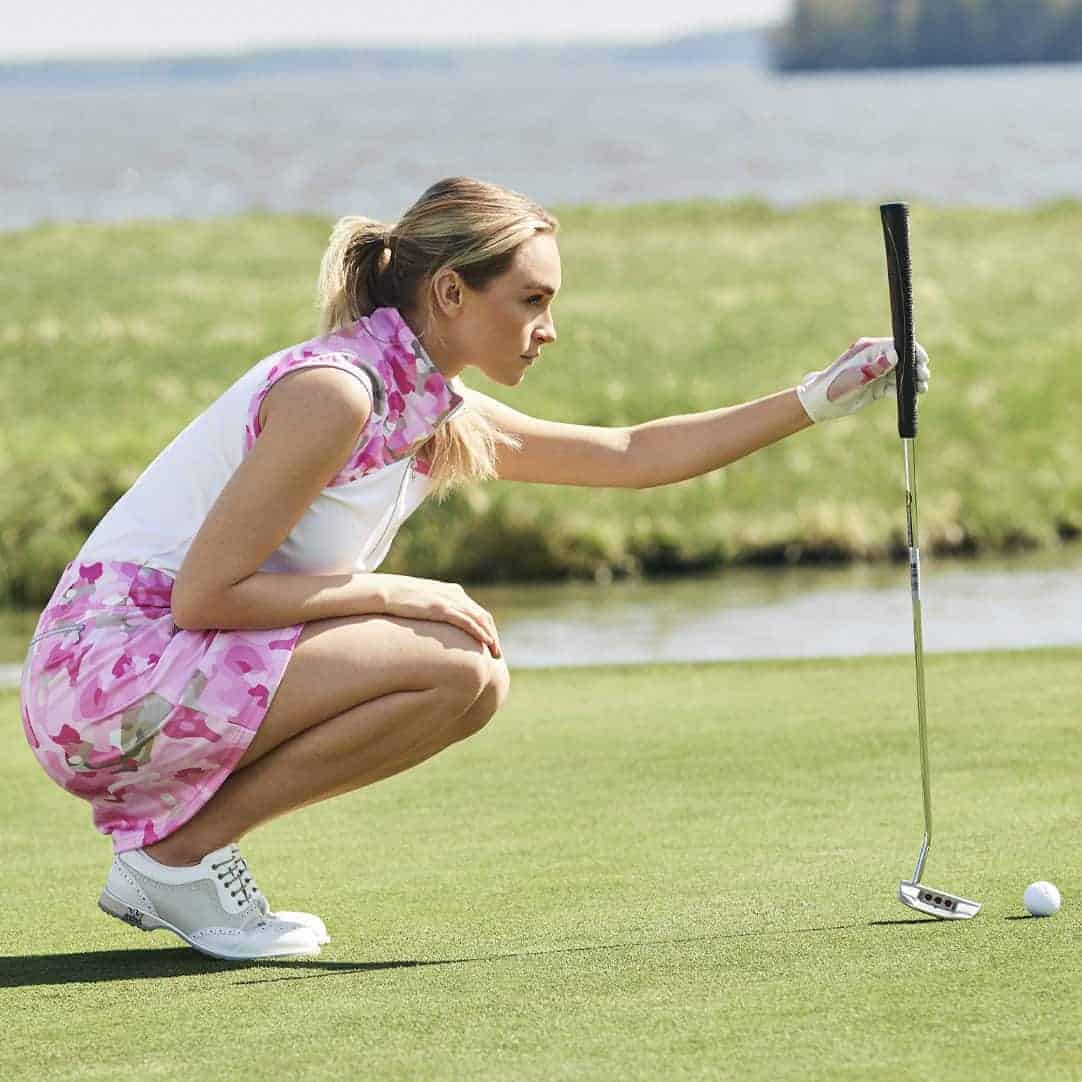
The skort is the dominant choice in women’s golf for good reason. It combines the ease of movement of a skirt with the practicality of built-in shorts, which means you can crouch to read a putt, bend into a bunker or reach into a bag without a second thought. For most women, it is the most uncomplicated option.
Skort length is worth paying attention to. The standard golf skort sits at around 16 to 18 inches, which works for most women. If you find standard lengths too short — particularly for bending and stretching during a round — look for 18 to 19-inch options, which several brands now offer. The right length is the one you stop thinking about once you are on the course.
Fit across the hip and waist matters more than most women expect when buying skorts. Too tight and the built-in shorts will dig in and ride up during your swing. Too loose and the whole thing moves independently of you. The fit should feel secure through a full rotation without any pulling or bunching. Stretch fabric helps considerably here.
Skorts work across almost all body types because the A-line shape creates coverage while the built-in shorts handle the movement. They are also the most versatile option for going straight from the course to the clubhouse without changing.
The Case for Trousers
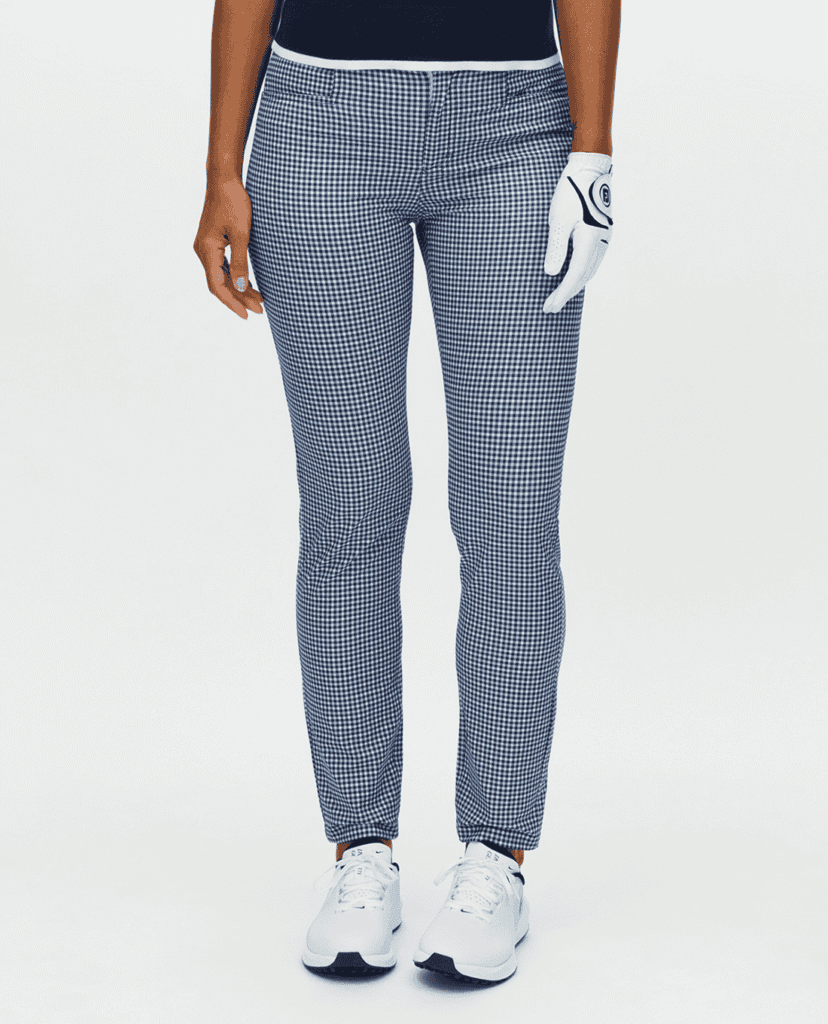
Trousers divide women golfers more than any other garment. Those who prefer them tend to prefer them strongly; those who don’t often find them too warm, too formal or too restrictive.
The practical case for trousers is straightforward. They provide full leg coverage, which matters for UV protection on sunny rounds, warmth on cold mornings and comfort on courses with rough terrain or long grass. They also tend to look more polished in a formal club environment, and are the clear choice for autumn and winter golf.
The fit question with golf trousers is more complex than with skorts. You need a trouser that allows a full hip rotation at the top of your backswing without pulling across the seat, and that has enough length to sit correctly when you bend your knees at address.
Stretch fabric is not optional in a well-functioning golf trouser — it is a basic requirement. A trouser that restricts your swing is a trouser that will stay in the wardrobe.
For shorter women, trouser length is a common frustration. Most golf trousers are cut for an average leg length, and many women find they need them taken up. It is worth factoring in tailoring costs or looking for brands that offer shorter inseam options. Cropped and seven-eighths options work well for this and have become a mainstream part of most collections.
The Case for Golf Dresses
Golf dresses have grown significantly as a category over the past few years. The appeal is obvious: one garment covers the whole look, there are no waistband or hem decisions to make, and a well-designed golf dress can look as appropriate in the clubhouse as on the course.
The practical considerations are real, though, and worth being clear about. Almost all golf dresses include built-in shorts, which handles the obvious movement issue. But the length of the dress itself matters considerably. A dress that sits above the mid-thigh will feel short on the course, particularly on a windy day or when bending to pick a ball from the hole. Most women find a dress that sits at or just above the knee gives the best combination of practicality and coverage.
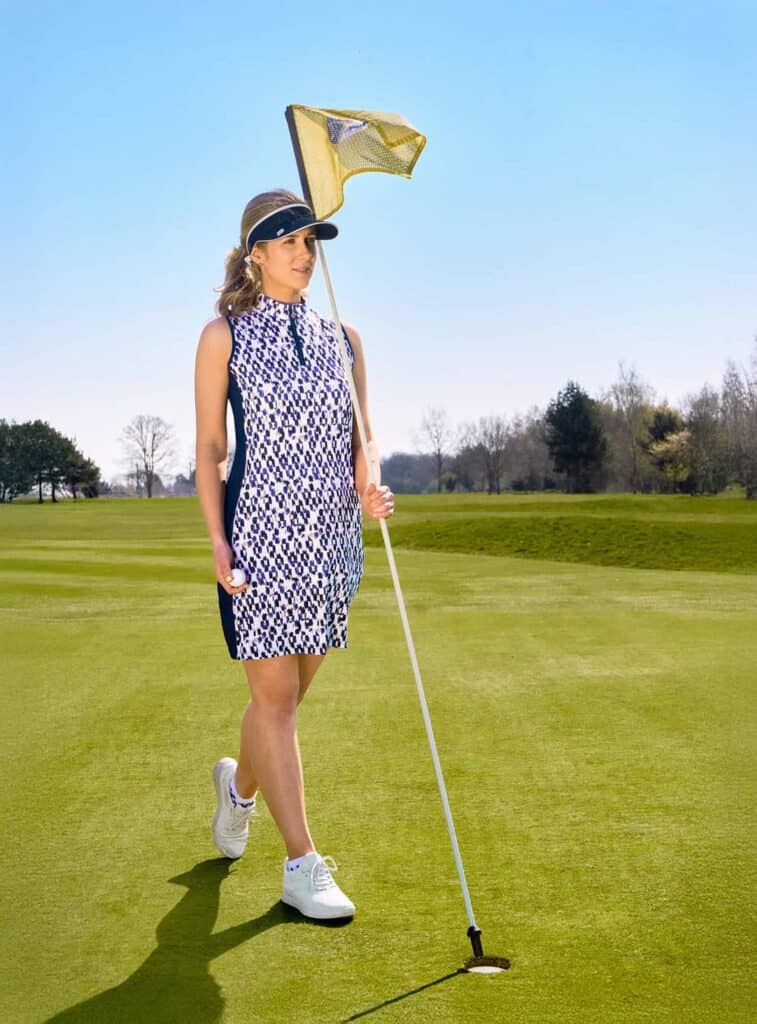
For shorter women, dress length is the biggest variable. A dress cut to sit at the knee on a 5‘5” woman will sit mid-thigh on someone 5’2”. Before buying a golf dress, check the stated length in the product description and compare it to where you want the hem to sit. This is one garment category where height matters more than size.
Golf dresses also tend to work better on warmer days than cooler ones. They are harder to layer effectively than a polo and skort combination, where you can add a mid-layer on top without affecting the bottom half. On a variable spring day, a polo and skort gives you more options.
Shorts: The Underrated Option
Golf shorts are a strong option on a warm day and the range available to women has grown considerably. Before buying, it is worth checking your club’s dress code — policies on shorts vary between clubs, both on the course and in the clubhouse.
Where they work, they work well. A well-cut golf short in a stretch technical fabric is arguably the most comfortable option on a genuinely hot day. The same fit principles apply as with trousers: room through the hip, stretch through the seat and thigh, and a length that stays in place when you bend and rotate. Most golf shorts sit at mid-thigh and work best at that length.
A Practical Note on Club Dress Codes
Dress codes vary significantly between clubs, and it is worth knowing your club’s position before building a golf wardrobe around a specific style. Most clubs accept skorts. Many accept tailored shorts. Some have specific rules about skirt and dress length. A small number of clubs still do not permit shorts or very short hemlines in the clubhouse even if they are acceptable on the course.
If you play at multiple clubs or travel for golf, the safest all-round investment is a skort and polo combination in a neutral colour that will be acceptable almost everywhere, supplemented by whatever other styles you prefer for your home club.
The right choice is the one you feel good in and stop thinking about once you’re on the course. Browse the Women & Golf Fashion Directory to find skorts, trousers, dresses and shorts across all the brands we carry.
Browse women’s golf clothing by style in the Women & Golf Fashion Directory.


