

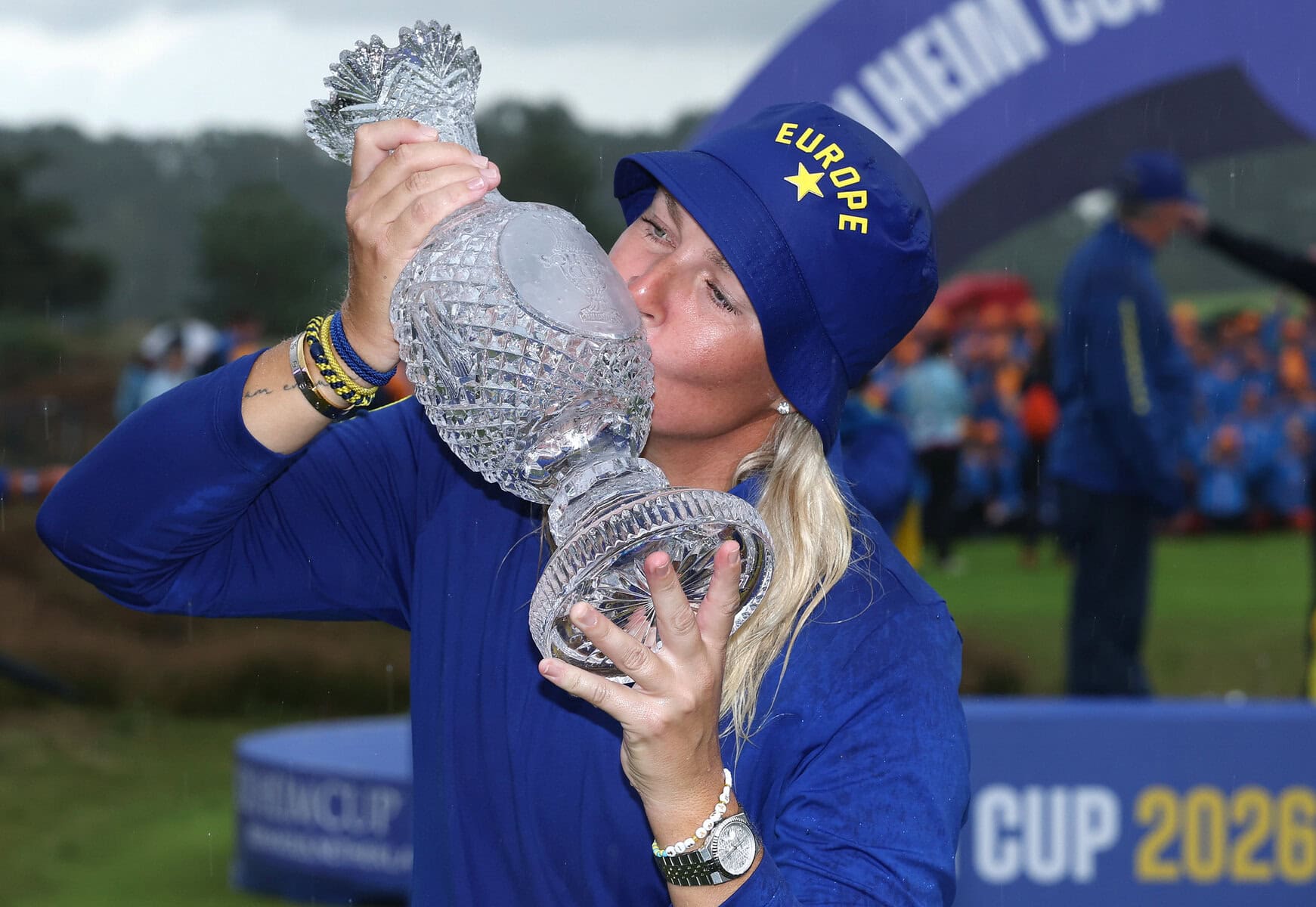
Anna Nordqvist’s faith in her players was spectacularly rewarded on Sunday, while Angela Stanford was left with questions over putting, preparation and missing data. We look at the decisions that shaped the Solheim Cup from the two captains’ perspectives.
When Anna Nordqvist and Angela Stanford woke on Sunday morning, there was nothing between their teams. After two days of swings, spectacular golf and a remarkable American finish on Saturday evening, Europe and the United States were locked at 8-8. Twelve singles matches would decide the Solheim Cup.
Yet by the time Europe completed a 15-13 victory at Bernardus, the two captains were reflecting on very different Sundays. For Nordqvist, decisions that had looked increasingly questionable 24 hours earlier were suddenly vindicated. For Stanford, defeat brought rather more complicated questions about what the United States might have done differently.
Perhaps the most revealing difference between the two captaincies was how they responded to what had happened immediately before the singles.

The United States had finished Saturday on an extraordinary emotional high. Jennifer Kupcho’s two huge closing putts, including her extraordinary effort at the 17th, transformed the final fourball and pulled the Americans back level. Stanford knew that moment had to be celebrated rather than immediately shut down.
“You don’t ever want to take away from that moment,” she said afterwards, describing it as a high the team might never experience again. Her players told her they had rested well, although Stanford conceded that “it did take a minute to come off” such an extraordinary finish.
Europe faced precisely the opposite problem. They had watched a Saturday advantage disappear and then suffered the additional blow of Kupcho’s finish. But what happened away from the golf course may have been one of Nordqvist’s most important pieces of captaincy.
Mel Reid described the European team bus as a place where the group traditionally comes together. Music went on, Sweet Caroline eventually changed the mood, and when Nordqvist returned after completing her media duties there were a few words from the captain and her assistants.
By Sunday morning, Reid sensed there was very little left to say. “The horses are ready, just let them go,” was how she described it.
That ability to absorb Saturday evening and start again mattered because Nordqvist was about to place considerable faith in two players whose results suggested they had given her very little reason to do so.
Nordqvist trusted the golf, not simply the results
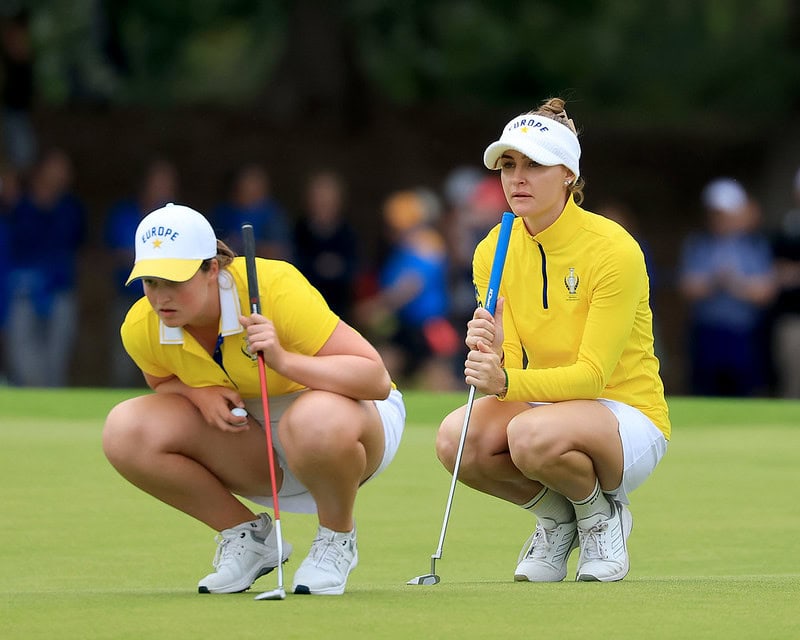
Charley Hull and Lottie Woad had played all four sessions together and accumulated just half a point. It was an extraordinary return from Europe’s two highest-ranked players and, by Saturday evening, Nordqvist’s persistence with the pairing had inevitably come under scrutiny.
There had already been questions in the media about continuing to send them out together, particularly after their 6&5 foursomes defeat on Saturday. But the captain’s own analysis was very different. Nordqvist revealed after the victory that Europe’s statistics showed Hull, Woad and Carlota Ciganda among the four European players who had made the most birdies during the opening two days.
The distinction was important. Hull and Woad had not necessarily been playing poor golf; they had repeatedly encountered opponents playing exceptionally well.
It made Nordqvist’s decision to put Hull first in the singles, rather than trying to protect a player who had collected only half a point, what she called a “no-brainer”. Hull’s job was to put blue on the board quickly and she did exactly that, beating Megan Khang to deliver Europe’s opening point.
Hull’s own assessment backed up her captain’s judgement. She said she had gone into Sunday determined simply to play as she had during the first two days because her tee-to-green game had been good and the putts had simply not fallen. Getting the first point, she believed, could then “feed” the rest of the team.
Woad provided an even more dramatic vindication.
The rookie had admitted after her singles victory that she had felt she was letting the team down. In comments reported after the match, she explained that the captains had shown her the birdie statistics and reassured her that she was playing good golf despite the results. Her task was to trust it.
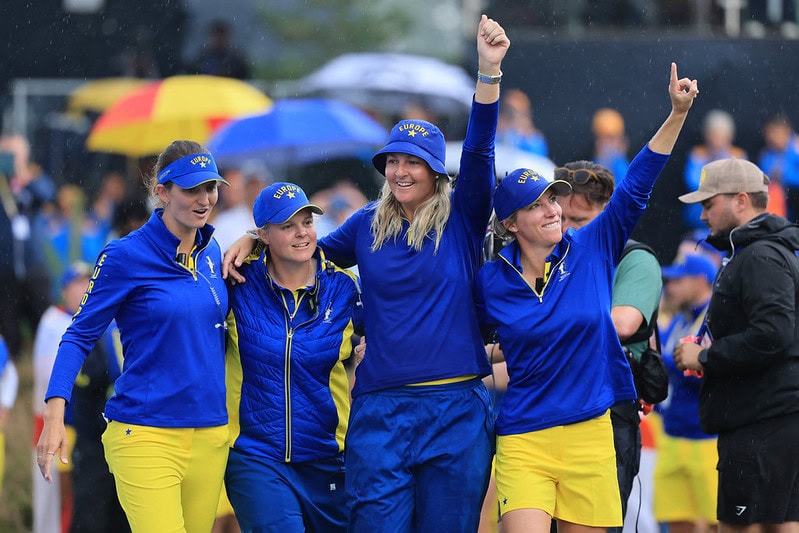
She did. Woad beat Auston Kim 2&1 and holed the putt that took Europe to the 14½ points required to win the Cup — although, wonderfully, she initially had to ask whether Europe had actually won.
It was a neat encapsulation of Nordqvist’s captaincy. She had separated performance from results and trusted what she and her backroom team were seeing.
Four rookies, but very little fear
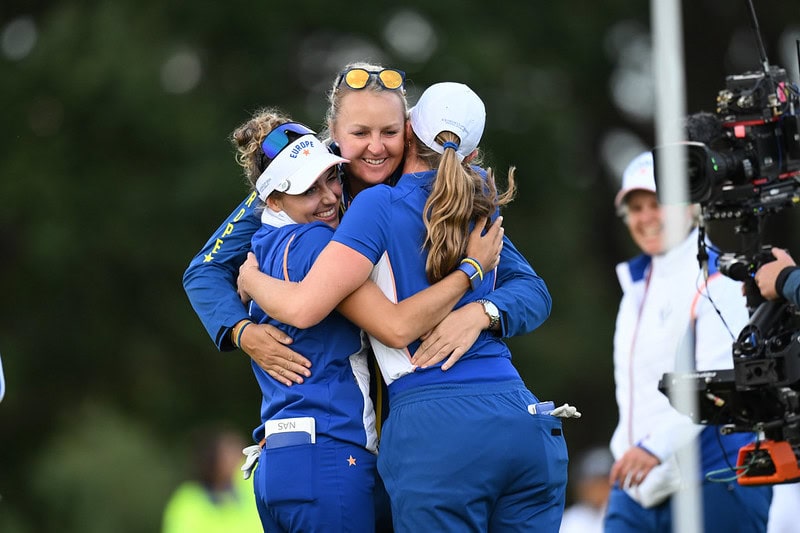
That trust extended well beyond Hull and Woad.
Four rookies had given Nordqvist one of the obvious selection questions before the Solheim Cup, yet afterwards she appeared almost bemused by the suggestion that their inexperience had represented a major risk.
Modern rookies, she argued, arrive on tour exceptionally well prepared. They are good, fearless and full of personality. “I never felt like they were rookies,” she said.
Nothing demonstrated that philosophy better than putting Mimi Rhodes and Nastasia Nadaud together. Sending two rookies out as a partnership attracted questions, but Nordqvist’s response was essentially: why not?
It was not reckless. She knew the players, their personalities and their games. Rhodes later explained that Nordqvist had been transparent with them and understood both their friendship and how well their golf could fit together. The pair rewarded that confidence with two points from their two matches together.
Caroline Hedwall offered perhaps the clearest explanation of why that approach worked. Nordqvist, she said, made every player feel seen, was transparent with them and, crucially, made them understand that she trusted their games.
It is difficult to find a better description of successful captaincy.
Stanford’s more difficult post-mortem
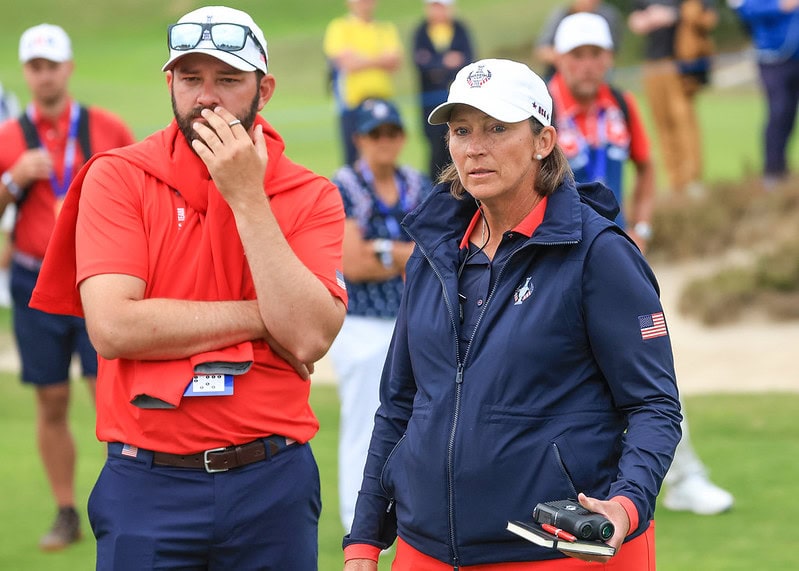
Stanford’s immediate reaction to defeat was not to tear apart the decisions that had brought the United States within two points of victory.
Asked whether she would change her Sunday order, she said she would not. Lauren Coughlin, Kupcho and Rose Zhang had needed rest during the previous sessions and that had influenced her deployment of them. Europe, she concluded, had simply played better when it mattered.
In a television interview immediately afterwards, she was similarly resistant to regret. She had believed in all 12 players and needed time before deciding whether anything should have been done differently.
There were, however, two fascinating qualifications in her later press conference.
The first concerned the greens.
Stanford said the putting surfaces were slower than when the Americans had visited Bernardus in July and slower than those her players normally encountered. She also made clear that this was her observation rather than a complaint from her players and accepted responsibility for not impressing the need to adjust more strongly upon them.
“This is the one thing I am kicking myself” over, she admitted.
The comments subsequently generated headlines around the green speeds and whether Europe had enjoyed an advantage. That discussion should not obscure what Stanford actually said: she blamed herself for America’s failure to adapt.
Nordqvist was subsequently asked directly about Stanford’s comments in her own press conference. She rejected the suggestion that Europe had deliberately set up the course to suit its players, explaining that the principal concern had been controlling firmness and that significant rain in the weeks leading into the event had inevitably softened the course.
It is tempting to turn that exchange into a controversy. It is probably more useful as an insight into two captains diagnosing the same golf course differently.
Was the American operation missing something?
Another question emerged from Stanford’s own press conference and may ultimately prove more significant.
Asked about the statistical work behind the American strategy, Stanford praised analyst Justin Ray but revealed that the US had been “missing some pieces” during the week. At the 2023 Solheim Cup in Spain, she said, the team had access to strokes-gained information from individual matches and even practice. That same level of information was not available at Bernardus.
When asked why, Stanford declined to elaborate.
Those comments have subsequently attracted attention in post-match reporting, but the substance comes directly from the US captain herself. Stanford was emphatic that analytics mattered and that Ray had been a huge help in devising the American formula. She also pointed out that losing by only two points in Europe was very different from being comprehensively beaten.
There is no evidence to say the missing data cost America the Solheim Cup, and it would be stretching Stanford’s remarks to suggest that it did.
It does, however, leave an intriguing contrast.
Europe used statistics to tell Hull and Woad that their results were disguising how well they were actually playing and then acted upon that information. The United States had also invested heavily in analysis but finished the week acknowledging both that some of its usual statistical resources had been absent and that its players had failed to adapt sufficiently to the pace of the greens.
One captain left Bernardus with her judgement vindicated. The other left with questions she admitted would require considerably more thought.
A captaincy built on trust
Winning inevitably makes captaincy decisions look better. Had Hull lost the opening singles and Woad failed to deliver, Nordqvist would undoubtedly have faced very different questions about playing them five times. Had one or two more American putts fallen on Sunday, Stanford’s decisions might have been viewed differently too.
The margins were not enormous. Europe won 15-13.
But Nordqvist’s players repeatedly returned to the same words when they described their captain: trust, transparency and belief.
She trusted two rookies together. She trusted Hull when four sessions had yielded little reward. She trusted Woad to play five matches in her first Solheim Cup. And when Europe suffered its biggest emotional blow of the week late on Saturday, she trusted her players to absorb it rather than filling Sunday morning with another torrent of instructions.
There was calculation behind that trust. The birdie statistics mattered. Knowledge of the players mattered. Partnerships mattered. But Nordqvist appeared willing to use all that information to support what she saw in front of her rather than allowing the scoreboard alone to determine her decisions.
Stanford deserves some of the same credit. Her team came to Europe, recovered from difficult positions and took the contest into Sunday with everything level. Even in defeat, she stressed that the players had remained together and had never wavered.
But Sunday belonged emphatically to Europe and ultimately to Nordqvist.
It made the timing all the more remarkable. She had retired from playing only two weeks earlier and admitted afterwards how difficult it had been at times to stand alongside the action without hitting a shot herself. Captaincy had shown her that there might be other ways to remain involved in golf and experience some of those same emotions.
Whether she wants to experience them again is another question.
Asked if she would captain Europe again, Nordqvist laughed and said she needed some time off.
Stanford sounded no more certain about returning for Valhalla in 2028. Asked about another attempt, she pointed instead towards America’s “pretty good pipeline” of future captains.
Perhaps that is where the comparison ends.
For three days at Bernardus, two first-time captains were separated by very little. On Sunday, one saw the decisions she had trusted all week fall spectacularly into place. The other was left to begin the much less comfortable process of working out why hers had not.

All the news after the event will be in our Solheim Cup Section


