

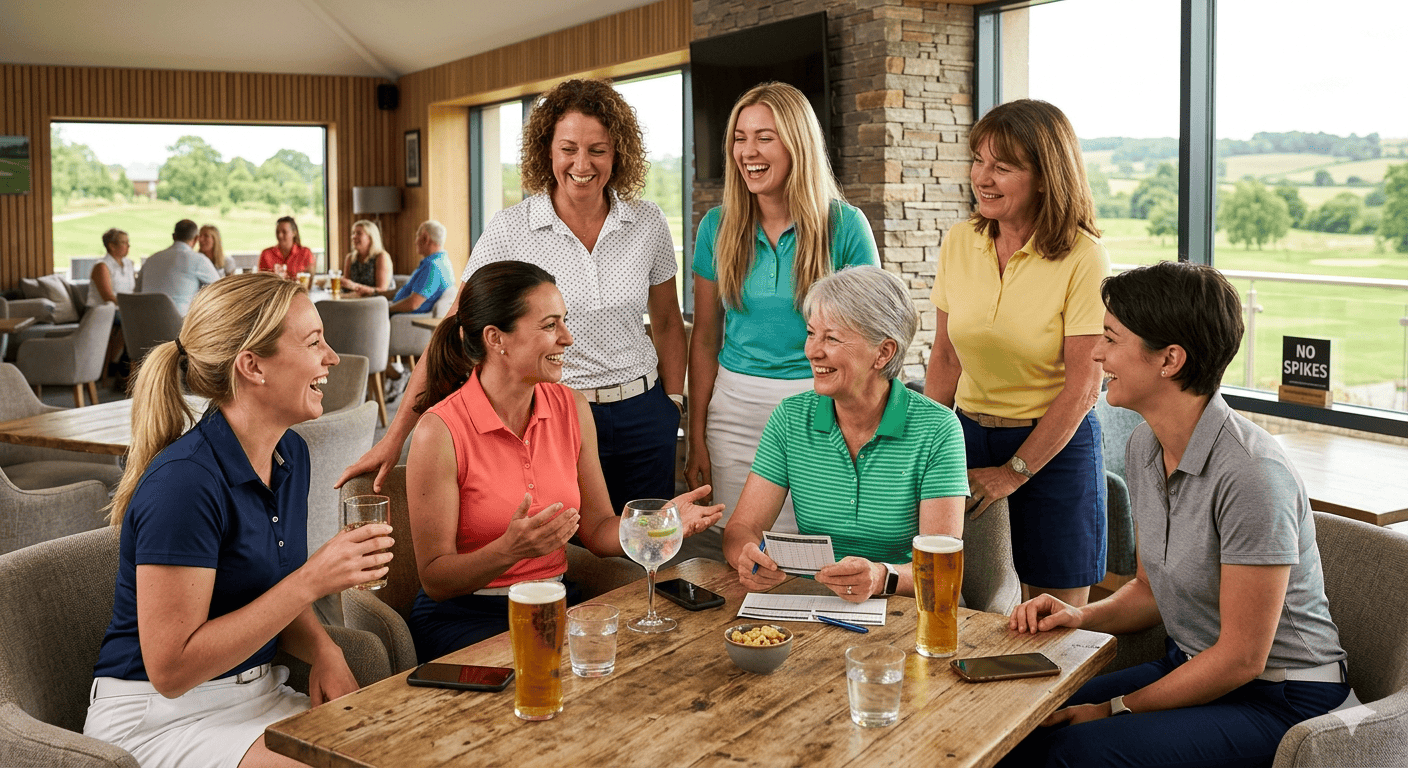
Women’s sections have acquired a reputation they don’t entirely deserve. But they haven’t helped themselves either. After thirty years of watching this play out, here’s what I think is actually going on.
I am a member of a women’s section. I have been involved in women’s golf in one form or another for three decades. I have seen women’s sections at their best — welcoming, energetic, genuinely inclusive communities that transform a new member’s experience of a club — and at their worst, closed circles that operate as though the purpose of the section is to preserve the way things have always been done rather than to serve the women who play there.
Both versions exist. And the conversation about which is more common is, frankly, more complicated than most people are prepared to admit.
The reputation — and why it exists
Women’s sections have an image problem. Ask women who have left a club, or who tried to get involved and gave up, and you will hear a consistent set of complaints.
Cliques. A single template for what club golf should look like. An unspoken expectation that new members will fit themselves around existing structures rather than the other way around. A social hierarchy that is invisible until you accidentally offend it.
These are real experiences. They happen in clubs across the country. And the sections where they happen are often the last to know, because the people who could tell them have already left.
The most damaging pattern I have seen — and it is genuinely damaging — is the pigeonholing of women into a single version of what golf should be. Traditional formats, traditional social expectations, traditional assumptions about what a woman golfer wants from her membership. Women who play differently, socialise differently, or simply want something other than what has always been on offer are made to feel that they are the problem rather than an opportunity.
That has to change. And in the best clubs, it already has.
But new members are not blameless
Here is the part of this conversation that doesn’t get said often enough. New members have a responsibility too.
A women’s section is a volunteer-run community that functions on the effort of its existing members. It does not have the capacity to seek out every new joiner and personally draw them in. The expectation that it should — that belonging should arrive without effort, that if the first competition feels uncomfortable it is the section’s fault — is not reasonable.
I have watched new members dismiss a women’s section as unwelcoming after a single visit, before they had entered a competition, spoken to the captain, or given it enough time to show them what it actually is. First impressions in a golf club are not always accurate. The section that feels closed on a wet Wednesday in October can feel completely different on a summer competition day when you finally know a few faces.
If you are new, engage before you judge. Enter something. Introduce yourself. Give it a season.
What getting it right actually looks like
The clubs where this works well have one thing in common: the women’s section actively creates space for different types of golfer rather than assuming everyone wants the same experience. They run a range of formats. They make new members visible — a simple introduction at the first competition, a playing partner arranged for the first few rounds. They ask what people want rather than presenting what’s always been on offer and expecting gratitude.
And the new members who settle in quickly are the ones who showed up with an open mind, made the effort to engage with what existed before asking for something different, and gave it time.
Neither side can do this alone. A section that makes no effort to evolve will keep losing the members it most needs. A new member who makes no effort to engage will keep finding communities that feel closed.
The game is good enough to be worth both sides trying harder.
This is a conversation worth having openly. If you’re a new member who found a way in — or didn’t — or a women’s section member who has seen this from the other side, I’d love to hear your experience.


