

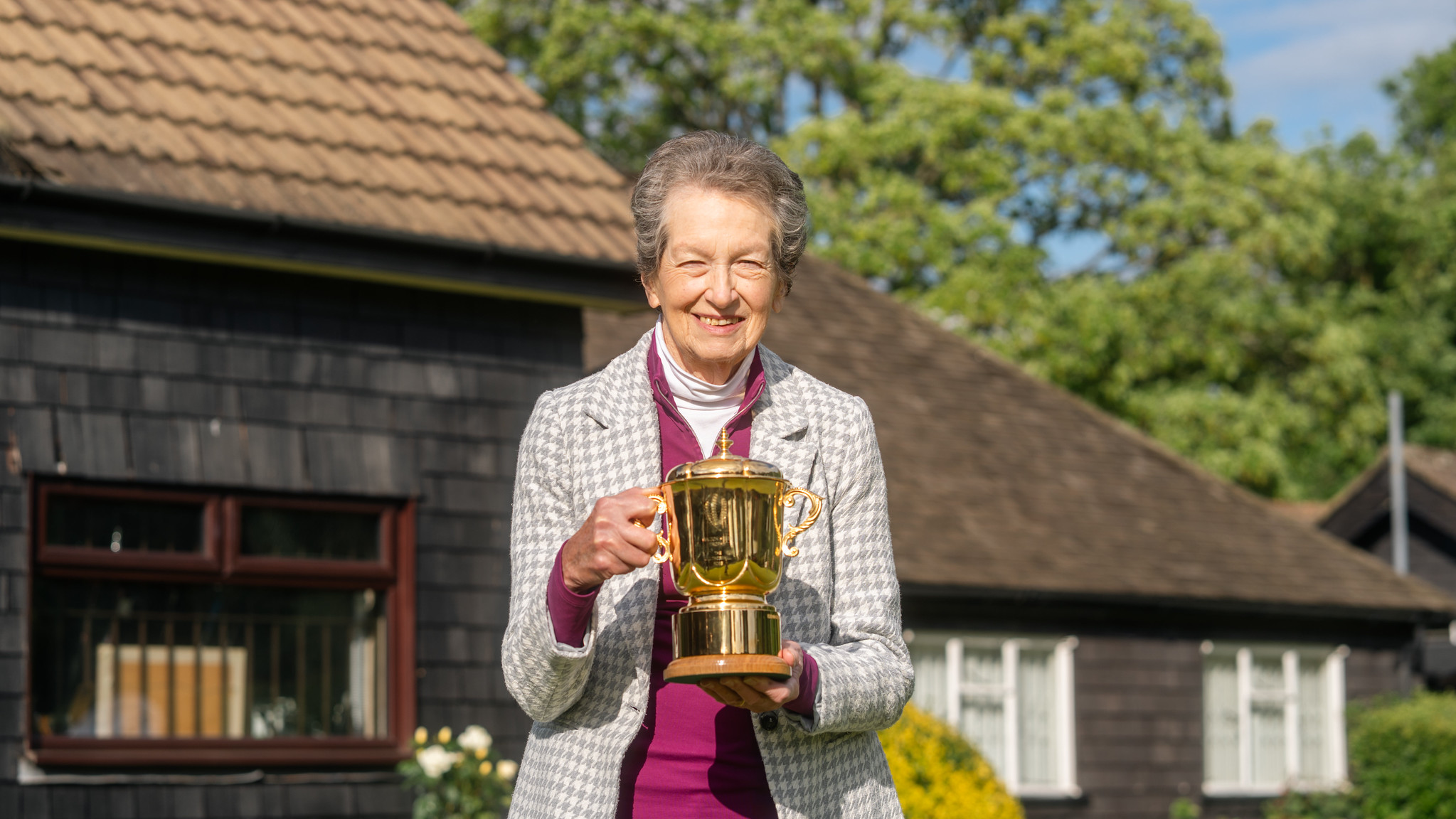
Jill Thornhill won the British Ladies’ Amateur, was part of two winning Curtis Cup teams, captained the Curtis Cup, and helped shape a generation of women golfers.
Now, with her name on one of amateur golf’s most unique events and the Curtis Cup about to tee off in Bel Air, she talks honestly about where women’s amateur golf stands — and why she worries nobody is listening.
Interview by Jane Carter
There is a certain irony in interviewing Jill Thornhill about recognition. She won the British Ladies’ Amateur Championship, played in two winning Curtis Cups teams, captained a Curtis Cup side and just this year received the Gerald Micklem Award from England Golf, the game’s highest honour for a volunteer administrator. And yet she will tell you, plainly, that the Telegraph still doesn’t run a regular women’s golf page.
We meet at Walton Heath Golf Club, where Jill is President and where, on 21–23 July, the club hosts the third edition of the Walton Heath Trophy for the Jill Thornhill Rose — a 72-hole women’s stroke play championship. Ahead of the 2026 Curtis Cup under way this week at Bel Air Country Club, California, we asked her to reflect on her days as an amateur compared with the game today.

The game has changed beyond recognition
You’ve watched women’s amateur golf transform over six decades. What are biggest changes you’ve seen?
The coaching, first. It’s become far more uniform — they’re all taught from the same foundation now, with gym work, fitness programmes, specialist coaches for every department of the game. The short game especially. And the equipment is far superior. When I watch these young players, the length is just awesome. Miles beyond what we could do. Miles.
Is that purely physical?
The physical side is a big part of it, yes — the strength and conditioning work that they do now simply didn’t exist. But it’s also the technology. Trackman studios, indoor facilities, warm weather training. These young players are almost professional before they’ve turned professional. The way they prepare for a tournament, the mental approach, the schedules they plot — it’s a different world.
When you were competing at the highest level, what did preparation look like?
I did it for myself, without supervision. I was lucky to play here at Walton Heath — playing regularly on a first-class course was an enormous advantage. But there was no structured programme. As Vivien Saunders used to say, teams were selected by people popping out of the bushes. You never quite knew who was watching, or from where.
The cost of competing — then and now
The financial burden on today’s elite amateurs seems extraordinary.
It is enormous. The World Amateur Golf Ranking points system means everything now — entry to championships, team selection, all of it flows from your points. And points accumulate at bigger events with stronger fields, so there is pressure to play as many of those as possible. If you’re not in the national teams, your expenses aren’t paid, but you still have to compete at that level to get there. The cost to families is huge. And they have to keep up with schoolwork, GCSEs, A-levels — if they want a US college scholarship, all of that carries on alongside.
Would you have wanted that kind of structure when you were competing?
In some ways, yes — the opportunities they have are fantastic. But you can’t do it with a family the way things are now. When I played a championship, I came home to family life- my training was running around Sainsbury’s.
County golf, and the volunteers who hold it together
You’ve spoken about the importance of county golf. Do you think it gets the recognition it deserves?
County golf teaches you things you can’t get anywhere else. How to play in a team. How to play foursomes. How to cope with match play — which terrifies people now, even good club golfers. County week used to be five days of continuous golf; it’s down to three in many places now. But you play on regardless of the result, and that builds something. Surrey has been very fortunate — the volunteer base, the junior programme. Lottie Woad came through Surrey. The Peaford twins, Annabel and Emily, now representing England, came through the same county system.
Are you worried about the future of women’s county golf?
When men’s and women’s county associations merge — and England Golf is pushing that direction — I worry that women will just get lost. The voices change. Decisions get made differently. Volunteers, who are the lifeblood of the whole structure, may simply stop. And then you’re left with whoever the paid staff are, and a great deal of what makes county golf what it is disappears.
The Walton Heath Trophy — and why women should be there
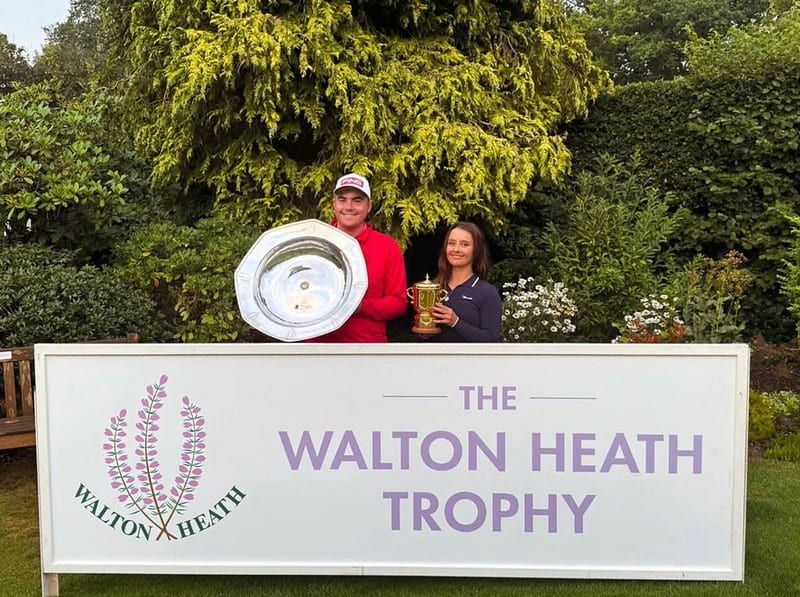
The Walton Heath Trophy is one of British amateur golf’s most storied events. What makes the event stand out is men and women compete simultaneously, on the same courses, to the same professional standard. The Jill Thornhill Rose runs alongside the Michael Lunt Salver across 72 holes of stroke play — a format that places it in rare company at national championship level. There is nothing else quite like it in the UK amateur calendar, and Jill is clear about what she wants to see: women backing it.
How did the women’s event come about?
Walton Heath hosted the AIG Women’s Open in 2023, and after that it was felt the club should do something more for women’s golf. I wasn’t involved in the original discussions — it was suddenly put to me that they wanted to call it the Jill Thornhill Rose. I said, come on, I can’t have another thing with my name on it. But they insisted, and yes, it was very exciting.
Why does the 72-hole format matter?
Because that is what the professional game demands. Most women’s amateur events are 36 holes, some 54. To have a 72-hole event is genuinely rare — only the national stroke play championships match it. Playing 72 holes teaches you things you cannot learn in 36. About managing your game over four days, about recovery, about coming back on day three when the wheels have come slightly off. It’s the training ground for everything that comes next.
What is the atmosphere like, playing alongside the men?
It makes it feel more important. The England boys and girls know each other well these days — there’s a good bit of banter on the course. And the event is run to a very high standard: Golf Genius scoring, starters, spotters. It genuinely feels like a professional event, because it is run like one. I went round to every table after the first year and asked what they thought. The feedback was very, very positive.
I hope that the young women who have come through the junior events — those who are ready for the step up — will put this in their diaries. It is the right kind of challenge at the right kind of venue. That’s the whole point of it.

The visibility problem
With the 2026 Curtis Cup under way in California this week, the question of recognition feels particularly pointed. Jill played in three Curtis Cups, won two — including GB&I’s historic first win on American soil at Prairie Dunes in 1986 — captained the side in 1990, and compiled an exceptional personal record of 8.5 points from 10. She will be watching from Walton Heath, and hoping the national press finds the space to tell people about it.
Media coverage of women’s golf — is it getting better?
Not really. Not enough. There’s nothing in the Daily Telegraph about women’s golf — I keep meaning to write to the sports editor. They started a women’s page a few years ago; I’ve seen it twice. Lottie Woad became world number one in the amateur rankings while in America, and she’s a once-in-a-generation talent — another Laura Davies in terms of sheer quality. She gets some coverage. But there are players in the top ten in the world who win events and nobody mentions them.
A final question — would you do it all again?
In a different era, perhaps. The opportunities now are extraordinary. But you don’t do anything else. That’s the trade. I played a championship, came home, took over from the au pair. My golf existed alongside a life. These young players — and I say this with huge admiration, not criticism — their golf essentially is their life. Whether that’s the better deal, I honestly don’t know.
The Walton Heath Trophy — Jill Thornhill Rose 2026
Dates: Tuesday 21 – Thursday 23 July 2026
Format: 72-hole stroke play, Old and New Courses, Walton Heath Golf Club
Points: WAGR points available
Unique: Run simultaneously with the Michael Lunt Salver for men — the only elite amateur event of its kind in the UK
Standard: Golf Genius scoring, starters, spotters, daily rolling buffet
Enter: Via the Walton Heath Golf Club website https://www.waltonheath.com/our_tournaments


