
It’s not always your swing that loses shape as the round goes on — sometimes it’s your body. Pilates and yoga instructor Hellen Barlow shares three simple movements to help you stay supported, stable and consistent from the first tee to the 18th green.
If your swing has ever felt solid on the front nine and gradually less so by the back — you’re not imagining it. And it’s often not a technique problem. When your body gets tired, your posture starts to slip, your rotation becomes a little more restricted, and your balance is not quite what it was on the first tee. All of that feeds into how the swing feels.
Pilates and yoga instructor Hellen Barlow works directly with golfers and hears this regularly. “You might start off really well, but by the end of 18 holes things can feel a little less steady,” she says. “The swing doesn’t always feel as controlled or as smooth as it did at the start.”
The good news: you don’t need to change your swing. These three movements focus on posture, rotation and balance — the physical foundations that keep your body supported throughout the round. A few minutes, a few times a week, is all it takes.

1. Hinging from the hips
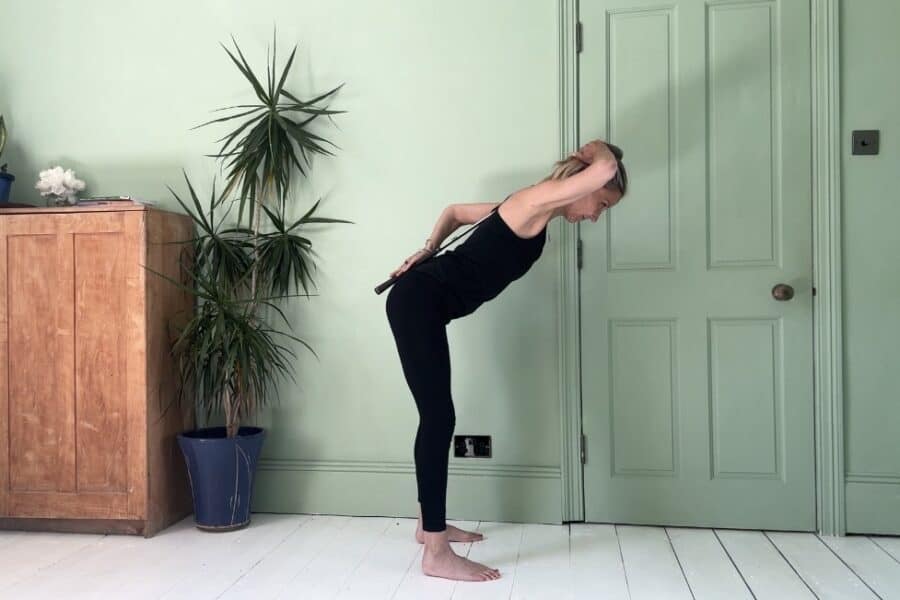
When fatigue kicks in, your body naturally looks for an easier way to move. For many golfers, that means shifting the load to the lower back rather than hinging from the hips — which puts more strain through the spine and starts to affect the shape of your swing.
This movement helps you practise the right hinge pattern, so your body holds on to it when it matters most.
The movement:
- Stand tall with your feet hip-width apart.
- Place a club down your spine so it touches your head, upper back and tailbone.
- Slowly hinge forwards from your hips, keeping club contact through the spine, then return to standing and repeat.
The outcome: Regular practice helps you maintain better posture with less pressure through the lower back — especially on those final holes.
2. Rotation with Reach
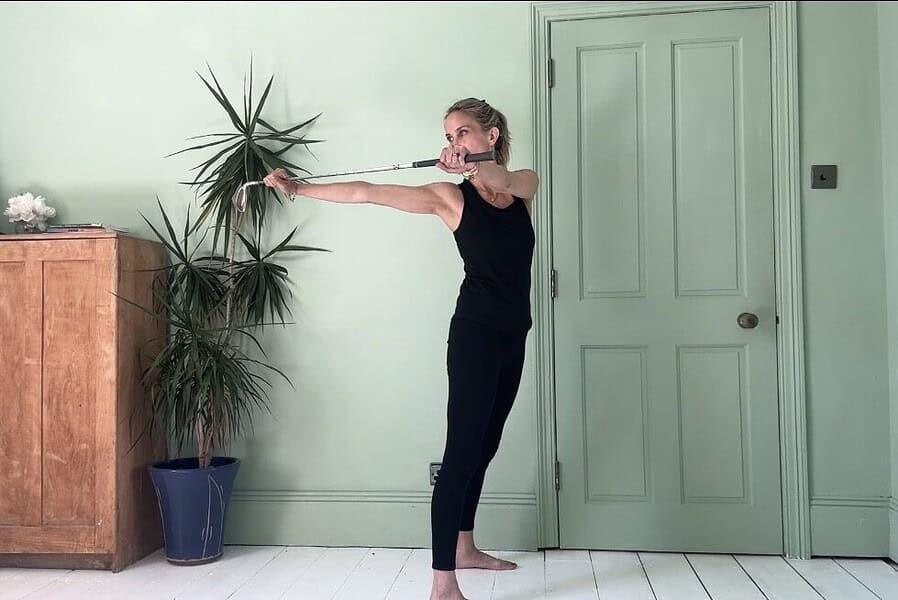
As the round goes on, upper body rotation can start to feel more restricted — and when it does, the swing feels less smooth or slightly forced. This movement helps keep everything moving freely while maintaining control through the action.
The movement:
- Stand in a relaxed stance holding a club out in front of you at shoulder height.
- Rotate with the club to one side using slow, controlled movement.
- Return to centre and repeat on the other side.
The outcome: Practised regularly, this helps the body feel less restricted, so your swing stays smoother for longer.
3. Balance for Weight Transfer
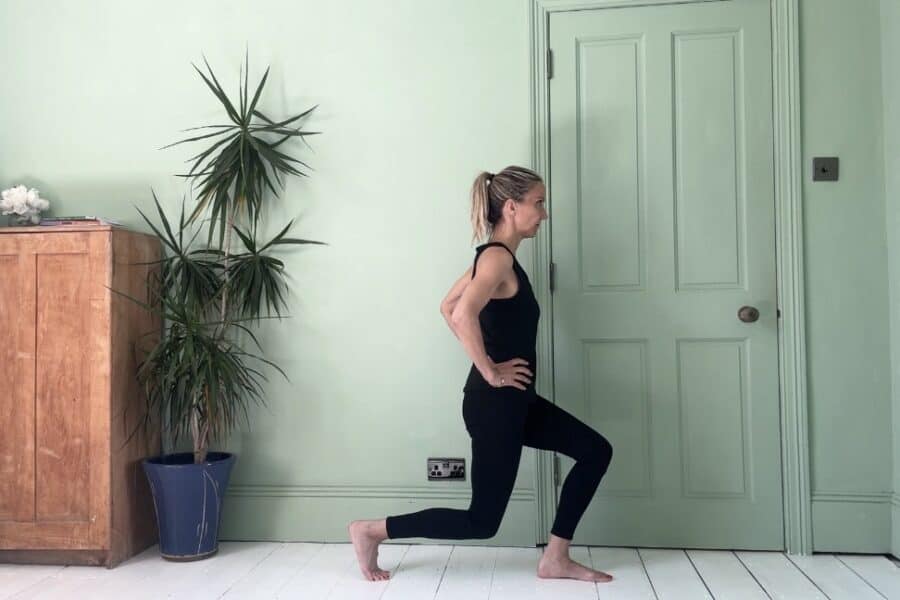
Balance plays a bigger part in your swing than you might think, particularly when it comes to weight transfer. When your balance becomes less steady — as legs and feet tire across 18 holes — consistency tends to go with it. This movement helps you work on both.
The movement:
- Step one foot forward into a split stance.
- Bend into both knees, keeping yourself balanced and controlled.
- Slowly shift your weight forwards then backwards, then swap sides.
The outcome: This movement helps you feel more stable and in control through weight transfer, and less likely to lose your footing on those uneven fairway lies in the back nine.
Keeping it simple
These movements don’t need to take long. A few minutes, a few times a week, and you may start to notice a real difference — not just in how your swing feels, but in how your whole body holds up across the round. They’re not about changing anything. They’re about helping your body stay supported enough to do what it already knows how to do.
Hellen Barlow is a Pilates and yoga instructor who works with golfers to improve strength, mobility and on-course performance. This is the second in her series for Women & Golf.
Read her first article on Why Strength and Mobility Matter for Your Game.