


You spend hours walking through rough grass, brushing past vegetation, ducking under trees. Your golf course is exactly the kind of environment ticks love — and May is when they’re most active.
Lyme Disease Awareness Month runs throughout May, and with cases continuing to rise across the UK, it’s worth knowing what to look out for before you head out for your next round. The good news: a few simple habits are all it takes to dramatically reduce your risk.
Why Golfers Are in the Frame
Ticks are most active between April and July, right in the middle of your spring golf season, with the incidence of Lyme disease peaking in June. They live in grassy and wooded areas — exactly the kind of terrain you’re walking through every time you play.
Golf courses are ideal tick habitat: rough grassland, woodland edges, and areas with long grass and bracken are where ticks thrive. That means the rough, the semi-rough around the trees, the unmown areas behind the green — anywhere you might go searching for a wayward ball.
Ticks climb a piece of vegetation and wait to latch on to a passing animal or human. You don’t need to be wading through bracken. Simply brushing past long grass is enough.
The Bite You Won’t Feel
The most important thing to understand about tick bites is this: they’re very small and their bites are not painful, so you may not realise you have one attached to your skin. NHS inform Nymph ticks may be as small as a poppy seed, and it is estimated that only one in three people even notice a tick bite.
That’s why checking yourself after every round matters. After you’ve changed your shoes and stashed your clubs, do a quick scan — particularly the backs of the knees, behind the ears, the hairline, armpits, and waistband. Ticks can bite anywhere, but they tend to favour warm, hidden spots.
The longer a tick remains attached, the greater the risk of Lyme disease transmission, and ticks may remain attached unnoticed for up to five days. According to Lyme Resource Centre, quickly finding a tick and removing it correctly is key to reducing risk.
What to Do If You Find a Tick
Remove it promptly and calmly — don’t panic. Use fine-tipped tweezers or a tick-removal tool, grasp the tick as close to the skin as possible, and slowly pull upwards, taking care not to squeeze or crush the tick. Tick removal tools are inexpensive and small enough to keep in your bag — Lyme Disease UK recommends Tick Twister® as a reliable option.
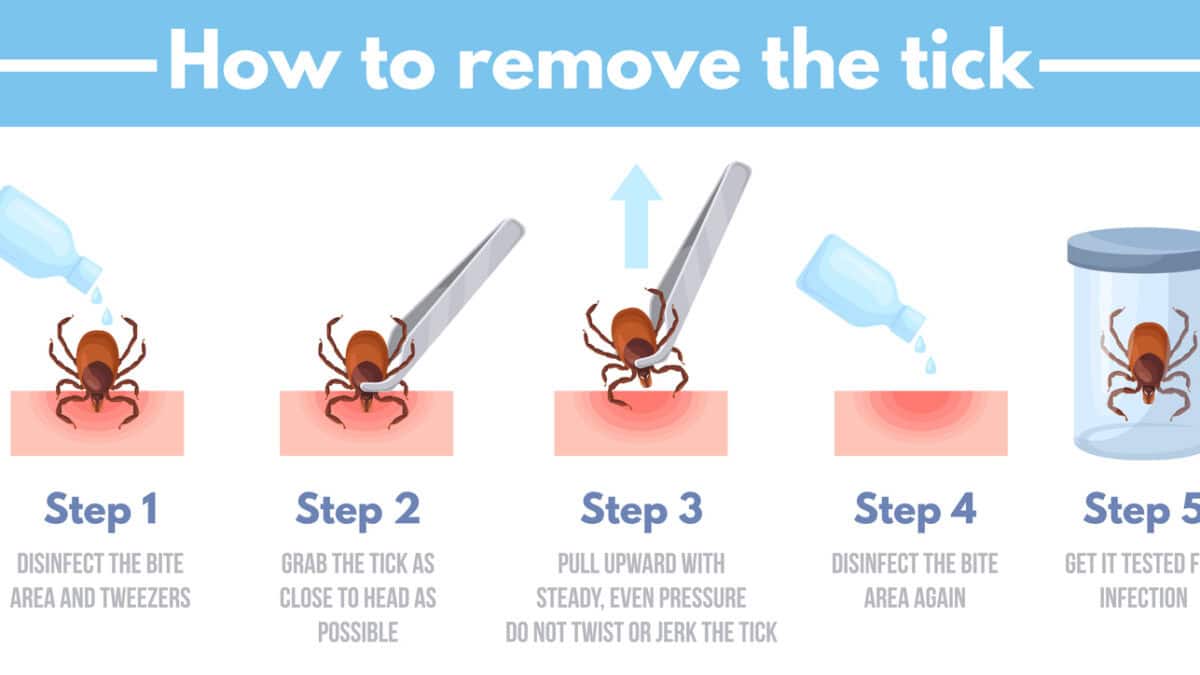
What not to do: don’t try to burn it off, smother it in Vaseline, or twist it out. All of these can cause the tick to regurgitate into the bite, increasing infection risk. Straight, slow, upward pressure only.
Once removed, keep an eye on the area and watch for symptoms over the following month. One of the most common early signs is a spreading bullseye rash at the site of the bite, typically developing three to thirty days after being bitten — though this rash does not appear in every case.
Other early symptoms can include fatigue, headaches, flu-like illness, facial palsy, and migratory muscle and joint pain. Lyme Disease UK advise if any of these appear, see your GP and mention the tick bite.
On-Course Prevention
Prevention on the course is straightforward and doesn’t require much adjustment to how you play.
Cover up where you can. Longer socks pulled up over trouser legs, or tucking trousers into socks in known long-grass areas, creates a physical barrier. Light-coloured clothing makes it easier to spot ticks crawling on fabric before they attach.
Use a repellent. Insect repellents containing DEET, PMD (found in lemon eucalyptus oil), or Picaridin are effective against ticks.
Apply to ankles, lower legs, and any exposed skin before you play — particularly on dewy mornings when ticks are most active.
Stick to the fairway where you can. If your ball lands in the rough or near long grass, retrieve it without lingering. You don’t need to stand in the rough to read the lie.
Check before you leave. A quick once-over in the car park takes thirty seconds. If you’ve walked a course with significant rough or woodland, make it a habit.
Lyme Disease UK’s Be Tick Aware campaign runs throughout May. For more information on tick bite prevention and what to do if you’re bitten, visit lymediseaseuk.com.


