

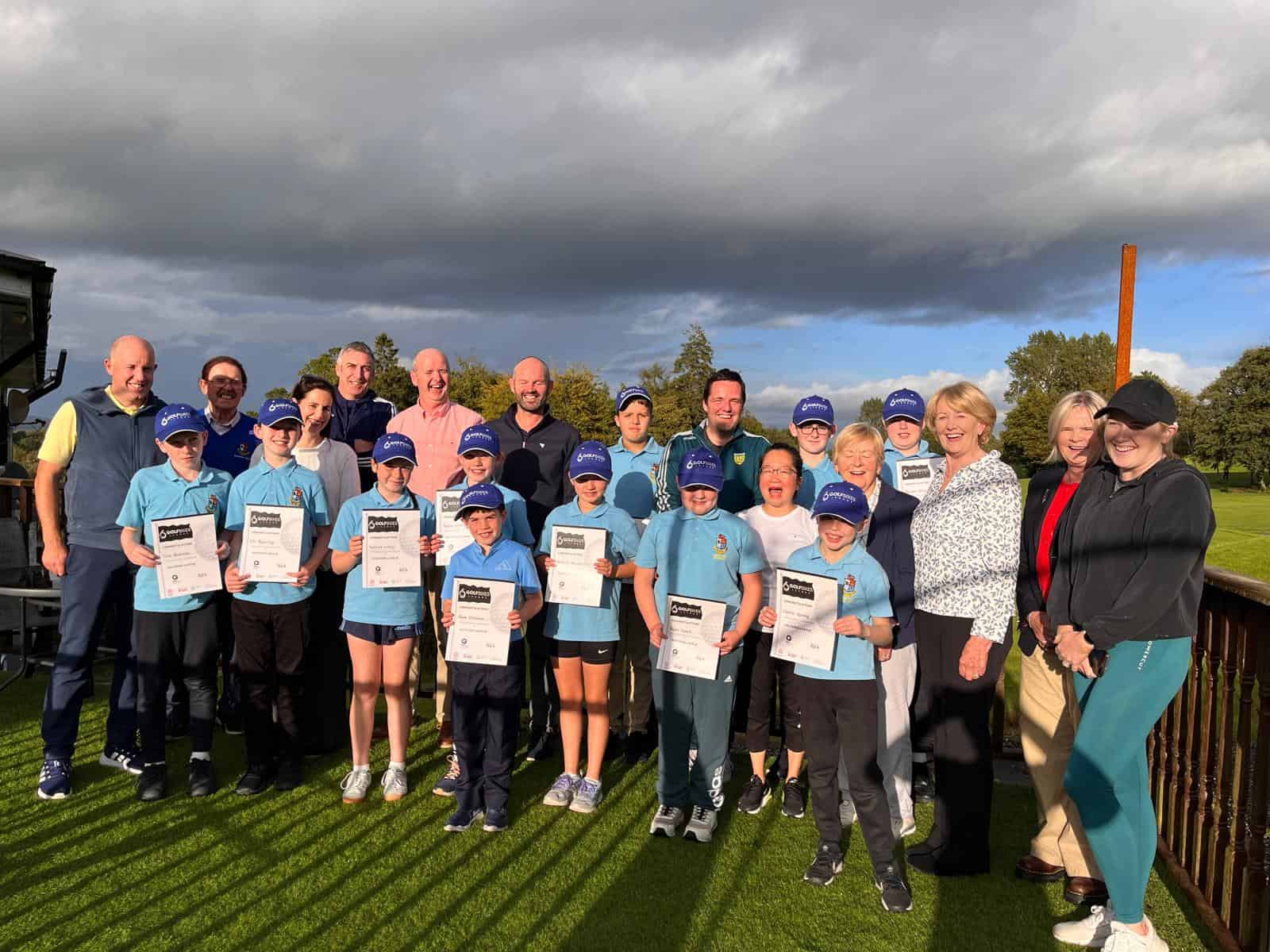
When Rheda Quinn took over as Junior organiser at Ireland’s County Longford Golf Club in 2021, there were 20 players and no structure. Four years later, there are over 100 — and a model that any club could replicate.
County Longford has just one golf club. That simple fact shaped everything Rheda Quinn did when she took on the junior section in 2021.
Membership was at rock bottom — 20 players, a programme that had been hollowed out by the pandemic, and a county where, if the next generation didn’t play at Longford, they didn’t play at all. Today, more than 100 juniors are active members, competing in inter-club events, attending professional tournaments, and bringing an energy to the club that the adult membership notices daily.
The turnaround didn’t happen by accident. Quinn built it on three foundations that any club, anywhere, could apply.
Build a structure first, not a headcount
Quinn’s first move wasn’t recruitment — it was organisation. She established a Junior Committee drawing in volunteers, parents, club members and the club professional, and introduced an annual development plan setting out coaching sessions, competitions and events for the year ahead.
“I always do out a development plan for what we are going to do for the year ahead,” she says. “We put forward the plan to the parents, and we explain what we’re going to do, what competitions we enter, what events we run. We tell them everything and we involve the parents.”
That transparency built trust — and parents who feel informed tend to become parents who stay involved.
Get juniors competing beyond the home club
Being the only club in the county focused Quinn’s thinking quickly. “I was anxious that our players would meet players from other clubs,” she says.
Her response was to co-found the Midwest Junior Alliance, an inter-club competition now involving Athlone, Roscommon, Carrick-on-Shannon, Strokestown and Castlerea. Players compete for the Mick Diviney Perpetual Trophy, and the event has become a fixture in the junior calendar. Longford’s juniors have also entered the Golf Ireland GolfSixes League for the first time and are planning to compete in GolfNines this year.
For clubs whose members rarely venture beyond their home course, the lesson is clear: external competition keeps young golfers engaged and gives them a reason to stay.

Inspire them with the bigger game
Quinn organised trips to the KPMG Women’s Irish Open and the Irish Open, letting juniors watch top professionals play in person.
“We bring them on trips like this as much as possible,” she says, “and I think actually that helps to retain our members.”
It’s a detail that’s easy to overlook when budgets are tight and logistics are complicated — but seeing the game played at its highest level can cement a young golfer’s commitment to the sport in a way that coaching sessions alone rarely do.
The wider impact
The numbers tell one part of the story. The other is harder to quantify. Families are now coming to the club across generations — grandparents and grandchildren playing together, parents out on the course with their children. The atmosphere has shifted.
“The general membership of the club are very much behind us, and they can see the progress, and they can feel the energy and vibrancy around the club,” says Quinn.
Her immediate priority now is girls. Despite the programme’s overall growth, she’s direct about where the gap remains: “My number one would be to see an increase in the number of girls in our club. That’s my main aim this year. We do not have enough and we need more.”
To find out more info visit www.countylongfordgolfclub.com


