
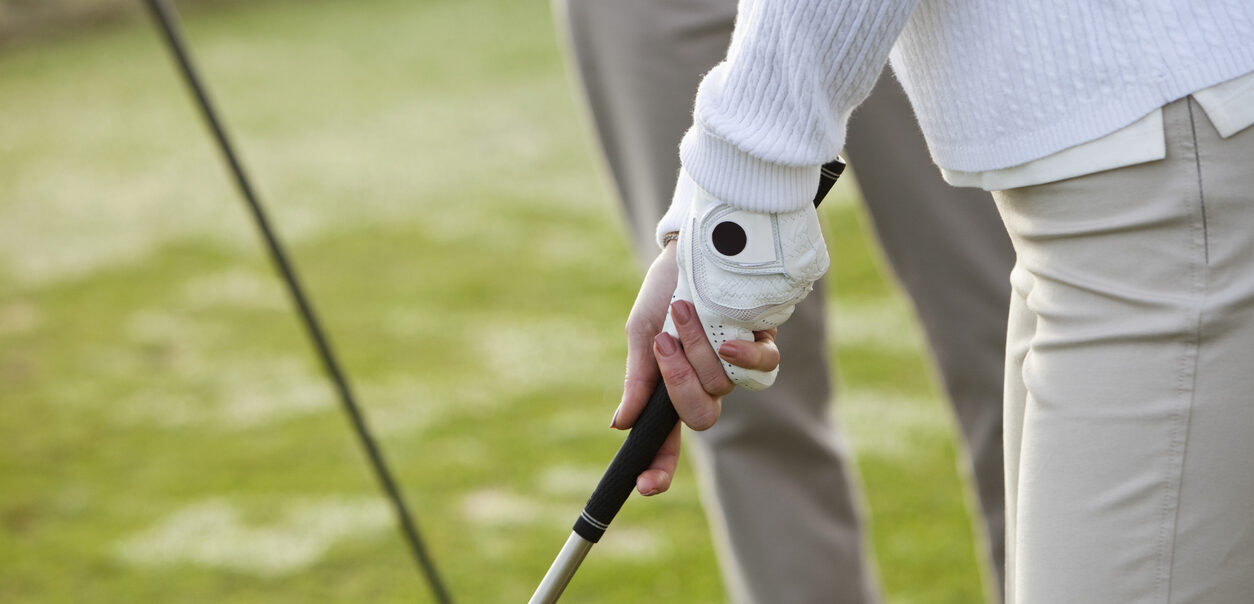
Most golfers who want to hit longer or more consistently head straight for the range. But there’s a simpler starting point — and it fits in your pocket.
Grip strength is one of the most overlooked physical assets in women’s golf. Not grip technique — that’s a lesson conversation — but the actual muscular strength of your hands, wrists, and forearms. Research consistently shows that women have, on average, significantly lower grip strength than men, and that this gap tends to widen with age. For golfers, that matters more than most people realise.
Why Your Hands Are Running the Show
Everything that happens in your swing passes through your hands. Club control at the top of the backswing, resistance through impact, club-face stability as you strike — all of it depends on what your hands can hold and how consistently they can hold it.
Weak grip strength doesn’t just affect distance. It shows up in ways you might not connect: the club twisting in your hands on off-centre strikes, inconsistent ball flight, that vague sense of losing control through impact, and the fatigue that sets in on the back nine when you’re gripping tighter to compensate. If your hands are working hard to simply hold on, they’ve got nothing left over for feel.
There’s also an injury dimension. Stronger forearm and wrist muscles absorb impact more effectively. Golfers with underdeveloped grip strength are more vulnerable to golfer’s elbow (medial epicondylitis) — that nagging inner elbow pain that develops from repeated impact without enough muscular support.
What Grip Strength Actually Involves
It’s not just about squeezing. Functional grip strength for golf involves three things working together: crush strength (holding the club securely), wrist stability (keeping the joint firm through impact), and forearm endurance (maintaining consistent pressure across 18 holes, not just on the first tee).
All three can be trained — and none of it requires a gym membership or specialist equipment.
Simple Ways to Build It
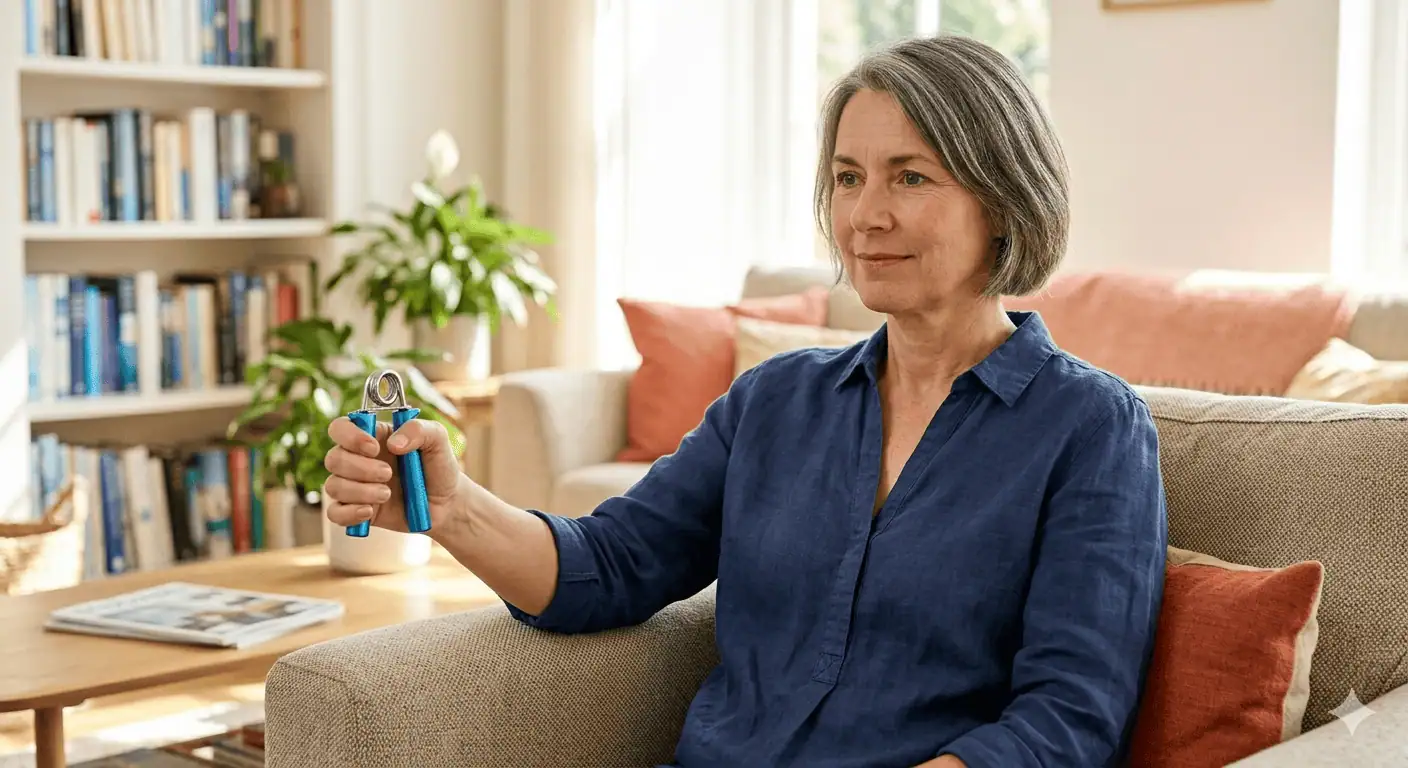
Squeeze work. A hand gripper or a tennis ball works fine. Aim for three sets of fifteen slow, controlled squeezes in each hand, three or four times a week. Slow is the key word — a fast squeeze lets momentum do the work. Squeeze over two seconds, hold for one, release over two. Ten minutes while you’re watching television will do it.
Wrist curls. Sit with your forearm resting on your thigh, palm facing up, holding a light dumbbell (1–2kg is enough to start). Curl your wrist upward, lower slowly. Fifteen reps, then flip your palm down and repeat for the extensors on top of your forearm. Two sets each way, three times a week. This is the specific movement pattern most relevant to impact.
Towel wringing. Underrated and free. Wet a small towel and wring it out as hard as you can in both directions — thirty seconds of sustained effort. Unglamorous but effective.
Farmer’s carries. Grab two moderately heavy shopping bags (or dumbbells), and walk for thirty to sixty seconds. The sustained load builds the grip endurance that gets you through the back nine without deterioration.
Progress steadily. If fifteen squeezes feels easy after two weeks, add five more or increase the resistance. You’re looking for moderate effort — the last few reps should feel like work.
How Long Before You Notice It?
Consistent training over four to six weeks typically produces measurable improvement. On the course, you’ll likely notice it first as greater confidence on off-centre strikes — the club stays where you put it rather than twisting. Distance gains follow, though they’re secondary. More significant for most golfers is the consistency improvement: less variation shot to shot, less fatigue across a round.
If you’ve been dealing with elbow or wrist niggles, it’s worth checking with a physio before starting — especially if symptoms are current rather than historical. That aside, grip strengthening is low-risk, time-efficient, and one of the few physical improvements you can make without ever going near a practice ground.
Start this week. Your hands are already doing the work — give them the strength to do it better.
For more on strength and mobility see the article by Hellen Barlow