

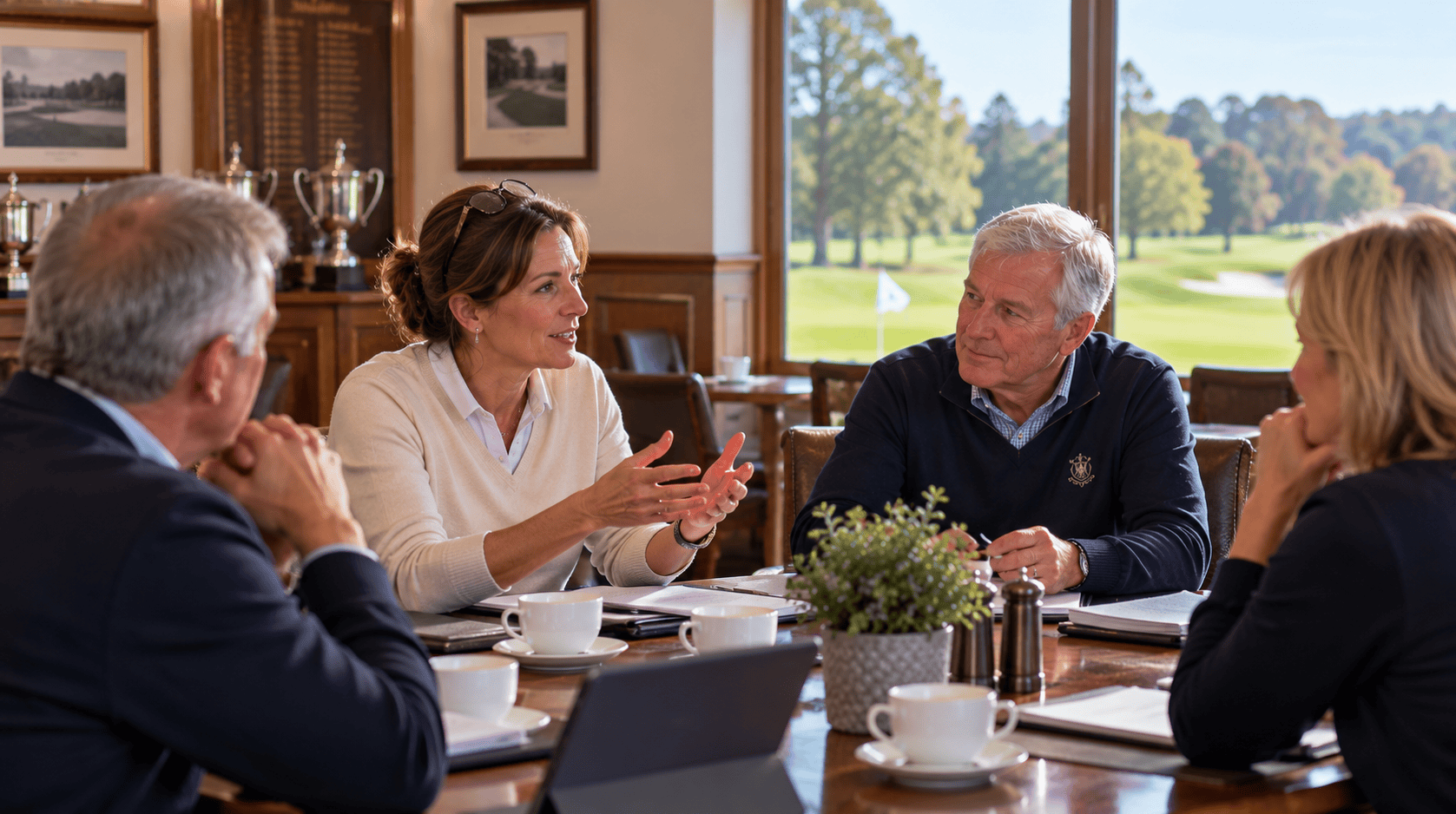
Golf clubs are working hard to attract more women, but could the biggest opportunity lie in changing who makes the decisions? From the boardroom to the first tee, a more representative approach to leadership could help create a game where more women feel they belong.
Golf clubs have become increasingly inventive in their efforts to attract women. There are beginner programmes, taster sessions, coaching groups and social events, many of them doing excellent work in introducing newcomers to the game. Yet there is a question that deserves just as much attention as recruitment: what happens when those women decide they would like to become part of the club itself?
For all the enthusiasm surrounding women’s golf, the culture of a club is still shaped by the people who run it. Decisions about membership, competitions, access to the course and even the atmosphere in the clubhouse influence whether someone feels genuinely welcome. And if women have little involvement in making those decisions, is it surprising that some clubs struggle to understand what female golfers actually want?
This isn’t an argument for replacing tradition or suggesting that every golf club is resistant to change. Many are already making significant progress. Rather, it’s an opportunity to recognise that encouraging more women to play golf and giving women a meaningful voice in the running of the game should be part of the same conversation.
From attracting women to making them feel they belong
That message emerged strongly from England Golf’s inaugural Women & Girls Summit, Building a Game for Her, held on 9 October. More than 260 delegates gathered to consider how the sport could become more welcoming, accessible and relevant to women and girls, with leadership and the importance of listening among the issues discussed.
Emma Highwood, England Golf’s Head of Women’s Development, summed up the challenge by arguing that clubs must understand women’s needs rather than simply expect them to adapt to established ways of operating. It is an important distinction, particularly when so much attention is understandably focused on attracting new players.
A successful introduction to golf is only the beginning. A woman might enjoy her lessons, make friends and become enthusiastic about playing, only to discover that the club’s established timetable, membership arrangements or competition structure doesn’t quite work for her. None of these barriers necessarily arises from deliberate exclusion. Sometimes they are simply the result of longstanding arrangements that have rarely been questioned.
But who is best placed to recognise those difficulties? Women already playing at the club, newer members and those who have recently joined the game can all offer valuable perspectives. The challenge is ensuring that their experiences influence decisions rather than remaining conversations within the women’s section.
What happens when women help make the decisions?
There are encouraging examples of clubs doing precisely that. At Henbury Golf Club in Gloucestershire, female representation on the board and key committees increased from 9% to 30% as part of wider governance reforms. The club also introduced equal weekend course access, ending a disparity that had existed for nearly three decades, and substantially increased the number of weekend competitions open to everyone.

These changes matter because they affect the everyday experience of being a member. Access to the course, opportunities to compete and the ability to influence club policy are fundamental parts of belonging, not simply additional benefits offered to female golfers.
Henbury board member Janis Sinton has also highlighted the importance of turning equality policies into action. Her point is a valuable one: adopting a policy is only the beginning; reviewing it and making sure it produces meaningful change is what matters.
At Cosby Golf Club in Leicestershire, a revised constitution has opened all leadership positions, including Club President, to members of any gender. Women contribute to important committees, including those responsible for the course and playing arrangements, while the club has also developed initiatives to support female participation and progression.
Cosby’s General Manager, Will Bevan, has described the ambition as creating a club that reflects the wider community, where men, women and children all feel that it belongs to them. That is a positive way to frame the opportunity. Greater female representation need not be viewed as a concession to one section of the membership, but as part of building a stronger, more relevant club for everyone.
These examples don’t establish that appointing more women automatically increases membership. They do, however, demonstrate how representation can sit alongside practical reforms that make a club more inclusive.

A leadership opportunity for every club
Of course, simply appointing a woman to a committee isn’t enough. Representation must come with genuine influence, and clubs need to consider whether their leadership structures encourage a sufficiently broad range of people to become involved.
Traditional committee roles can require considerable time, and the expectations attached to them may discourage members who are balancing work, family or other commitments. A club seeking fresh perspectives might therefore need to examine not only who is invited to participate, but how its decision-making processes operate.
Could meetings be more accessible? Are opportunities to join committees openly advertised? Do newer members understand how decisions are made? And when women raise concerns about their experience, is there a clear route for those concerns to reach the people who can act on them?
There is also an important distinction between asking the women’s section to take responsibility for growing female participation and making that growth a priority for the club as a whole. The latter requires commitment from the board, management, professionals and wider membership. It also creates opportunities for men who recognise the value of a more welcoming and representative golfing environment to become active supporters of change.
For clubs considering where to begin, five questions are worth asking:
- Who makes our decisions? Does the board or committee reflect the membership and the community we hope to attract?
- Can women influence the issues that matter? Are they represented in decisions about the course, competitions, membership and facilities?
- Are leadership opportunities genuinely accessible? Do recruitment processes and meeting arrangements encourage a wider range of members to participate?
- Are we listening to newer golfers? Do women joining the game have opportunities to explain what is working and what could improve?
- How will we measure progress? Are we looking beyond recruitment numbers to retention, participation and members’ experiences?
Building a game for everyone

At the Summit, Dame Denise Lewis offered a simple reminder: “Small changes lead to big outcomes.” It is an encouraging message for clubs that may recognise the need to evolve but feel uncertain about where to begin.
Not every improvement requires a complete restructuring of club governance. Sometimes it starts with inviting a different voice into a discussion, reviewing an established policy or asking whether an arrangement still serves the membership as well as it could.
The opportunity for golf is considerable. More women playing is good for the sport, but more women helping to shape its future could be just as important. Clubs that embrace that possibility are not abandoning their traditions. They are giving themselves the opportunity to create new ones.
And that may be one of the most meaningful ways to build a game for her — by ensuring she has a voice in building it.
READ MORE: Why I Swapped Membership for Points — and Why I Don’t Regret It – From Unequal to Award-Winning: How Henbury Golf Club Rewrote the Rules for Women Members


