

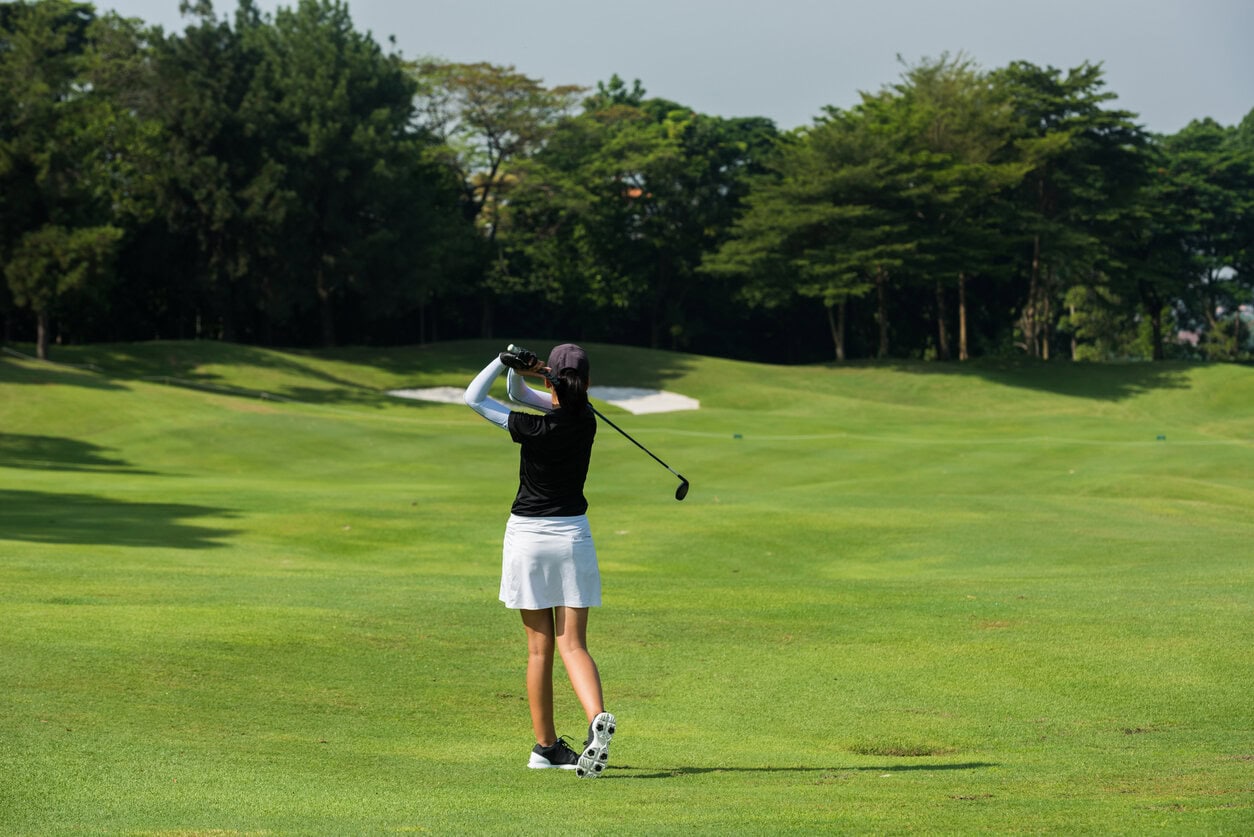
You can book a tee time almost anywhere, but finding someone to share it with isn’t always so straightforward. In the latest article in our Building Her Game series, we explore why women outside established golfing circles can struggle to find playing partners — and what clubs, courses and the wider golf industry could do to make it easier.
There’s a curious contradiction at the heart of modern golf. We can book a tee time in minutes, search for courses almost anywhere in the country and choose from an increasing range of ways to play. Yet something as simple as finding another person to share a round with can remain surprisingly difficult.
It’s a problem that doesn’t attract much attention. Golf’s participation campaigns tend to concentrate on encouraging people to take up the game, while clubs understandably focus on recruiting and retaining members. But between those two priorities sits a sizeable group of women who already play golf, want to play more often and don’t necessarily have anyone to play with.
They may be reasonably experienced golfers who have moved to a new area, women returning to the game after a break, or players who enjoy the freedom of visiting different courses without committing to membership. Others may belong to a club but find that their availability rarely coincides with the established playing groups.
Their circumstances differ, but the frustration is much the same. They have the ability, enthusiasm and opportunity to play golf. What they lack is someone to share it with.
And in a sport that prides itself on friendship and community, that seems a rather fundamental gap.

Golf has changed, but our playing networks haven’t
The traditional golf club has always provided more than somewhere to play. Membership offers a ready-made community, with competitions, social events and the opportunity to develop friendships over many years. For women who enjoy that environment, it can be one of golf’s greatest attractions.
But it is no longer the only way people want to play.
The freedom to book a round at a pay-and-play course, enjoy nine holes after work or visit different venues at weekends suits women whose lives don’t fit neatly around a traditional club programme. Some may eventually become members; others may never feel the need.
Yet much of golf’s social infrastructure still depends on the established club model. Playing groups develop through membership, competitions and personal introductions. Outside those networks, the opportunities to meet other golfers can be far less obvious.
A woman who moves to a new town can find the nearest courses online within seconds. Discovering whether there’s a friendly group she could join for nine holes on a Saturday morning is another matter.
She might contact a club, search Facebook groups or ask at a driving range. She may eventually find exactly what she’s looking for, but the process often depends on chance encounters and personal initiative.
It’s an odd situation when you consider how much effort the industry puts into making golf accessible. We have become increasingly inventive about attracting people to the sport, but perhaps less imaginative about helping them find one another.
The difficulty isn’t necessarily about ability
It would be easy to assume that this is predominantly a beginner’s problem. Someone who has only recently learnt to play may understandably feel nervous about joining more experienced golfers.
But the issue extends well beyond those first tentative rounds.
An established golfer who has relocated may have years of experience and a perfectly respectable handicap, yet still know nobody locally. A woman whose regular playing partner has stopped playing can suddenly find herself without a game. Someone who works during the week may struggle to connect with golfers whose social arrangements revolve around weekday mornings.
Even club membership doesn’t guarantee an answer. Established groups are often welcoming, but friendships built over years naturally develop their own routines. New members can find it difficult to know where they fit, particularly when informal games are arranged privately.
Nor is finding a suitable partner simply a question of matching handicaps.
Anyone who has played with a variety of people knows that golfing compatibility has as much to do with attitude as ability. One player may enjoy a competitive round, concentrating on every shot and keeping a careful score. Another might prefer a relaxed afternoon, where the conversation matters at least as much as the result.
Neither approach is wrong. They simply don’t always make ideal playing companions.
Availability matters too. A woman who can manage nine holes after work is unlikely to benefit from being introduced to someone whose golfing week revolves around early-morning 18-hole competitions.
What many women need isn’t necessarily a golfer of identical ability, but someone who wants to enjoy the game in a similar way.
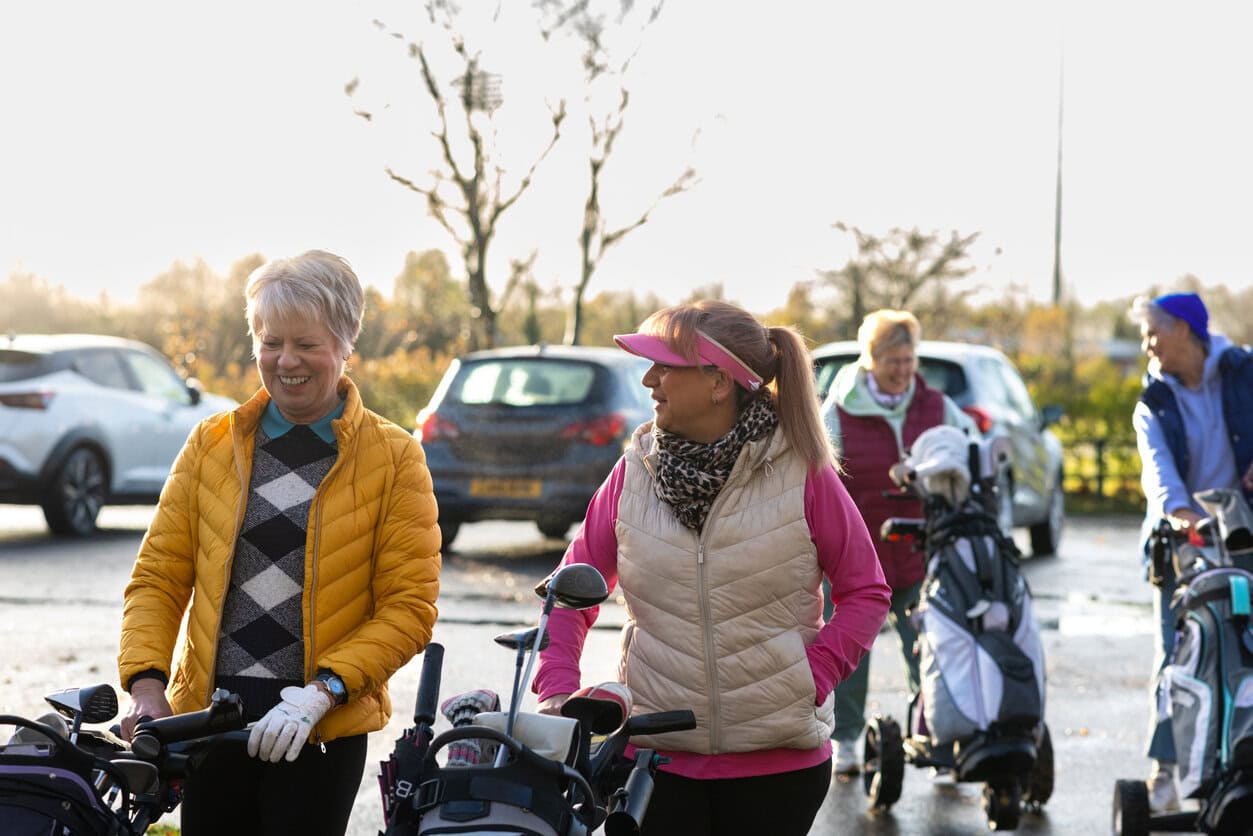
Who should be helping women find a game?
There is an obvious opportunity here for golf clubs and courses, particularly those that already welcome visiting golfers.
Most facilities have become adept at making tee times available online. But what if they also made it easier for individuals to join a game?
A regular social tee time, for example, could allow golfers to book individually, knowing they would be playing alongside others who were equally happy to meet someone new. A nine-hole evening group might appeal to working women, while an informal weekend session could provide a starting point for golfers who prefer not to join a traditional club.
These are hardly revolutionary ideas. Roll-ups and social groups have existed in golf for generations. The difference would be making them genuinely accessible to people outside established friendship groups and, where appropriate, to non-members.
For clubs, there could be a commercial benefit as well as a participation one. A golfer who discovers a welcoming group at a particular course has a reason to return. She may bring friends, book additional rounds or eventually consider membership.
More importantly, she begins to feel connected to the game rather than simply using a facility.
The same principle applies within clubs. A thriving women’s section and a busy competition calendar are valuable, but they don’t necessarily serve every member. Women who work, prefer informal golf or have lost their regular playing partners can still find themselves on the margins of club life.
Helping members find a game should be a routine part of creating a welcoming environment, not something that depends entirely on the goodwill of an individual captain or committee member.

A question golf needs to take seriously
There is a wider issue behind all this.
For years, the conversation about women’s participation has understandably focused on attracting more women into golf. Introductory programmes, coaching initiatives and recruitment campaigns all have an important part to play.
But participation isn’t just about getting people started. It’s about making it possible for them to continue enjoying the game as their circumstances change.
A woman who has played golf for 15 years but can no longer find regular playing partners faces a participation barrier just as real as someone who has never picked up a club.
And a woman who chooses not to join a golf club shouldn’t find herself excluded from the social side of a sport she enjoys.
If golf is serious about becoming more flexible and accessible, it needs to think beyond lessons, membership packages and competition calendars.
It needs to consider how people actually find opportunities to play together.
For many women, that may be the difference between playing occasionally and making golf a regular part of their lives.
Building Her Game: Five questions worth asking
Golf clubs, courses and organisers could begin by considering a few straightforward questions.
Can someone join a game without bringing a playing partner? Are there regular social sessions or open roll-ups where individuals are welcome?
Are opportunities available to non-members? Could visiting and pay-and-play golfers join selected informal games?
Do playing times reflect different lifestyles? Are there options for women who work, prefer nine holes or cannot attend traditional competition days?
How easy is it to find other golfers? Could existing booking systems, social groups or simple introductions help women connect?
Are these opportunities clearly advertised? Would someone visiting the club’s website know how to find a social game, or would she need to ask around?
More than somewhere to play
One of golf’s greatest strengths is the friendships it creates. Ask women who have played for years what keeps them coming back, and the people they play with will often feature as prominently as the courses themselves.
Yet we still leave too much of that social connection to chance.
Golfers shouldn’t necessarily have to join a club, enter competitions or already know the right people to enjoy the companionship that makes the game special.
We have spent years making it easier to discover golf, learn golf and book golf. Perhaps it’s time we gave just as much thought to helping women play it together.
READ MORE: Why Are We Losing New Women Golfers After Their First Lessons?


