

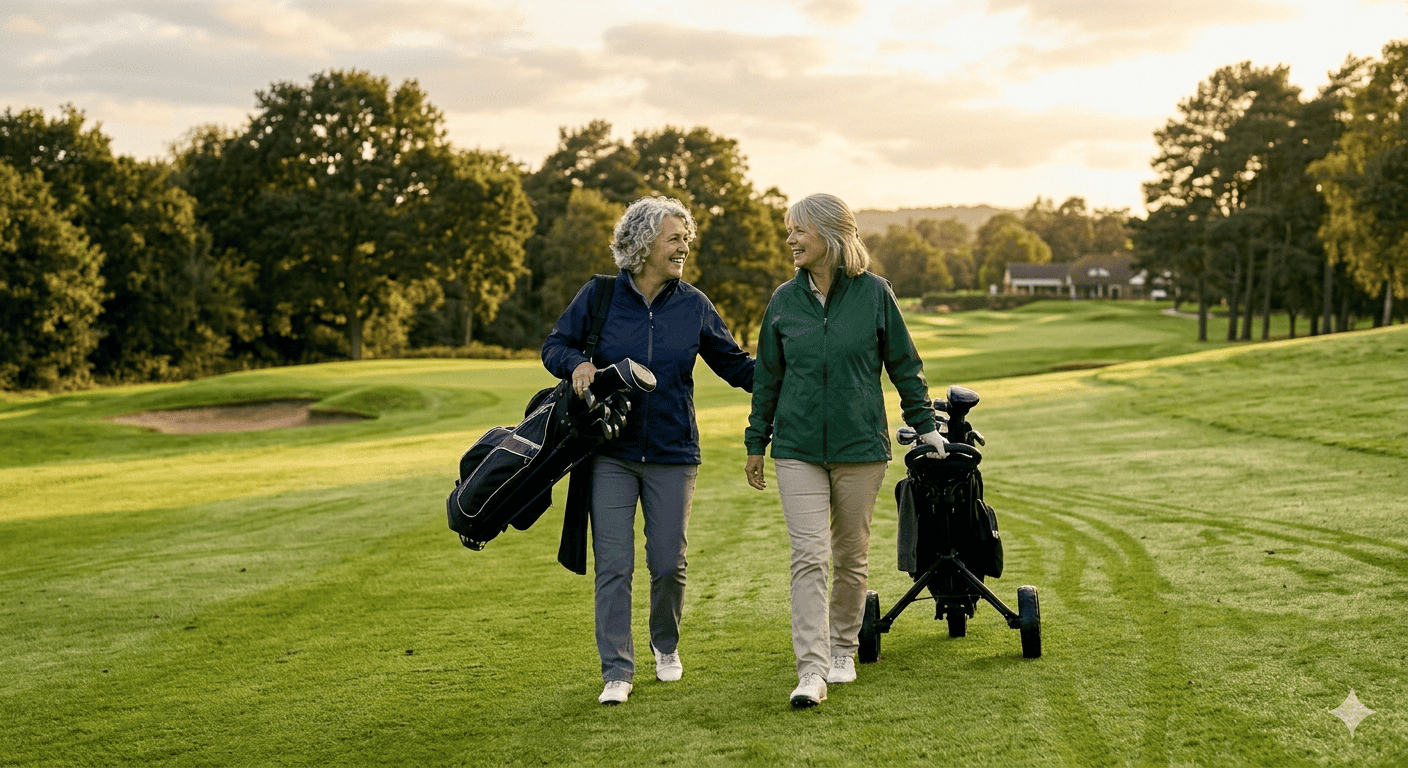
You’ve played together for years. Then you start to notice something’s not quite right — a lost ball that’s more than a lost ball, a name forgotten, a hole replayed. Dementia affects one in three women over 65, and for many golf club members, it’s already part of club life. Here’s how to stay connected, stay kind, and keep her in the game for as long as possible.
It starts with small things. She walks to the wrong tee. She asks what hole you’re on twice in the same minute. She forgets the score she just wrote down. You catch yourself wondering whether to say something — and then decide not to.
Most of us notice these moments before anyone has put a name to what’s happening. That’s uncomfortable territory. You don’t want to jump to conclusions, and you certainly don’t want to embarrass someone who’s been a friend and playing partner for years. But the instinct to look away, to quietly stop including her in the weekly competition group medal or the social roll-up, is the one worth resisting.
Dementia is an umbrella term for a group of conditions — Alzheimer’s disease being the most common — that affect memory, thinking, and behaviour. Symptoms typically develop gradually, and in the early stages, many people continue to live full and active lives. Golf, with its combination of fresh air, physical movement, familiar routine, and social connection, can be genuinely beneficial. The worst thing that can happen — for her, and for your club — is for her to disappear from the course before she needs to.
If you notice a pattern of confusion rather than an isolated bad day, the most useful thing you can do is stay present. Keep inviting her. Keep playing alongside her. What she needs most at this stage isn’t intervention — it’s continuity.
The Awkward Middle Ground
This is the stage most club members find hardest. Something is clearly different, but nothing has been said. She may not have a diagnosis yet. She may have one privately but chosen not to share it. You’re not sure what you know, what you’re allowed to acknowledge, or how to behave.
A few things are worth knowing here. Dementia doesn’t strip someone of awareness all at once. Many people in the early stages are acutely conscious that something is changing, and they are watching how the people around them respond. Withdrawal — even well-intentioned withdrawal, the kind that comes from not knowing what to say — lands as rejection.
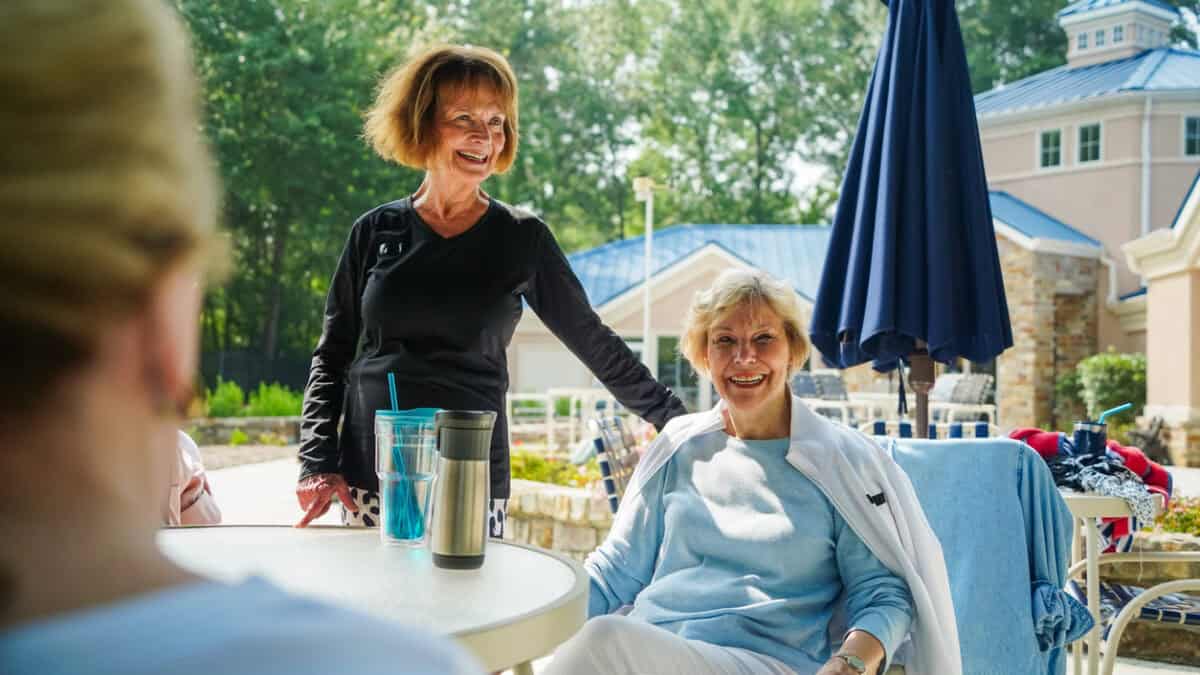
You don’t need to raise the subject directly if she hasn’t. What you can do is be consistent. Keep the tee time in the diary. Keep texting to confirm. If she seems confused on the course, steer gently rather than correct — “I think we go left here” rather than “No, you’ve already played that hole.” Small adjustments in language make the round feel less exposing.
If you are close enough that a conversation feels right, keep it simple and led by her. “I just wanted you to know I’m always happy to play together” is enough. You don’t need to name what you’ve noticed. What matters is that she feels supported, not managed.
When She Tells You
When a playing partner shares her diagnosis, the most common instinct is to treat it as a problem to be solved. What adaptations does she need? Should someone walk with her? Should the club be told?
Those questions matter, but they come second. First, listen. Let her tell you what it means for her and what she wants. Some women will want to keep playing exactly as they have been for as long as possible. Others may already be thinking about what changes might help. Very few want their golf redefined around their diagnosis the moment they share it.
What to say: “Thank you for telling me. I’d love to keep playing with you.” What not to say: anything that implies the game is already over, or that immediately frames her as someone to be looked after rather than played with.
Practically, some small adjustments can extend the amount of enjoyable golf she gets. Playing at the same course rather than visiting new venues removes the stress of unfamiliar layouts. Playing in a consistent group — the same two or three faces every week — reduces cognitive load. Keeping the format simple, and caring less about the score, helps everyone relax. A shorter round, nine holes rather than eighteen, may suit her better on some days. None of these things need to be announced — they can simply happen.
What Golf Clubs Can Do
Individual kindness matters, but it has limits. A golf club that genuinely wants to support members living with dementia needs to think collectively — and it’s more straightforward than most clubs assume.
The Dementia Friends initiative, run by Alzheimer’s Society, trains individuals to understand what dementia is and how to respond. A one-hour awareness session can transform how front-of-house staff, competition secretaries, and committee members handle situations they currently find uncomfortable. It’s free, and it’s online. Several clubs have now put their entire team through it.
Flexible membership options matter too. A member who can no longer manage a full 18-hole competition round shouldn’t have to resign. A nine-hole social membership, or a reduced-fee walking membership, keeps her connected to the club and to the people in it. Losing that membership often means losing a community — and isolation accelerates cognitive decline.
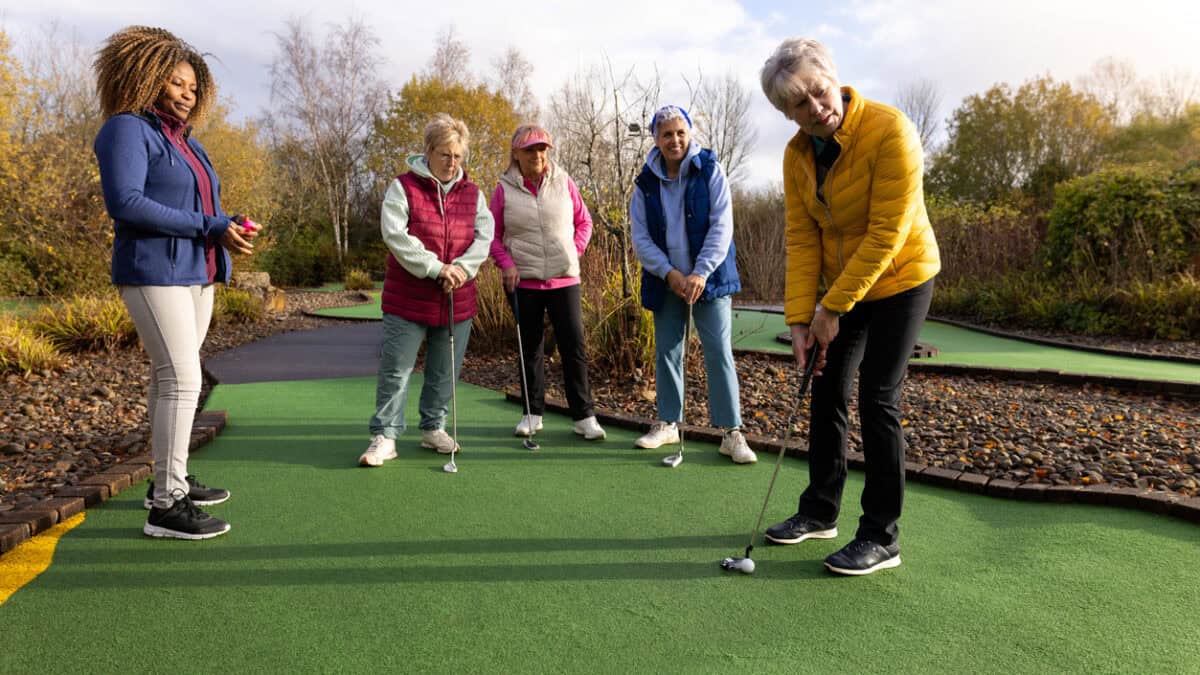
Quiet communication between a member’s family and the club secretary, where the member has consented, can also help. It means the club knows to be patient if she seems confused in the car park, or to call a family member if she seems distressed. It’s not about surveillance — it’s about having a quiet safety net in place.
‘Fore’ Get Me Not Golf, a charity founded in 2022, has shown what’s possible when clubs commit to this properly. Running dementia-friendly golf sessions at clubs including Seckford Golf Club in Suffolk and several others across England, they’ve demonstrated that with a little adaptation, golf remains accessible and genuinely life-enhancing for people living with dementia. If your club wants to explore what a structured programme might look like, their website is a good place to start.
Knowing When Things Change Again
Dementia is progressive, and there will come a point — different for everyone — when golf on the course is no longer safe or enjoyable. Recognising that moment, and responding to it with the same warmth that’s carried the relationship this far, is the final act of a good playing partnership.
If she’s becoming distressed on the course rather than settled by it, if she’s putting herself or others at risk, or if her family has asked the club to help manage her activity, it’s time to think about what comes next — not an ending, but a different kind of involvement. Putting greens, short game areas, and driving ranges can still offer the feel of the game without the complexity of a full round. Club social events, lunches, and presentations keep her part of the community even when competitive golf is behind her.
The connection you’ve built across years of shared rounds doesn’t have to end when the golf does. A card, a phone call, a visit to watch the club captain’s day — these things cost almost nothing and mean everything.
Key Takeaways
- Early-stage dementia doesn’t mean the end of golf — consistency, familiarity, and a relaxed approach to scoring can extend playing life considerably.
- The most damaging response is quiet withdrawal. Keep inviting, keep texting, keep her in the group.
- You don’t need to name the diagnosis to be a good playing partner. Practical, gentle adjustments on the course speak louder than conversation.
- Golf clubs can make a real difference — Dementia Friends training, flexible membership options, and open communication with families are all low-cost, high-impact steps.
- When golf on the course is no longer right, the social connection of club life can continue in other forms.
‘Fore’ Get Me Not Golf
‘Fore’ Get Me Not Golf is a UK charity dedicated to keeping people living with dementia connected to the game they love. Founded in 2022, they run dementia-friendly golf sessions at clubs across England — combining physical activity, mental stimulation, and social connection in a welcoming, adapted environment. Sessions are currently running at Seckford Golf Club (Suffolk), Dereham Golf Club (Norfolk), Heysham Golf Club (Lancashire), Sheringham Golf Club (Norfolk), Garon Park Golf (Essex), and Southwold Golf Club (Suffolk).
To find out more or get your club involved, visit foregetmenotgolf.co.uk or email enquiries@foregetmenotgolf.co.uk
For more information about the Dementia Friends initiative, run by Alzheimer’s Society, visit Dementia Friends


